BAGUIO BEGUILES ANEW
Baguio reveals itself to offer a peek into its past and present, and embraces the traveler in its inherent beauty.
Baguio reveals itself to offer a peek into its past and present, and embraces the traveler in its inherent beauty.
For many tourists, the opening of Baguio City near the summer season was invariably received with great delight. Of course, the city formulated a cautious and well-planned course of action to handle the development.
Apart from that, the Tourism Office undertook initiatives to develop and beautify popular destinations that have traditionally attracted tourists to the highland city. “That’s why we have renovated the Baguio Botanical Garden. Beside it is the Baguio Arboretum Park which is still being completed. Here, we are designing pathways through the trees. Meanwhile, in the Rose Garden of Burnham Park, we planted 4,000 roses. The Wright Park and Mines View Park have already master plans drawn up,” Baguio City’s Tourism Officer, Engr. Alec Mapalo, informs.
Baguio is a city of varied textures, colors and flavors. The influences that have shaped its culture make it a city of exciting contrasts. Thus, for the resourceful and judicious traveler, Baguio reveals itself to offer a peek into its past and present. These are some of the city’s attractions that vary from the informative and educational to the surprising and stunning.
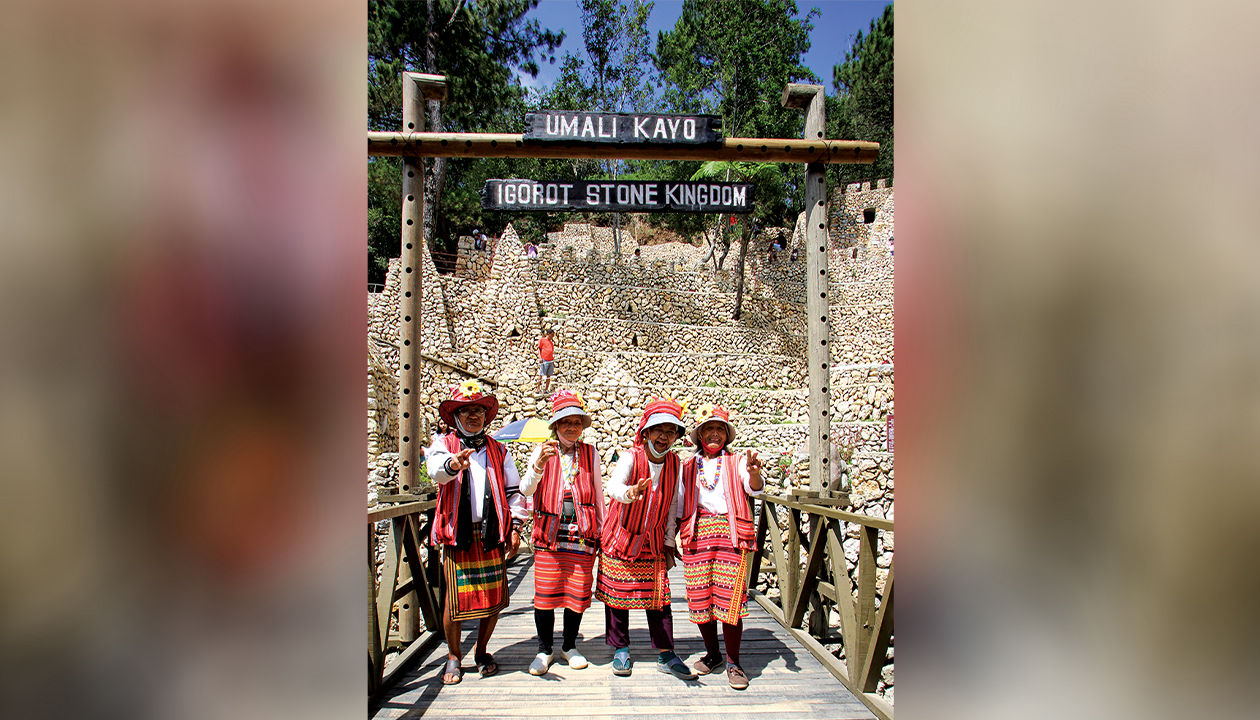
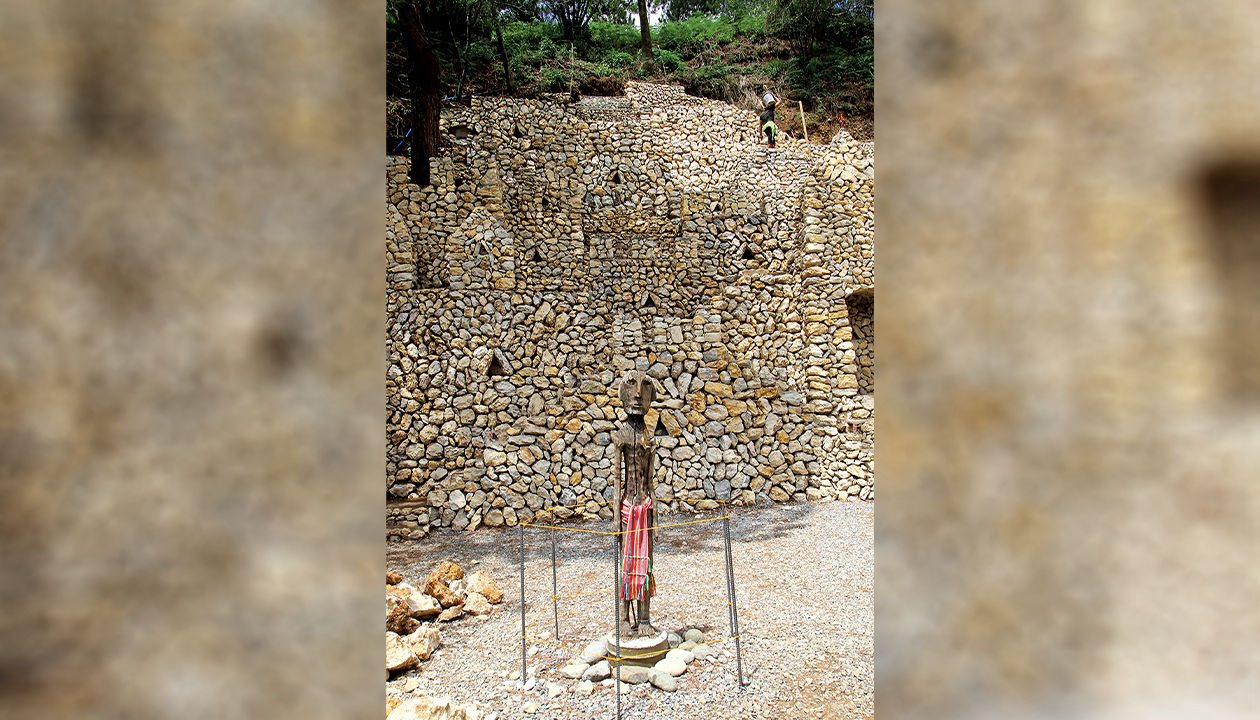
Inspired by the legendary Igorot Kingdom of Sabangan (which is said to have existed thousands of years ago), The Igorot Kingdom is built from stonework in the traditional riprap style where boulders are placed in interlocking positions without the use of steel reinforcements or cement. Hugging the side of a mountain, the off-white structure stretches up into terraces with different symbolic towers.
The Igorot Stone Kingdom was built by Mr. Pio Velasco on the exact location where he is said to have seen a vision of a white carabao. He took this as an omen to build the kingdom. A sign also tells that this enormous complex is his tribute to his mother whose strength, wisdom and patience have inspired him.
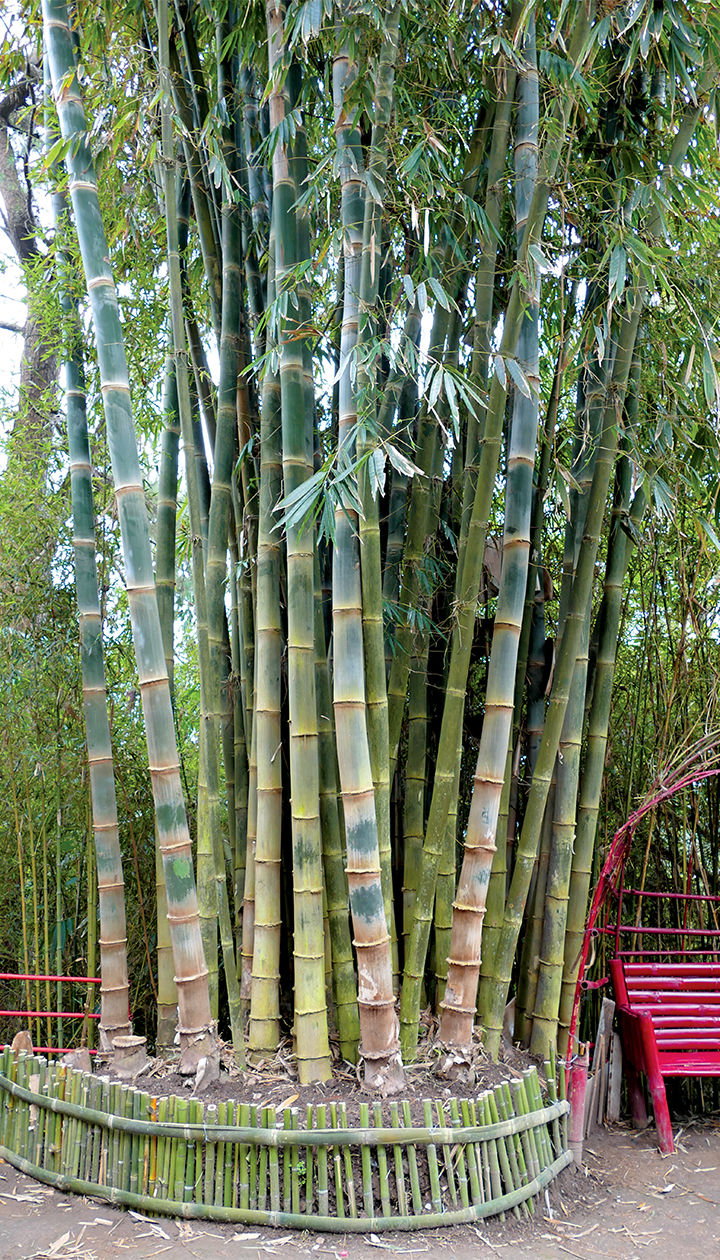
What started as an experiment to see if Chinese bamboo species will survive in Baguio and help curb soil erosion has become one of the city’s tourist attractions called the Bamboo Sanctuary. “Actually, the real name of this facility is the Bamboo
Educational Demo Farm,” says Peter Calpasi, a staff of the Philippine Bamboo Foundation, Inc. “It all started when Mr. Edgardo Manda, president of the Philippine Bamboo Foundation and Bishop Carlito Cenzon of the Diocese of Baguio went into a partnership in 2011 to plant several Chinese bamboo species in this vacant space that belongs to the St. Francis Xavier Seminary.”
After a little over a decade, this sloping parcel of real estate (nearly a hectare in size) is now lush with a healthy bamboo forest that helps clear and clean the air. Here, visitors can walk the narrow stone paths and get lost under the shade of tall bamboo trees. In the middle of a bustling city, one gets a palpable sense of relief and relaxation—thanks to the rustling of the leaves and the refreshing smell of bamboo as the breezes pass by.
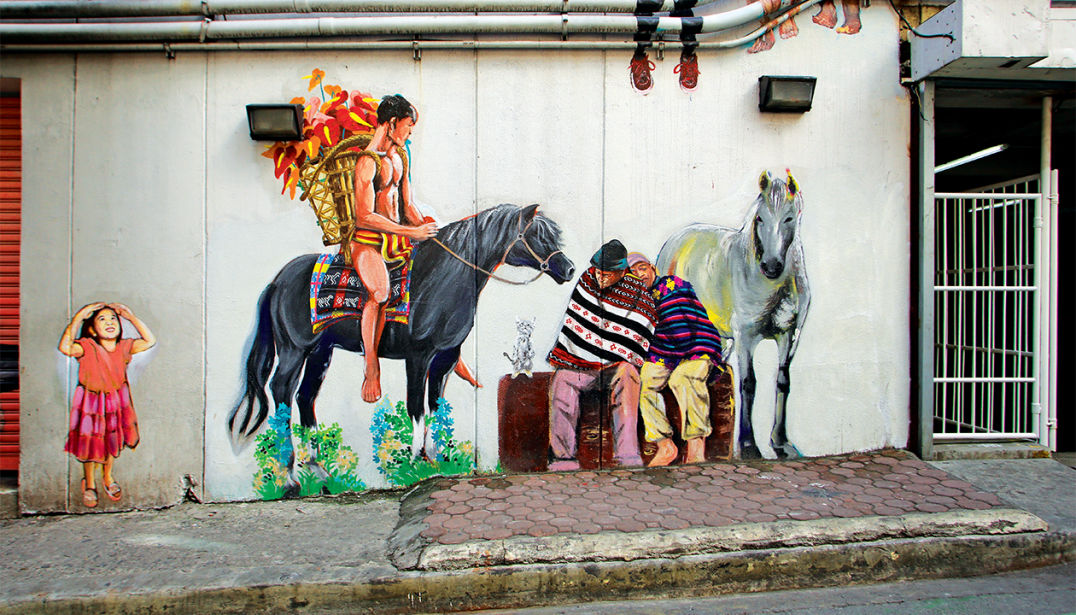
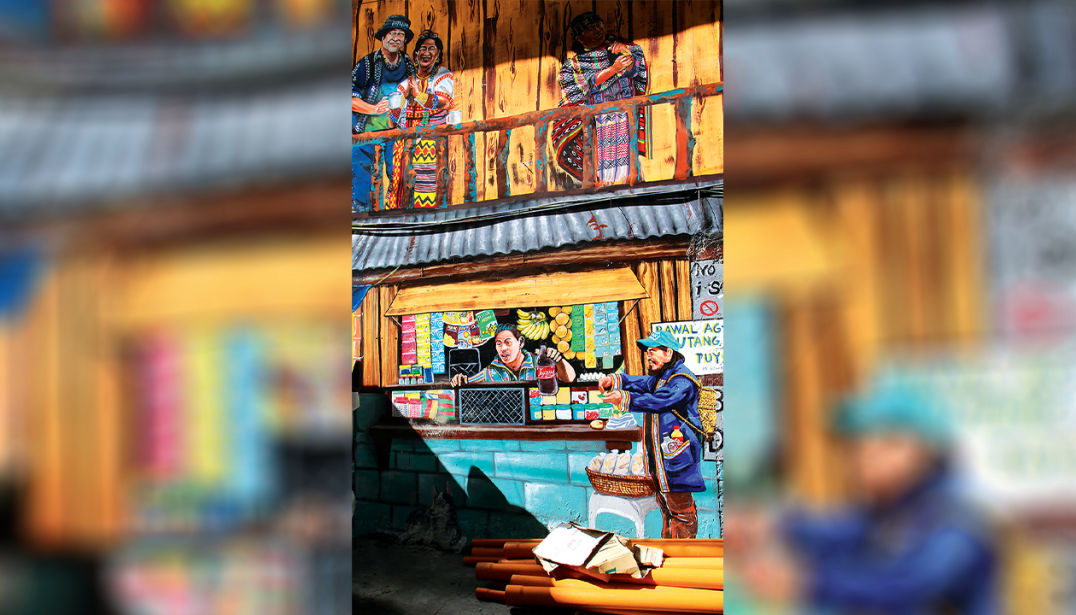
Baguio is brimming with new attractions. And nowhere is this more visible than in busy Carantes Street where the members of the 23 Sampaguita Artist Collective have painted on the walls of houses and buildings. Young and imaginative, these artists interpreted traditional Igorot games, the city’s hawkers and vendors, the traditions of the Igorots, and slices of everyday life in Baguio City through colorful murals.
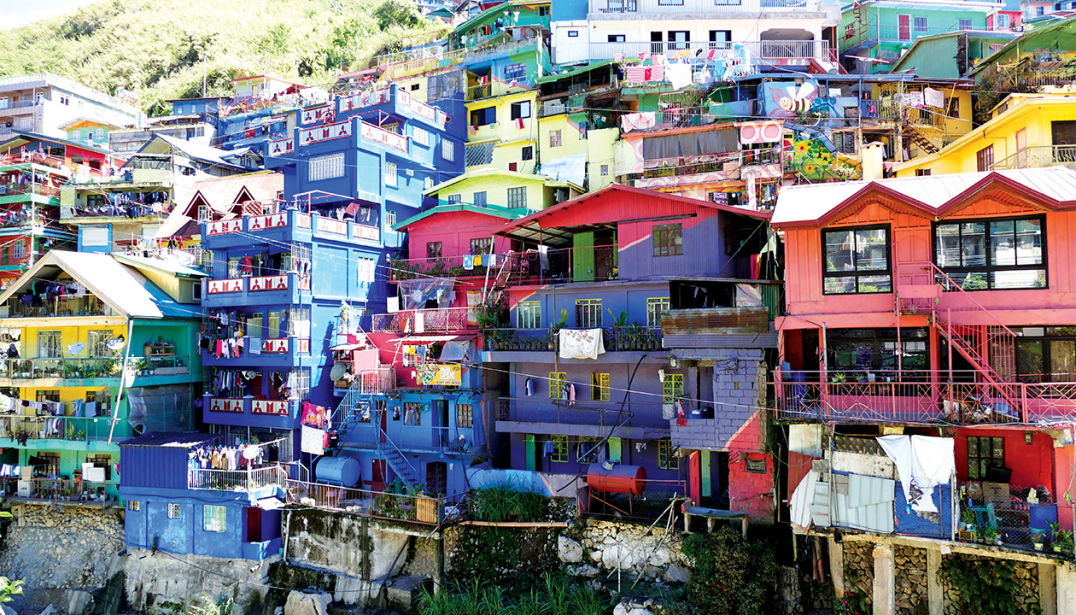
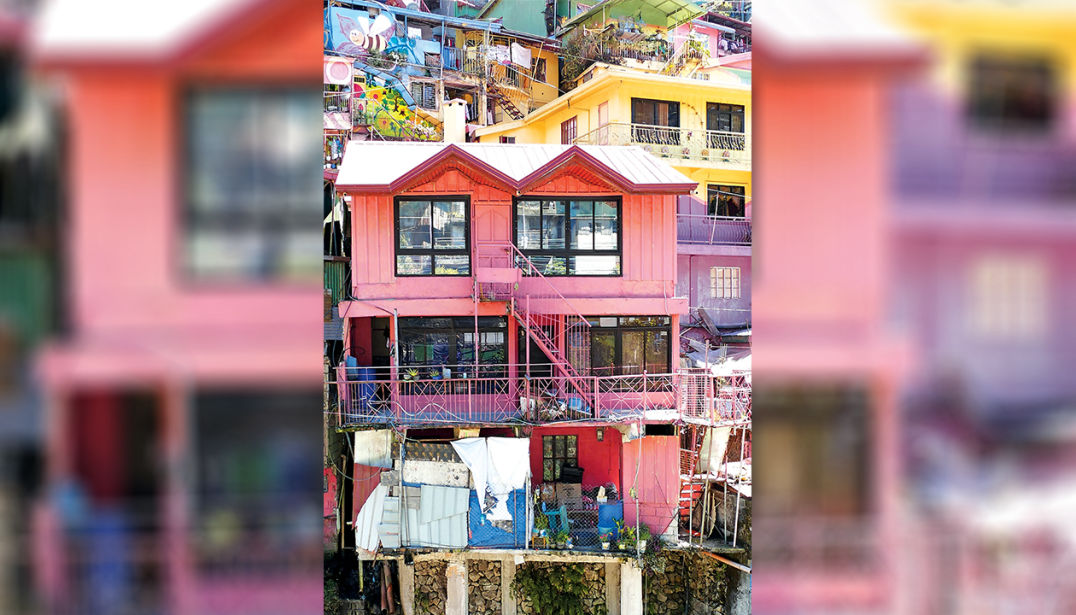
Another colorful attraction can be found between Baguio City and La Trinidad. Called “Stobosa” (short for the sitios of Stonehill, Botiw-tiw and Sadjap) the shanties have been transformed into a work art by painting the walls in a rainbow of bright. From afar, the houses form oversized paintings of sunflowers.
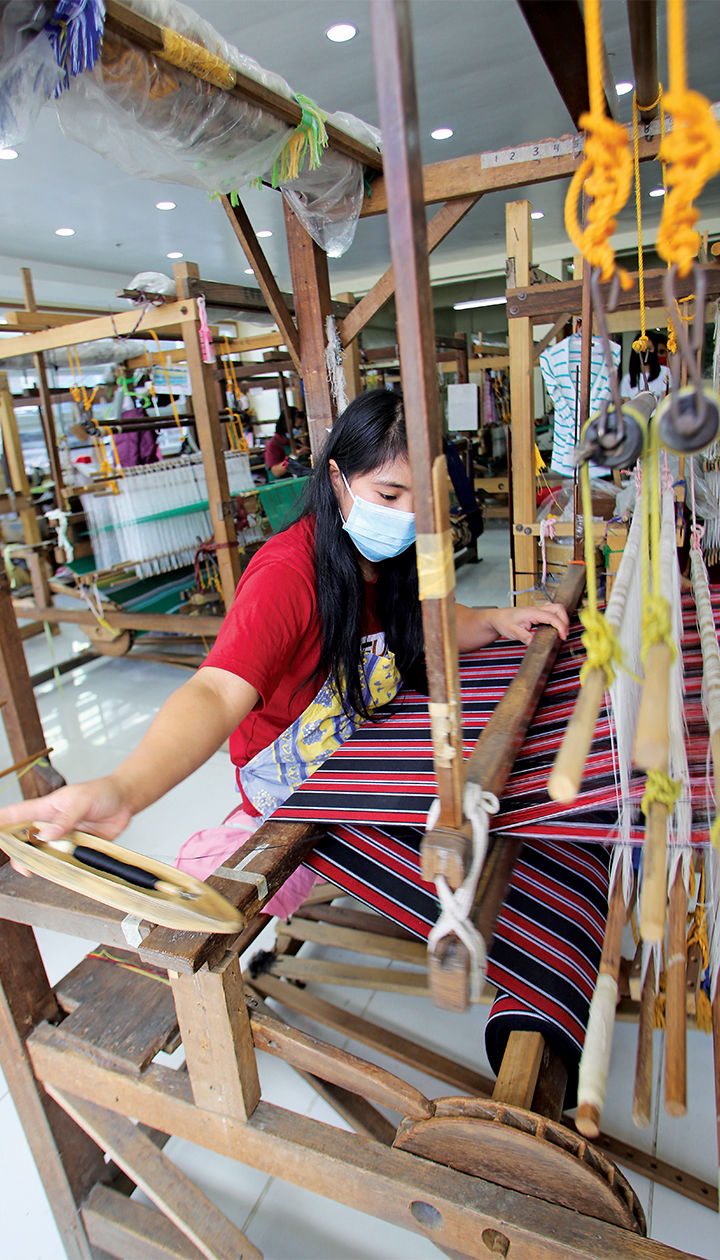
The Easter Weaving Center came as a result of the founding of the Episcopal Church in 1908 by an American missionary. “The Deaconess, Ms. Anne Hargreaves, thought of opening doors of the Easter School to women with the idea of continuing the weaving tradition by teaching the young girls how to weave so that they, too, may earn a living,” relates Ms. Virginia Doligas, the present general manager of Easter Weaving Center. Doligas now supervises 35 weavers in Benguet, and has recently added 15 more weavers that are stationed in Bontoc in another weaving facility.
The weavers create the famous Montanosa cloth from vividly-colored yarns which are sold as fabrics, or turned into chic clothes, fashionable bags, handsome placemats and table runners, and so much more. Apart from the woven items, the center has a carpentry shop that produces the handsome wooden furniture available at the store. The center also sells shell products—exquisite bangles, pendants, earrings, etc.—which Doligas sources them from suppliers from the south. “That makes Easter Weaving Center a one-stop shop of beautiful products to keep or to give away as presents.”
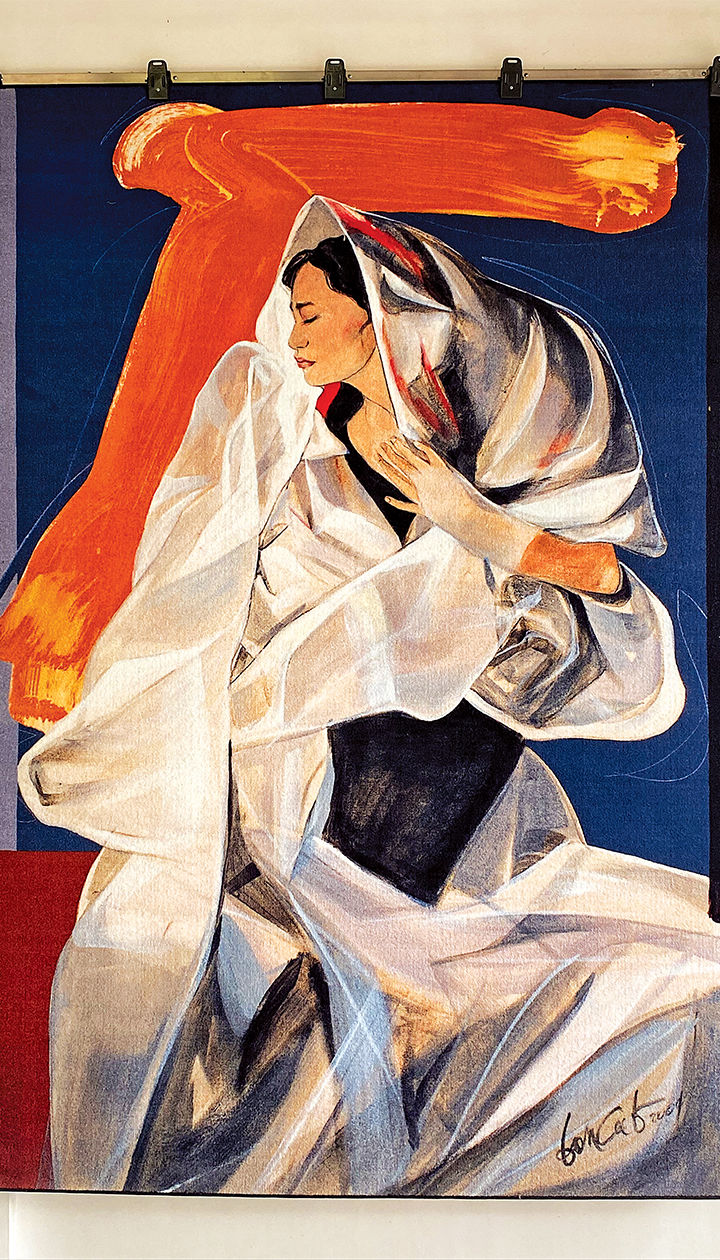
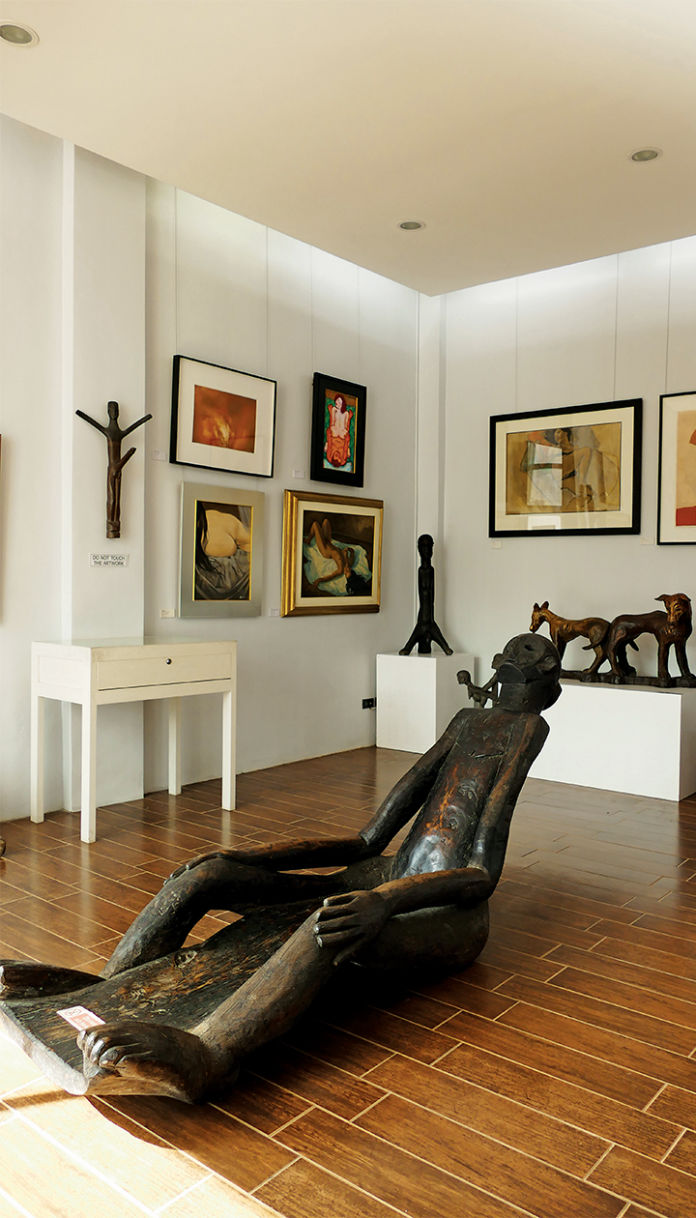
Lovers of art will find endless wonder as they scour gallery after gallery of the famous BenCab Museum. Owned by National Artist Benedicto Cabrera, more popularly known as BenCab, the museum is a rich repository of the artist’s past and present works, as well as curated pieces from other celebrated visual artists.
Located in Km. 6 Asin Road, it is embraced by the luxuriant greenery of the adjacent forest and gardens. In the distance is a view of the surrounding mountains and to the west is a glimpse of the South China Sea. The artist’s own compelling works—from paintings to sculptures—are housed inside the BenCab Gallery. The Cordillera Gallery features several bulol carvings, daily implements such as baskets, betel nut containers, baskets, and furniture, among other handcrafted objects.
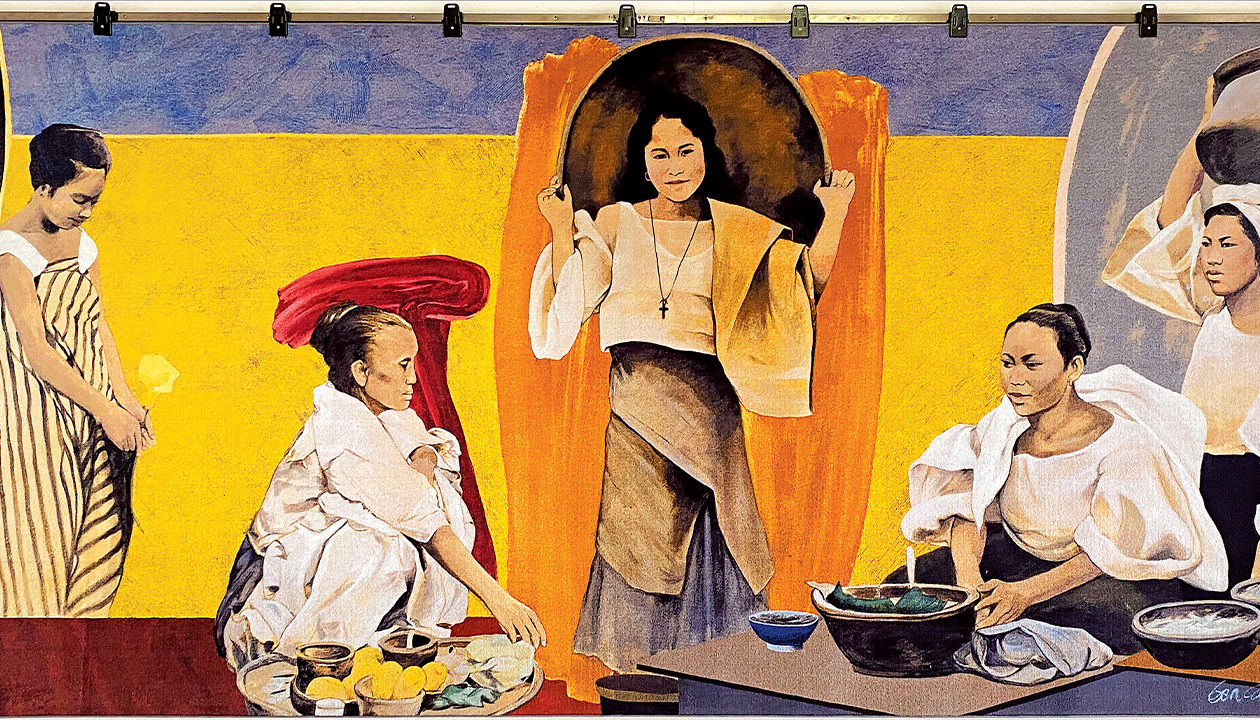
Adrenaline junkies who still want to be in close contact with nature will do well to visit The Admiral Farm Park. Located at Pinalyok, Pico Lamtang Road in La Trinidad, this outdoor activity area is perfect for those who get their thrill from hiking, rope swings, wall climbing, and walking on hanging bridges. The seven-hectare farm park, owned and operated by the Cordilleran Career Development College, also has extensive gardens, forests and rock murals.
At the Admiral Farm, visitors may choose from three eco trails. The Binnadang Trail starts on flat terrain and gradually descends on a slope. The SadShak Trail which takes trekkers on a winding upward slope to a peak with a commanding view of the opposite mountains. Or the Waterfall Trail that leads trekkers to the waterfalls and creeks. We spent the afternoon under the shade of an Ifugao hut, watching one of the girls roast coffee. After which, we spent a few hours sipping the full-bodied brew.
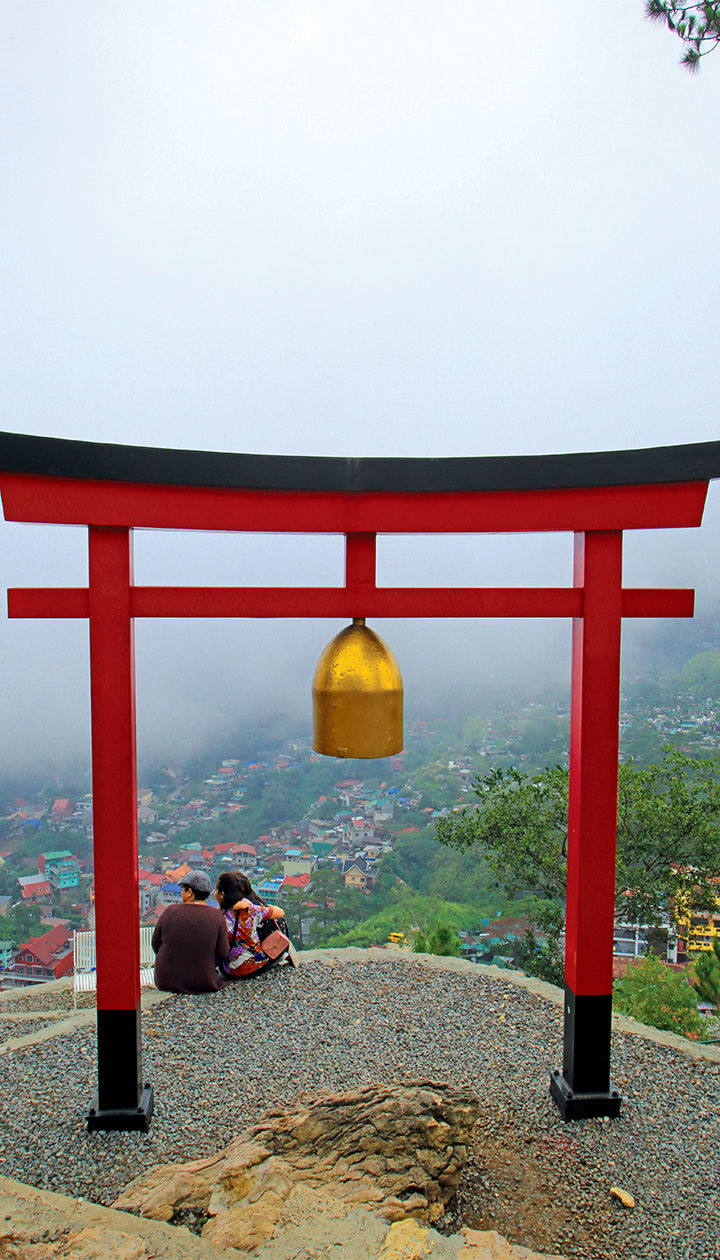
Perched on Mirador Hill, a Jesuit-owned land that rises to a commanding height above the city, Mirador Heritage and Eco Park takes visitors to a verdant bamboo grove bordered by red fences. Among the bamboo trees, it’s easy to imagine being in a sacred Japanese forest. There are seating areas along the way, as well as gardens of flowering shrubs, and a patch of sunflowers happily swaying in the cool breeze.
On the highest point, in a clearing that overlooks the houses and buildings in the valley below, a red and black torii stands solitary. In Japanese Shinto religion, a torii is a gateway to the home of the spirits. This is the Mirador Peace Memorial, a place to open the mind and spirit in communion with the gods. To those who wish to find peace in a city that can sometimes bristle with tourists, this is the place to unplug from the world and tune in to one’s inner senses.
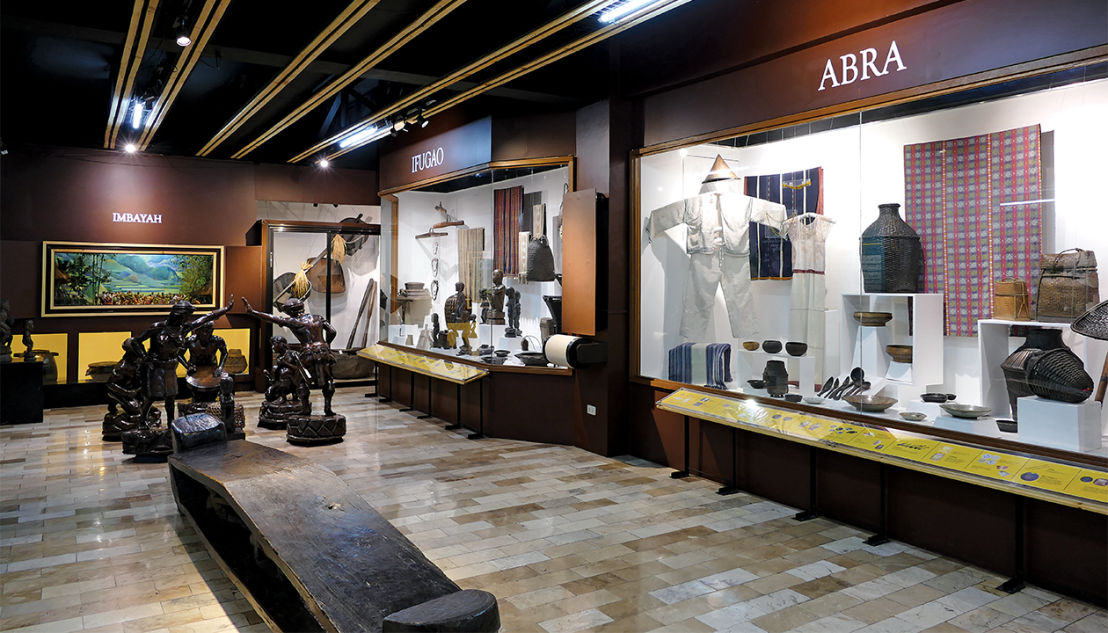
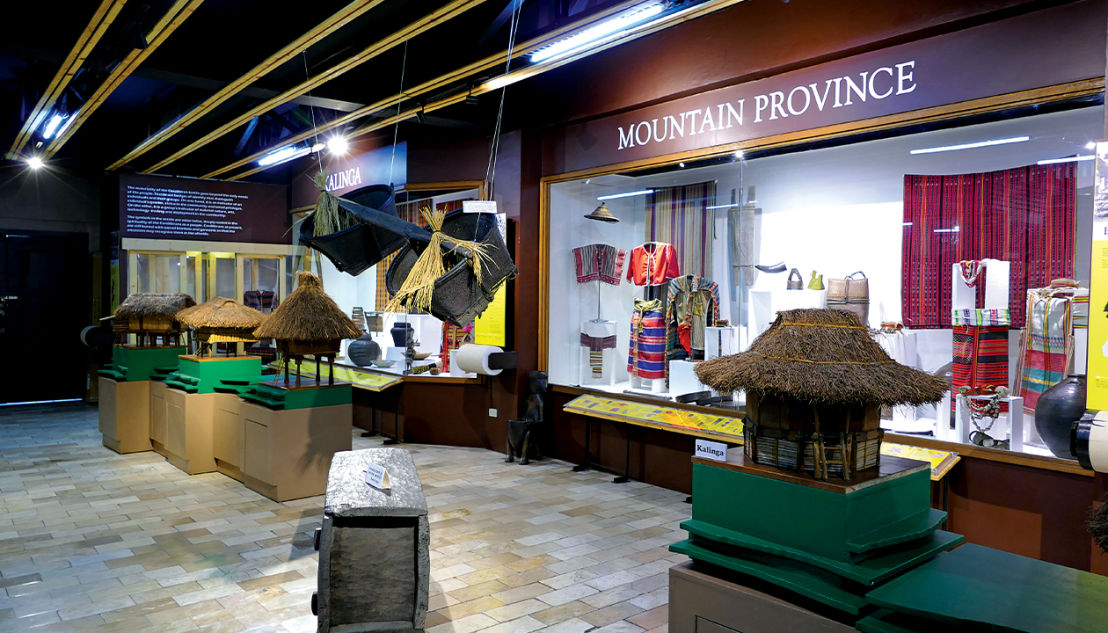
Visiting the Baguio Museum will give visitors a deeper understanding of the history and culture of the mountain city and the provinces comprising the whole Cordillera mountain range. “The museum was built as a hub of education and a repository of the ethnographic artifacts of the six provinces that make up the Cordillera mountain range,” says Gemma Estolas, Museum Assistant Curator.
The museum is composed of three galleries. The NCCA Gallery is a venue for workshops and seminars, and is also an art exhibit area. At the Cordillera Gallery visitors will get acquainted with Apo Baket—the museum’s prized mummy of a woman in a wooden sarcophagus. It is the only mummy in the Cordilleras that is outside the traditional burial cave. The Baguio History Gallery is dedicated to show the growth and expansion of Baguio City from its origins as an R&R facility during the American period.
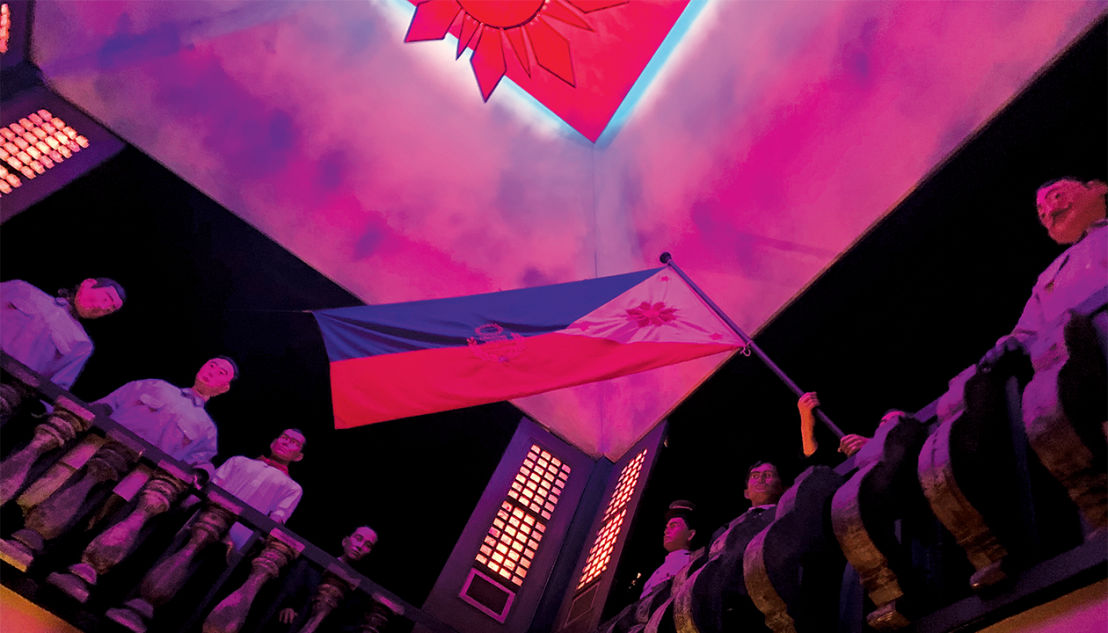
When Cristina Aguinaldo married Dr. Federico Suntay, the couple decided to live and raise a family in Baguio City. Cristina brought with her a special memento from her father, the Philippine’s first president, Gen. Emilio Aguinaldo: the first Philippine flag.
Today, the Suntay home has been transformed into the Aguinaldo Museum. Paintings, dioramas, installations, and a light-and-sound show emphasize the heroic exploits of Filipino soldiers in the fight against Spanish and American forces. At the end of the tour, in a dimly-lit room equipped with a dehumidifier, one may view the original Philippine flag enclosed in a glass case—the symbol under which many Filipinos fought and died in their fight for freedom.
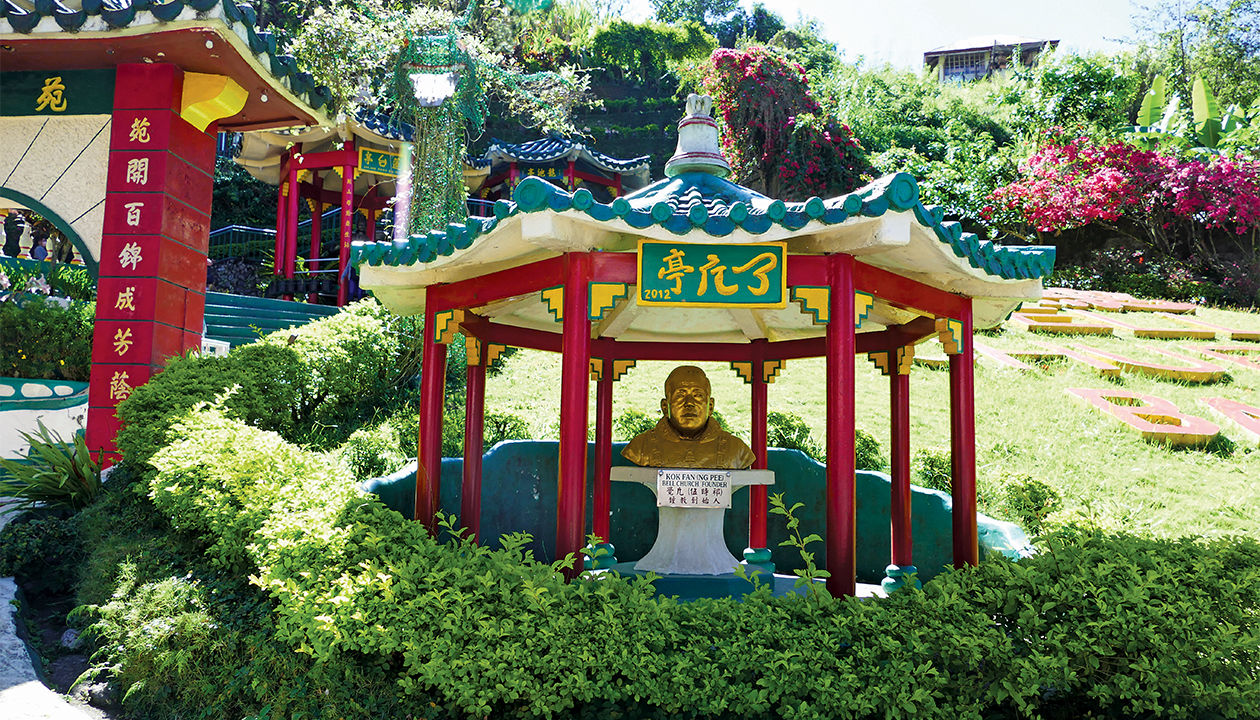
Gleaming in the early morning sunshine, the Bell Church looks like a sprawling Buddhist temple straight out of a quiet village in China. Tall arches in crimson with green roofs welcome visitors to a church that does not discriminate according to religion. “At Bell Church, we practice a belief system where a person models his life based on the lessons and the teachings that you learn here,” he explains. “Anybody, regardless of religious denomination, can be a believer and become a member of the Bell Church.”
The design and architecture, while predominantly classical Chinese in inspiration, incorporate motifs from different spiritual beliefs. The symbolisms, however, are Buddhist. The dragon relief, running at the upper side of the temple, indicates the beginnings of Bell Church as a place of Chinese spiritual belief. Outside, the terraced grounds feature gazebos with statues of general Guan Yu and the goddess Quan Yin. At the topmost terrace is an enclosed shrine with the statue of Buddha sitting on a lotus leaf.

Drag and Drop Website Builder