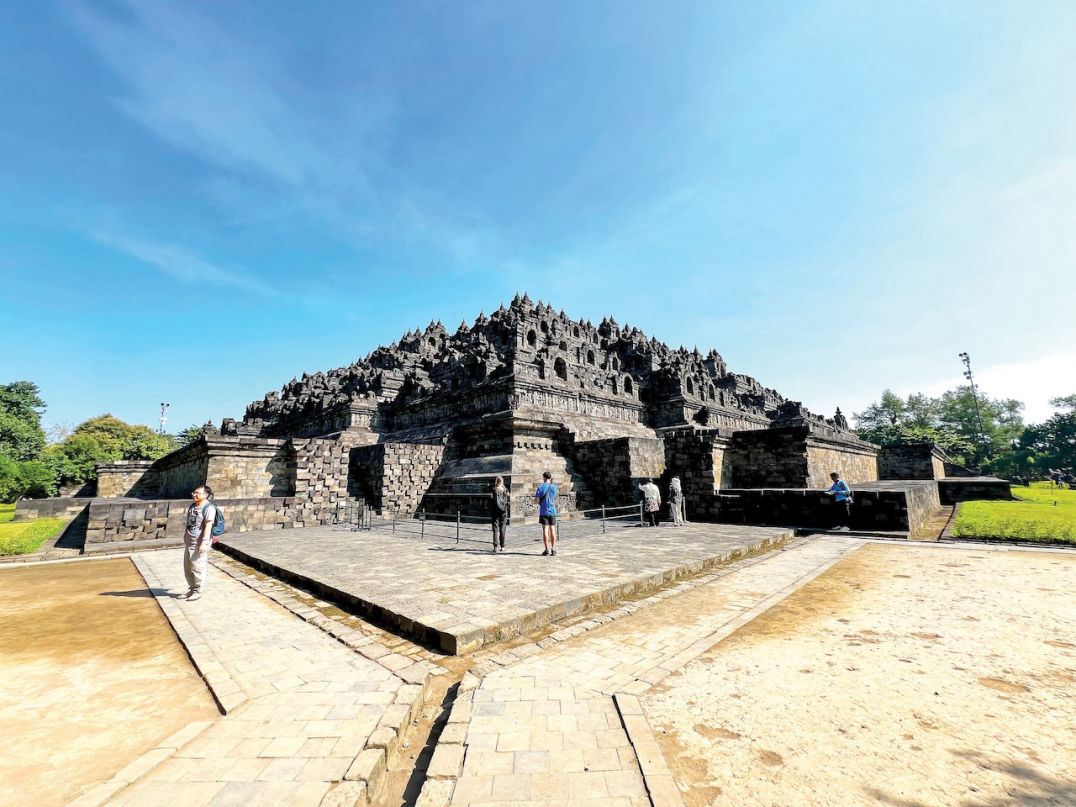
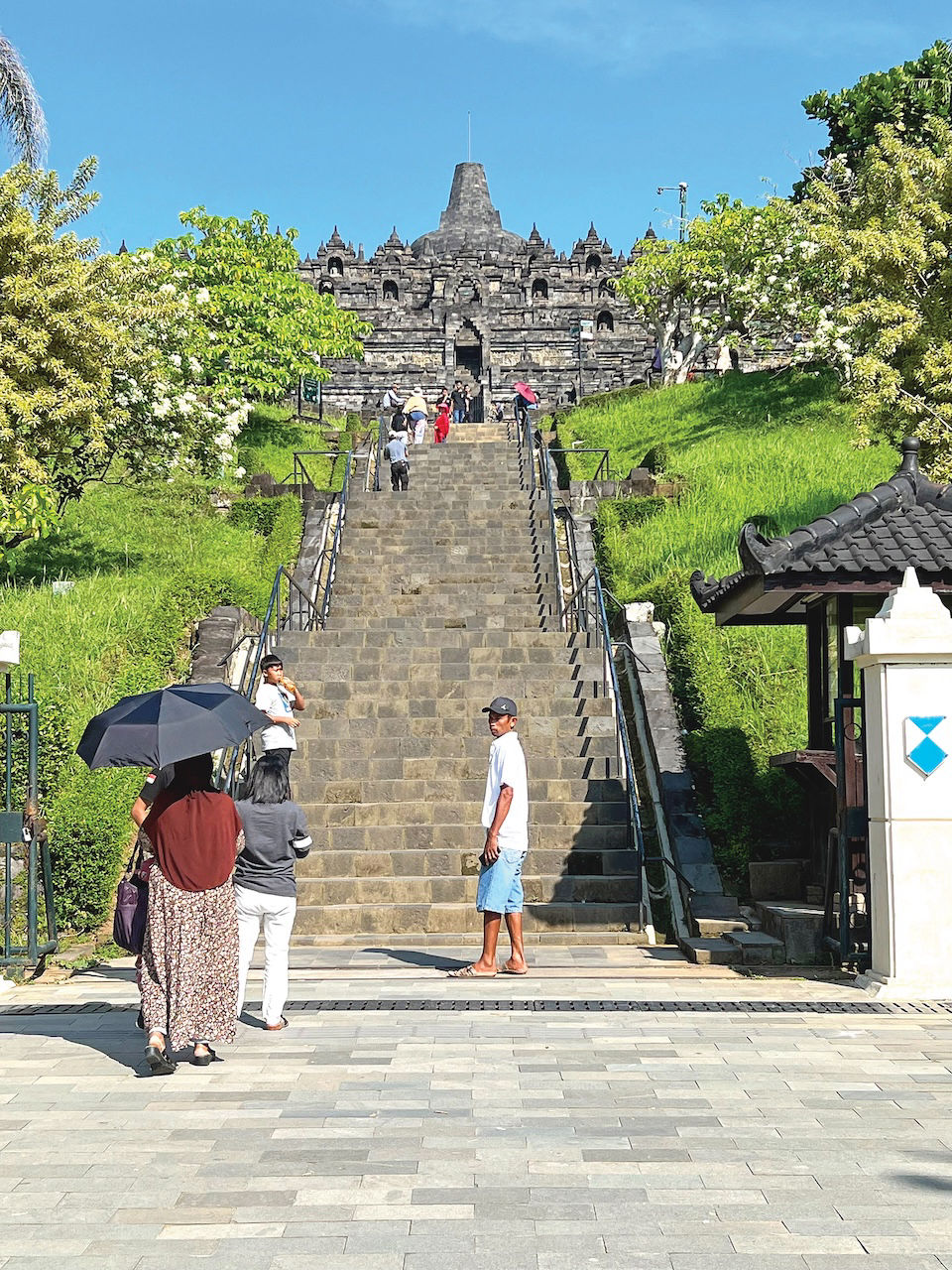
In Magelang, Central Java, Indonesia’s most sacred monument invites a deeper journey, one where preservation shapes the experience and every step becomes a quiet meditation.
There are places that impress you once, and there are places that change you when you return.
Set against the lush Kedu Plain, Borobudur Temple rises not only as the largest Buddhist monument in the world, but as something far more enduring: a living symbol of devotion, resilience, and reflection. Years after my first visit, I arrived again with a sense of familiarity, only to realize that Borobudur is not a place that stays the same. It evolves, just as those who come back to it do.
What was once an overwhelming encounter is now a measured experience. Where there were crowds, there is now quiet, and where there was constant movement, there is now a sense of pause. The transformation is intentional, shaped by a growing awareness that Borobudur must be protected—not just from time, but from us.
The journey begins long before the first step on the stone.
Today, visiting Borobudur requires planning, as entry to the temple is limited and visitors are scheduled into specific sessions, each with an accredited guide. This system aims not to restrict but to restore balance, allowing the monument to breathe again while offering each visitor a more meaningful experience.
At the base, a small but meaningful gesture sets the tone. Shoes are removed and replaced with woven slippers specially designed to protect the temple’s ancient volcanic stones. Visitors carry their footwear in simple bags, stepping forward with a new awareness of where they are. There is something humbling in this act, as it naturally slows you down and prepares you for what lies ahead.
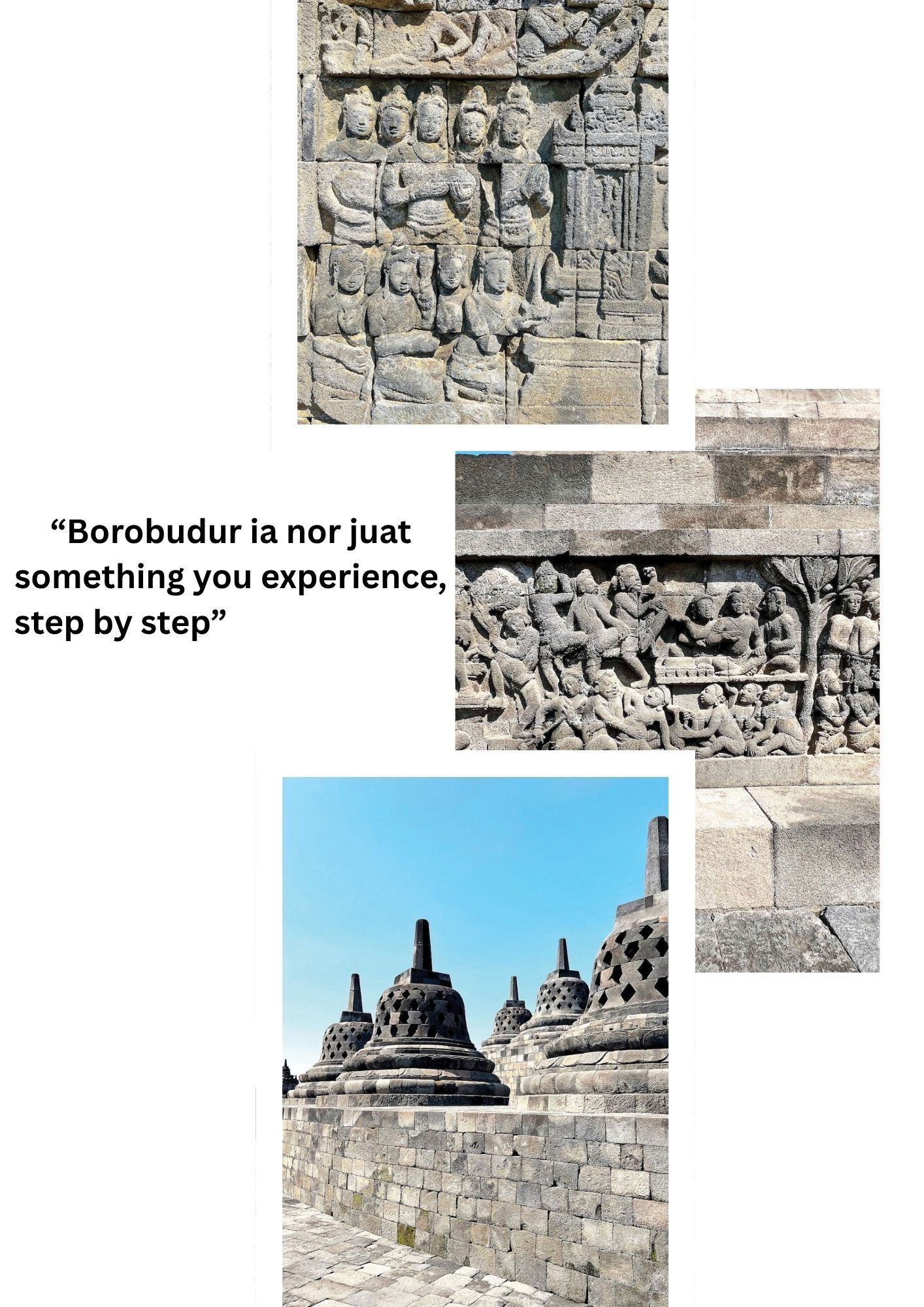
“Borobudur is not just something you see,” our guide says quietly. “It is something you experience—step by step.”
And so, the ascent begins, not hurried or casual, but deliberate.
Borobudur reveals itself not in a single glance, but in layers that unfold gradually as you move.
The structure is a vast mandala, its design reflecting the Buddhist path toward enlightenment, yet its meaning is best understood through experience rather than explanation. At the base lies Kamadhatu, the realm of desire, where a small exposed section reveals carvings that depict human behavior in its rawest form—scenes of indulgence, consequence, and moral struggle that feel strikingly relevant even today.
As the path rises into Rupadhatu, the experience shifts into something quieter and more contemplative. Five square terraces open into corridors lined with intricate bas-reliefs narrating the life and teachings of the Buddha. With fewer visitors allowed at any given time, there is space to linger, to observe, and to absorb details that might once have been overlooked—the softness of carved expressions, the rhythm of repeating motifs, and the subtle play of light across stone.
At the highest level, Arupadhatu unfolds into three circular terraces lined with perforated stupas, each sheltering a seated Buddha in meditation. The architecture becomes simpler and more open, guiding the mind toward clarity as the surroundings grow quieter and more expansive. The atmosphere here feels lighter, almost intangible, as if the structure itself is encouraging stillness.
“Nirvana is not a destination,” the guide adds. “It is awareness. And sometimes, it begins in silence.”
At the center stands the main stupa, closed and inaccessible, its emptiness still debated by historians. Whether it once held a statue or was always void remains uncertain, yet standing before it, the question feels less important than the experience itself. In this space, not knowing becomes part of understanding.
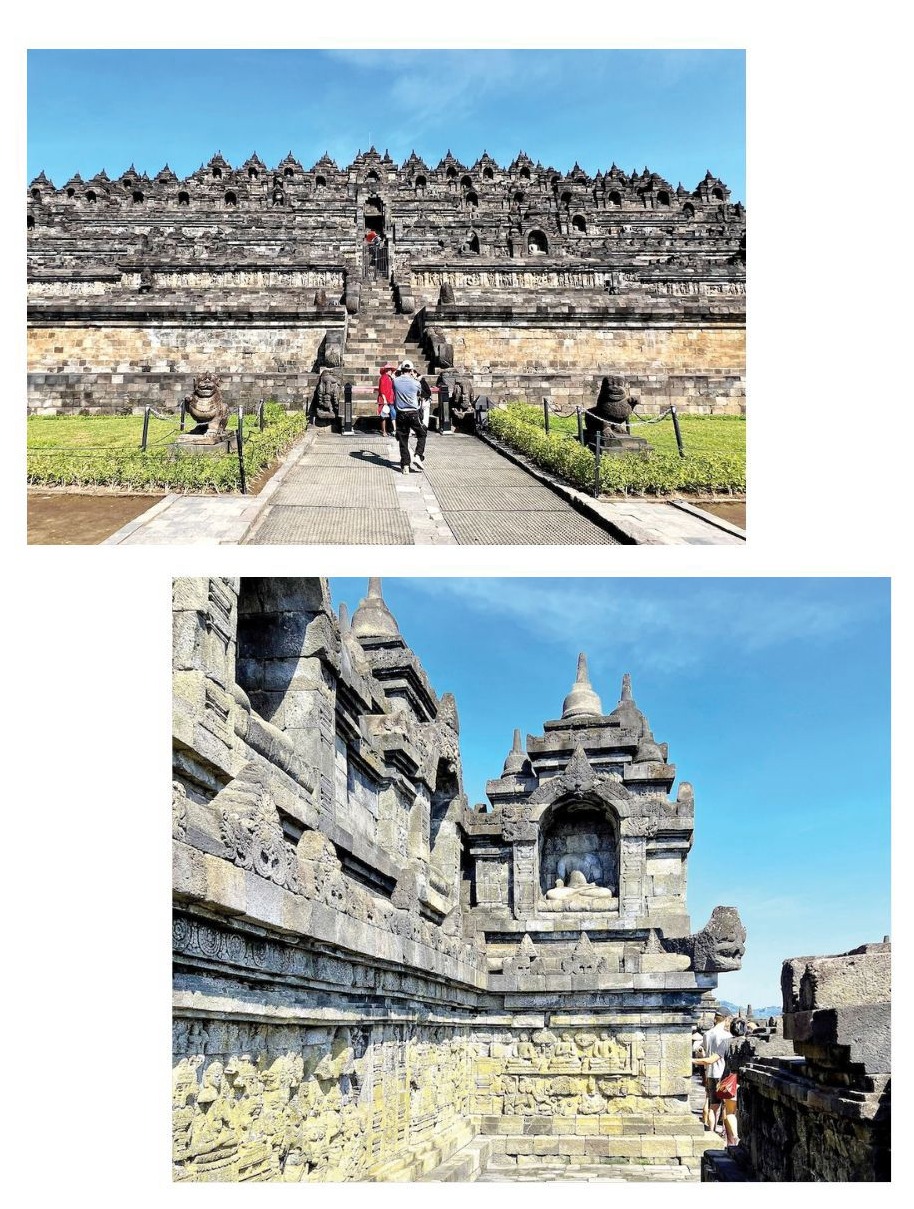
Returning to Borobudur today reveals a deeper commitment not only to tourism but to stewardship and sustainability.
In recent years, Indonesia has implemented stricter conservation measures to ensure the temple’s longevity. Daily visitor limits, guided access, and the introduction of protective footwear are all part of a broader effort to safeguard the site. These are not inconveniences, but necessary acts of care that reflect a growing respect for heritage preservation.
The difference is immediately felt. Without the overwhelming presence of crowds, the temple regains its rhythm, allowing each step to feel more personal and each moment more present. Visitors are no longer rushing through the experience, but engaging with it in a more meaningful way.
The marks of history remain visible, particularly in the headless Buddha statues that bear silent witness to centuries of looting during colonial periods. These absences are not hidden; instead, they serve as reminders of the temple’s long and complex journey through time.
Borobudur has endured volcanic eruptions, earthquakes, abandonment, and rediscovery. Once buried beneath ash and jungle, it was eventually restored through global efforts, emerging not as a relic of the past, but as a living monument to resilience.
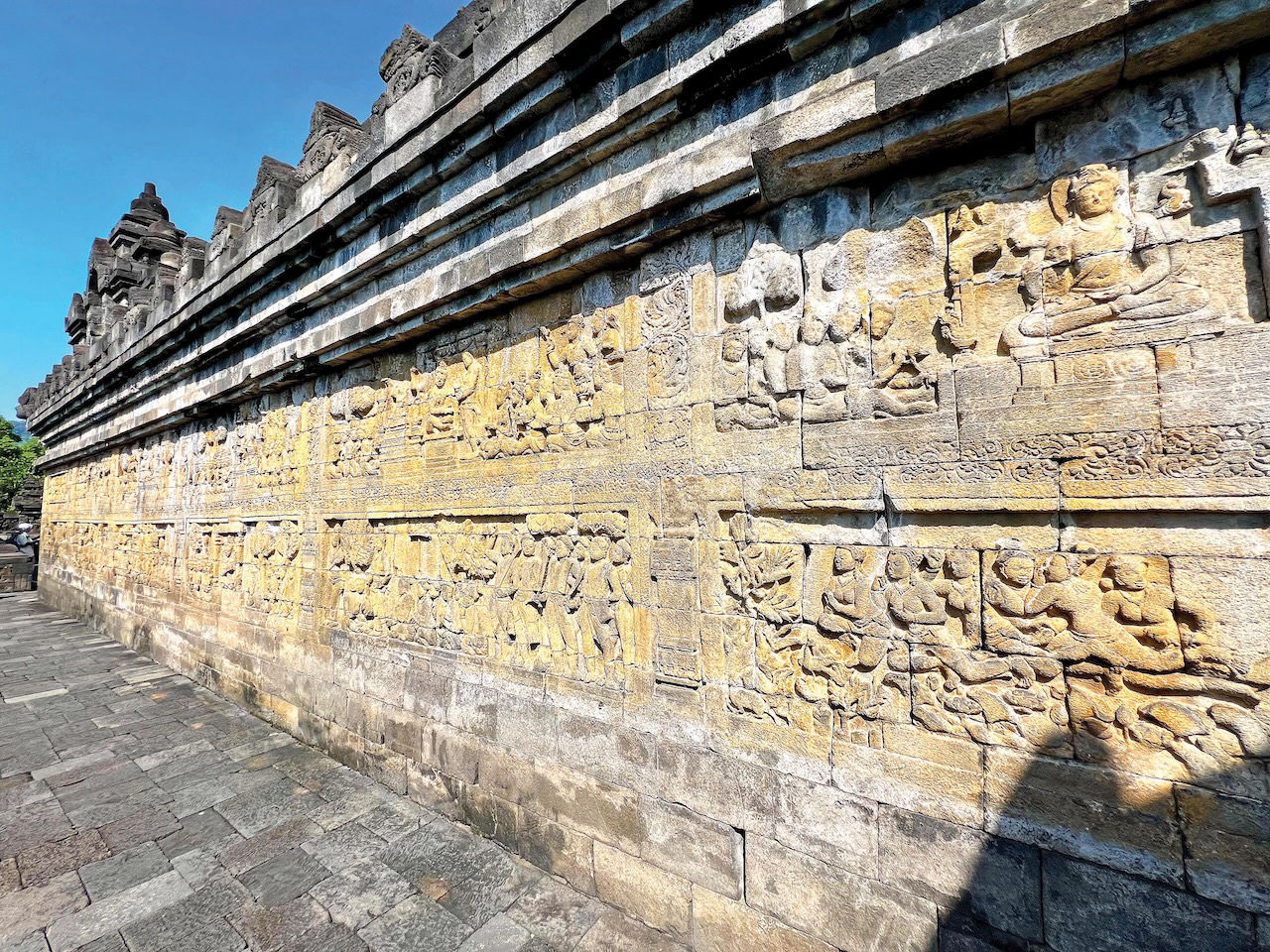
To fully understand Borobudur, one must look beyond its stone walls and into the surrounding landscape.
The temple is part of a sacred alignment that includes Mendut Temple and Pawon Temple, forming a straight line that reflects an ancient spiritual journey. This path continues to be followed by pilgrims, particularly during Vesak, and has seen renewed interest among travelers seeking deeper meaning in their journeys.
At Mendut, an active monastery sustains a living spiritual tradition, while Pawon offers a quieter, more mysterious presence with its empty chamber. Together, these sites frame Borobudur as the culmination of a journey rather than a standalone destination.
Walking this route today is not simply about covering distance, but about experiencing a sense of continuity—of moving through history, spirituality, and self-reflection all at once.
In a world where wellness is often defined by luxury and curated experiences, Borobudur offers something far more essential: the opportunity to be still.
The region of Magelang has begun to embrace this shift, with boutique stays and eco-conscious retreats offering programs centered on mindfulness, meditation, and slow travel. These experiences complement the temple, but they do not define it.
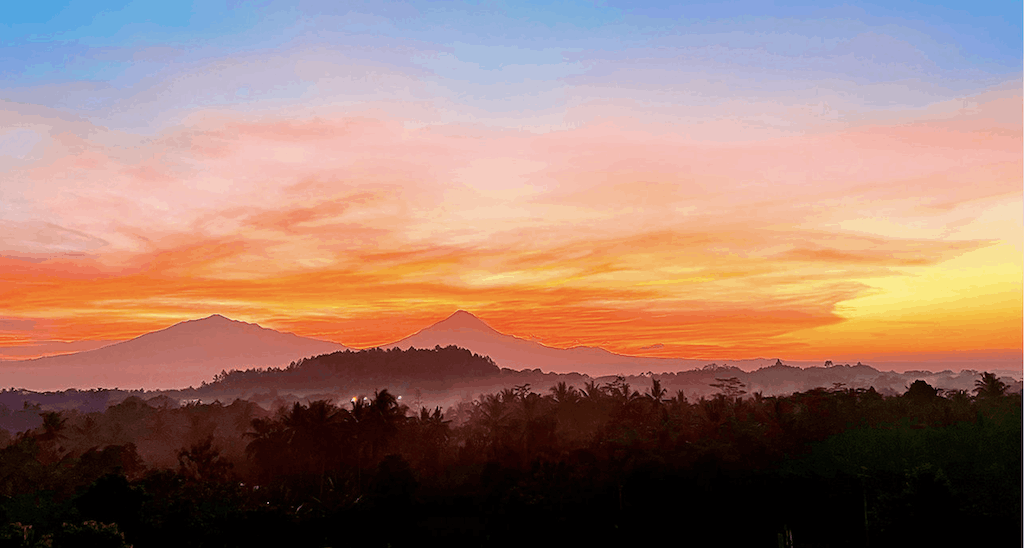
Nearby, Bukit Rhema (Chicken Church) provides a different kind of perspective. From its hilltop vantage point, Borobudur appears distant yet commanding, reminding visitors that sometimes clarity comes from stepping back rather than moving closer.
Yet even without these additions, Borobudur itself remains the most profound expression of wellness. There are no prescribed activities or structured outcomes—only the quiet invitation to be present, to observe, and to reflect.
As the descent begins, the realization settles gradually rather than arriving all at once.
Returning to Borobudur is not about discovering something new, but about seeing with new awareness. The temple remains unchanged in its essence, yet the experience of it evolves with time. What once inspired awe now invites reflection, and what once felt grand now feels deeply personal.
Borobudur does not overwhelm with answers; instead, it creates space for understanding. In that space, something shifts, not dramatically, but enough to leave a lasting impression.
In a world that rarely slows down, Borobudur provides a rare gift: the chance to pause, breathe, and just be.

Offline Website Creator