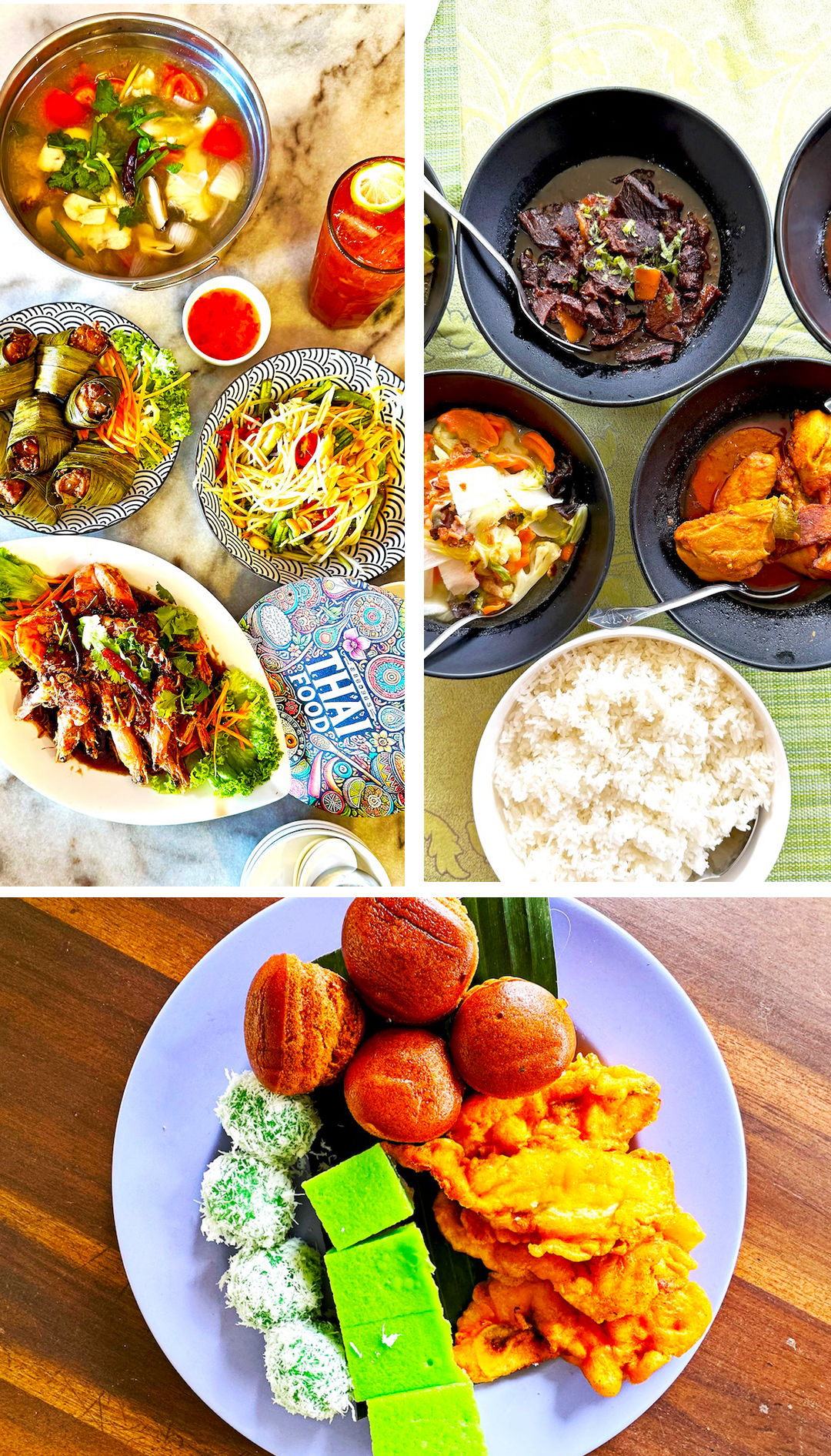
Brunei's cuisine is a flavorful blend of Malay, Chinese, and indigenous influences- a true melting pot of Southeast Asia on every plate.
Uncover Brunei’s layered luxury, a nation where reverence and rainforest live side by side.
Brunei isn’t always loud about what it has—many times, it lets the rainforest do the talking. In this tiny, oil-rich kingdom on Borneo’s thriving northern edge, true luxury isn’t flashy cars or infinity pools (though you’ll find those too); it’s the hush of ancient jungle pressing in, the glint of sunlight off gilded mosque domes, the patient rhythm of a country unhurried by the world’s race to consume. Here, sustainability and beauty are braided into faith, into the way people live and pray and protect what’s green.
Our Brunei adventure began between 30,000 and 40,000 feet above the ground, on the approximately two-and-a-half hour flight from Manila to the neighboring Southeast Asian country. Onboard Royal Brunei Airlines, the service was seamless and sincere. No over-the-top theatrics, no forced smiles—just friendly, understated, intuitive hospitality that felt real.
Turns out, that’s by design. The airline has been named “World’s Leading Cabin Crew” for the fifth year running by the World Travel Awards, with the latest honor handed out in Madeira in late 2024. The recognition spotlights their “Ikhlas from the Heart” philosophy, which isn’t just branding—it’s a cultural code that actually shows up in quiet efficiency with a human touch.
That attention to detail extends beyond the typical service moments (smooth, thoughtful, and respectfully paced, overall). The cabin itself felt well-maintained enough and calming, free from the usual announcements—overkill that can jar a short-haul experience.
The sense of authenticity and care didn’t stop at the jet bridge. In fact, it set the tone for what we would come to experience in Brunei itself, where we were first greeted by Freme Tours’ Mr. Zulkefli (Zul, for short)—smiling-faced and eager to serve, ready to show off his beloved country as our main guide on the trip.
The stay at the Radisson Hotel Brunei Darussalam picked up right where the flight left off: polished, low-key, and dialed in. Located just 11 minutes from the Brunei International Airport and a stone’s throw to the capital’s marquee sights, the hotel feels both effortlessly accessible and surprisingly secluded. Here, we were warmly received by Miriam Wolber, General Manager at Radisson Hotel Brunei Darussalam, and Paula Munoz, the hotel’s Director of Sales and Marketing.
Known as a business hotel, the Radisson Brunei wears its corporate chops well and leans into functionality—but it also throws a pleasant curveball: it's wrapped in its own patch of rainforest—a fitting first impression of Brunei’s lush, tropical character. From the pool, you can look out at the treetops and almost forget you're in the middle of the city. It’s Brunei in a nutshell—lush, layered, and alternately laidback or lavish in luxury.
What sets the Radisson apart is its clear, intentional focus on sustainability. Motion-sensor lighting in restrooms and hallways, filtered water stations on every floor, and a commitment to the Hotel Sustainability Basics framework aren’t just window dressing—they’re integrated into the property without being preachy about it. It’s a refreshingly no-nonsense approach to eco-conscious hospitality that still feels comfortable. The rooms follow that same ethos—streamlined and straightforward, but not short on comfort. There’s nothing flashy here, and that’s the point. Everything you need, nothing you don’t. Clean design, good lighting, a bed that actually delivers on sleep—you’re set.
Food-wise, the hotel more than holds its own. Breakfasts at Tasek Brasserie are generous and varied, with enough options to start your day on the right foot, whether you prefer local, Western, or plant-based (vegetarians and vegans are not an afterthought, mind you). Later in the day, you can go casual with à la carte or opt for something spiced and satisfying at Riwaz, the hotel’s Indian restaurant. It’s a welcome surprise to find food this thoughtfully done in a property that also knows how to keep things efficient.
Brunei's cuisine is a flavorful blend of Malay, Chinese, and indigenous influences- a true melting pot of Southeast Asia on every plate.
Leaving the Radisson’s calm, corporate-chic comfort behind, we set out with Freme Tours for an entirely different kind of immersion. Freme’s youthful team member, Kalmey, took the wheel as we crossed the Sultan Haji Omar ‘Ali Saifuddien Bridge—more commonly known as the Temburong Bridge—a striking 30-kilometre dual-carriageway that holds the title of the longest bridge in Southeast Asia. It connects Brunei’s mainland to its semi-exclave of Temburong District, a region renowned for its pristine rainforest.
Brunei remains a remarkable natural sanctuary. Despite rapid development in much of Southeast Asia, about 70% to 75% of the country remains covered in lush forest, with very little industrial or manufacturing activity to disrupt its delicate ecosystems. This makes it one of the region’s best-preserved pockets of biodiversity—home to ancient trees, exotic wildlife, and ecosystems that have thrived for millennia.
At Brunei’s Rainforest Sanctuary, the smell of damp earth rises from beneath a mossy carpet and the crush of fallen leaves; the air pulses with the orchestrated trill of myriad bird species; flourishing foliage saturates every corner of vision; crawling, slithering, climbing creatures move with quiet purpose; and Borneo’s Rajah Brooke's Birdwing butterflies flutter past like living brushstrokes. Edible trees. Medicinal leaves. Organic shapes. Menggaris trees that echo like drums when you strike them—a signal for help through the dense thicket and lush canopy. Water tucked in the long, woody stems of the liana vine. Plants that feed, heal, and protect—if you know how to read (and to treat) them. The Brunei rainforest has so much to say. Volumes and volumes, to be certain—if you know how to listen.
We spent half the day immersed in all this, guided by Amal and Qintana, part of the knowledgeable crew at Freme Rainforest Lodge. No urban noise and daily distractions—just the relaxing rhythm of the Temburong River and the cushioned crunch of forest underfoot. It’s wild how much calmer you get when you're surrounded by, well, the wild. In a nation steeped in faith, nature is a way of worship, a big dose of the divine.
Back on the road, we met up with the ever-amiable Zul and tucked into delightful Indonesian fare at Pondok Sari Wangi in Jerudong—serving bold, comforting dishes in Brunei since 1990. The perfect end to a day steeped in nature’s wonders.
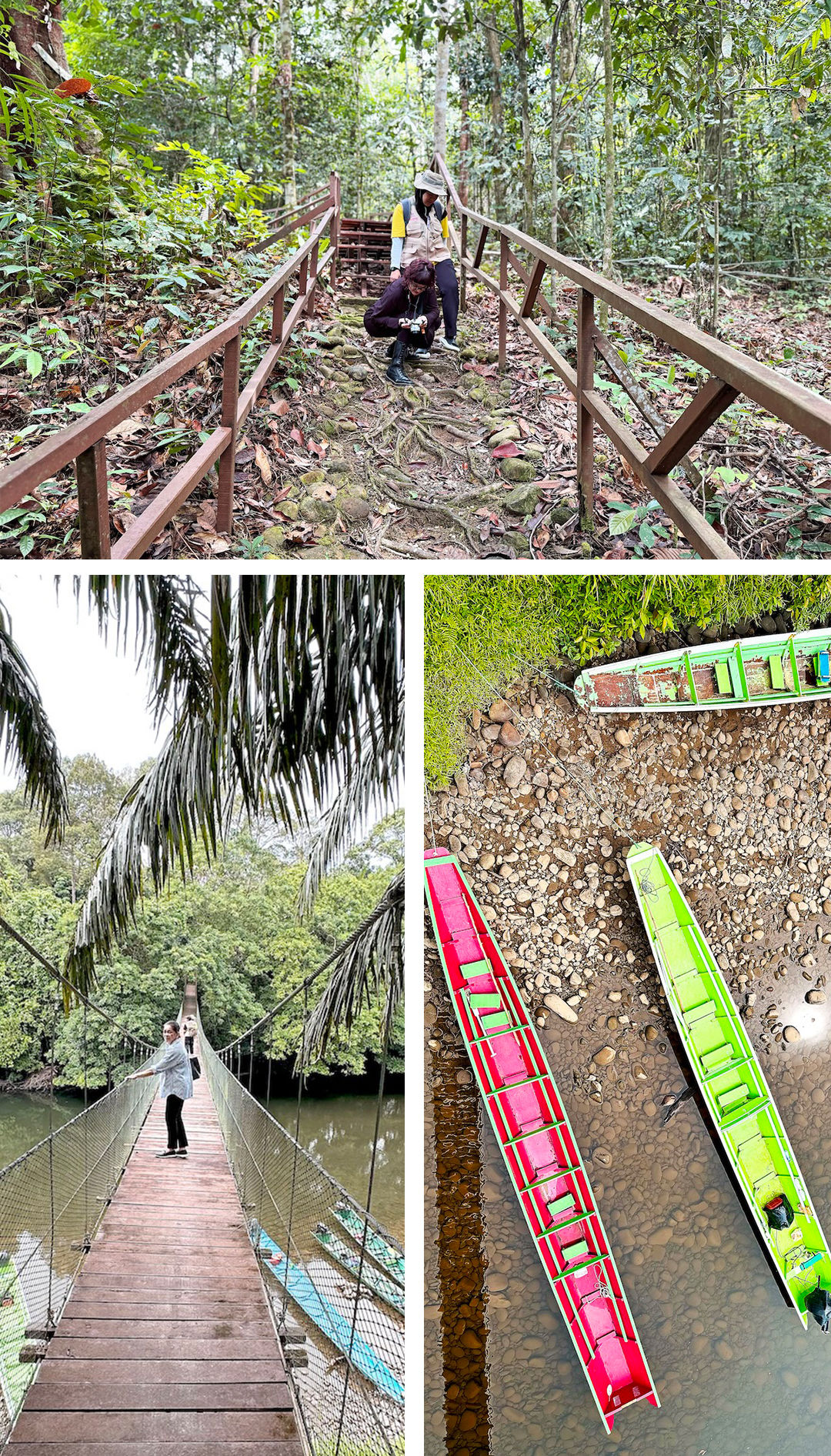
Scenes from Brunei's rainforest, where the lush canopy hums with life by the tranquil Temburong River
A city tour of Bandar Seri Begawan took us from mosques to markets—the next leg of our journey. After a mouthwatering meal at Restoran Makanan Thai Bess, a popular Thai restaurant in Jalan Batu Bersurat, our first stop was the Jame' Asr Hassanil Bolkiah Mosque, the largest place of worship in Brunei. With a capacity of 5,000 worshippers and crowned by 29 gleaming domes, it stands as a wakaf, or royal gift, from the 29th Sultan of this devout Muslim nation. This massive mosque is impressive enough by day. But by night? It is sheer drama, in golden glory. For this reason, we returned right in time for the last hour of prayer. It was quite the sublime, somewhat surreal spectacle. In the still of the balmy early evening, prayers echoed throughout the city and forest canopy alike—as they do five times throughout the day, each one a call to fervent faith.
Not far off, in the quieter west of the capital, we visited the iconic Omar Ali Saifuddien Mosque—known locally as the SOAS Mosque—named for the 28th Sultan, featuring 28 domes, and crowned with a 52-meter main minaret, with its 24-karat gold dome comprising 3.5 million pieces of real goldleaf Venetian mosaic tiles. Framed by a manmade lagoon, its elegant Mughal-inspired design makes it one of the region’s most photographed landmarks. Built in 1958, it remains a symbol of Brunei’s spiritual and architectural heritage.
Despite all this grandeur, Bruneians live simply, yet with a profound sense of contentment. The local markets—with their colorful stalls and families shopping and sharing meals together—are a living reminder that communal life continues to shape daily routines. Weekends in particular are a buzzing social affair, with people gathering not just for supplies, but also for company.
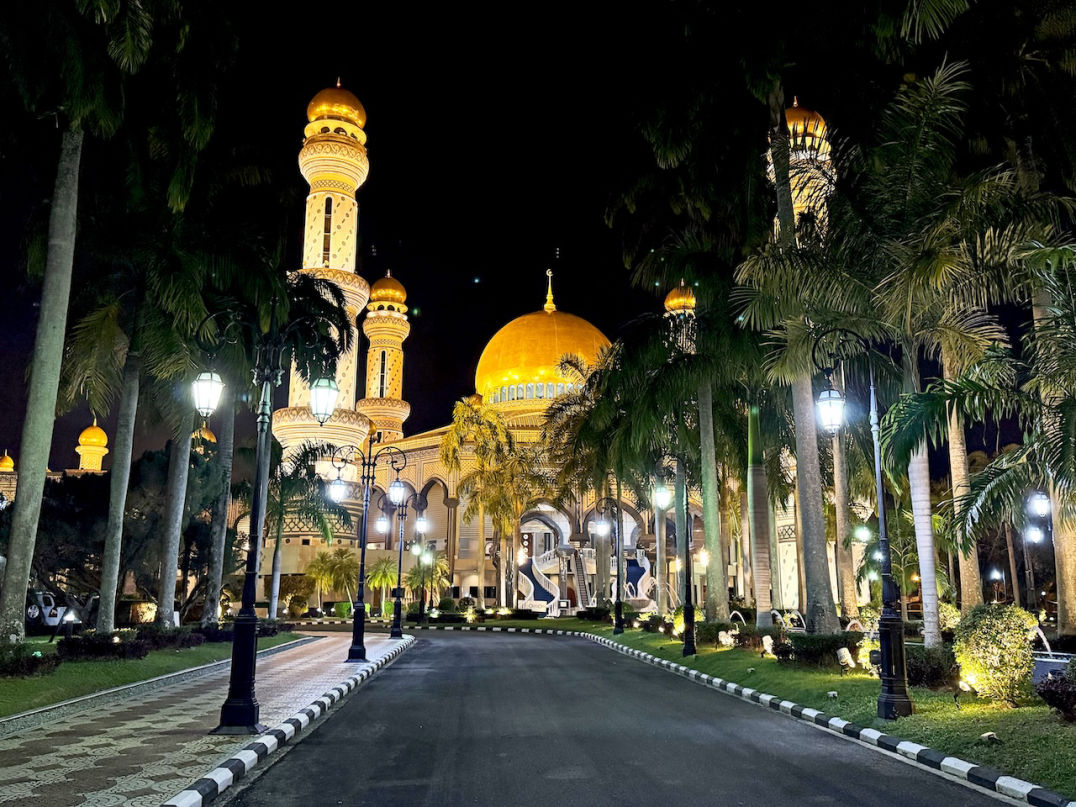
The Jame' Asr Hassanil Bolkiah Mosque Dazzles under the night sky
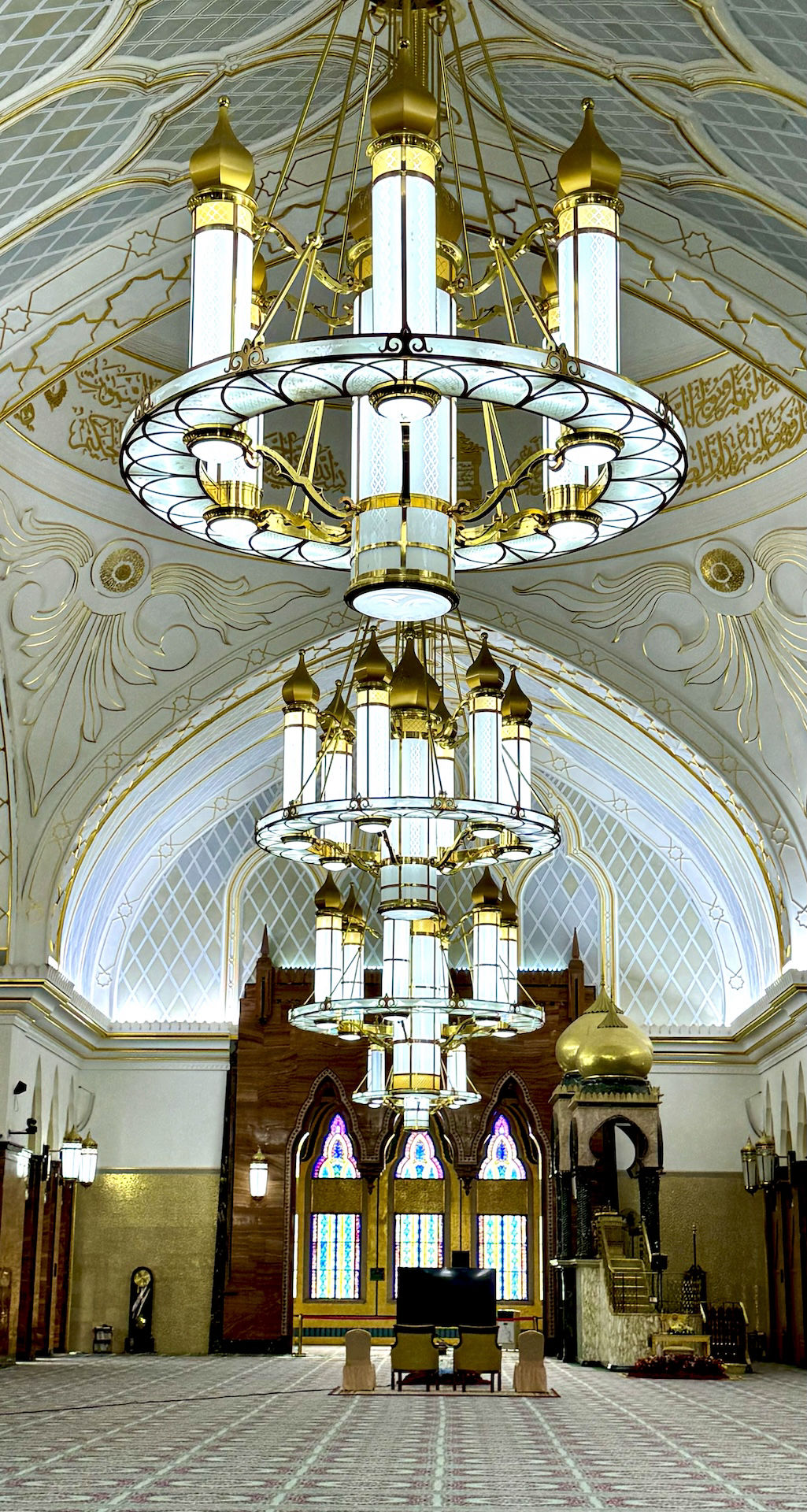
Inside the Omar Ali Saifuddien Mosque, intricate architecture and shimmering details create a serene sanctuary.
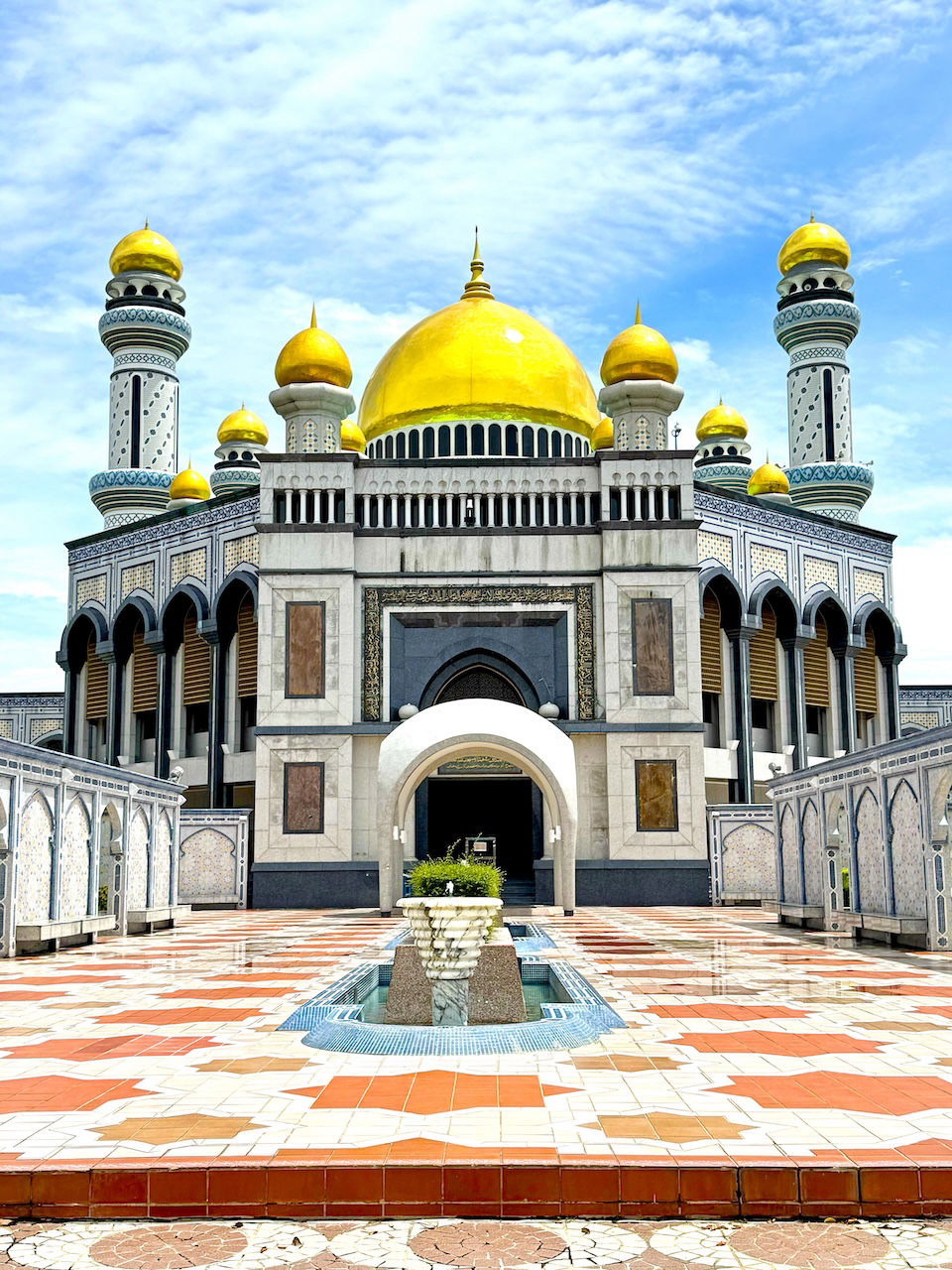
The Jame' Asr Hassanil Bolkiah Mosque is gilded symbol of Brunei's rich spiritual life
Before oil and gas transformed the economy, Brunei was a seafaring nation. The Maritime Museum in Kota Batu tells this story vividly, with recovered shipwreck relics from the 15th and 16th centuries and displays chronicling the country’s long-standing involvement in trade, fishing, and coastal living. Traditional boats and maritime tools reflect a time when Brunei’s prosperity came not from below the ground, but from the sea.
That legacy continues today in Kampong Ayer, the Water Village. Built on concrete and timber stilts over the Brunei River, it was once home to over 4,000 dwellings—though fewer remain now due to rising maintenance costs and urban migration. Still, the village supports a community of around 10,000 residents and maintains its own schools, mosques, a police post, and even a fire station. Many homes have been modernized, but the traditional way of life remains: tides are still read and anticipated, wood must be repaired regularly, and the close-knit nature of waterborne living endures. For Zul—once a long-time resident of the village—it was a heartfelt moment to speak to us about the enduring spirit of a place he called home for decades.
Dating back over a thousand years, Kampong Ayer is considered a national treasure—not just for its age, but for its subdued strength and robust resilience. It’s a living record of Brunei’s stalwart soul: deeply faithful, modestly modern, and anchored in its roots. In a world of constant reinvention, the Water Village remains a place where tradition is more than a matter of mere nostalgia—it’s daily life.
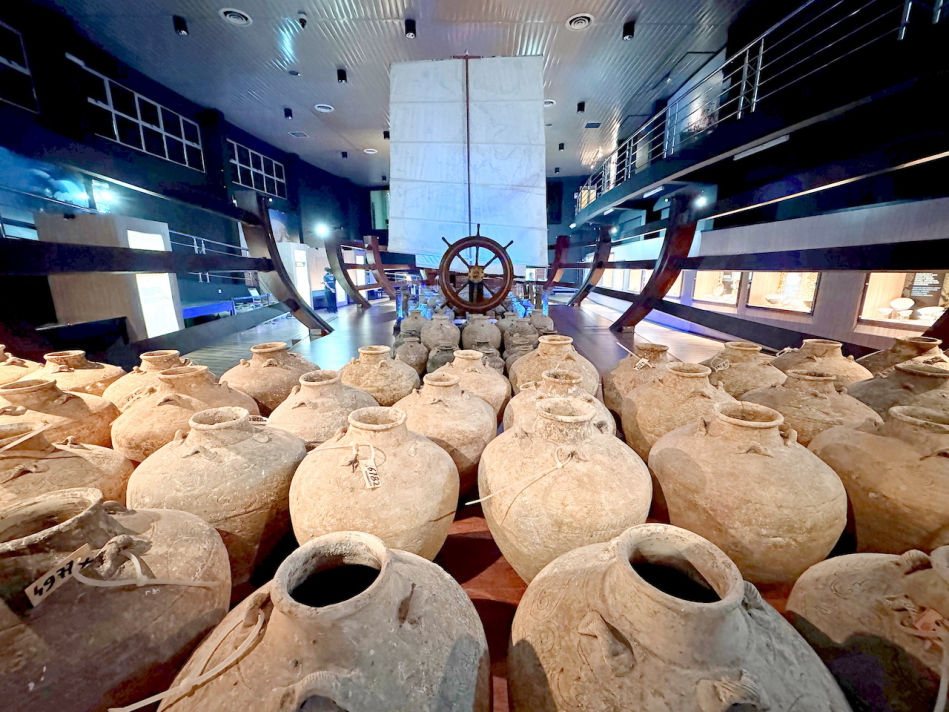
Ancient clay vessels recovered from sunken ships tell stories at the Maritime Museum
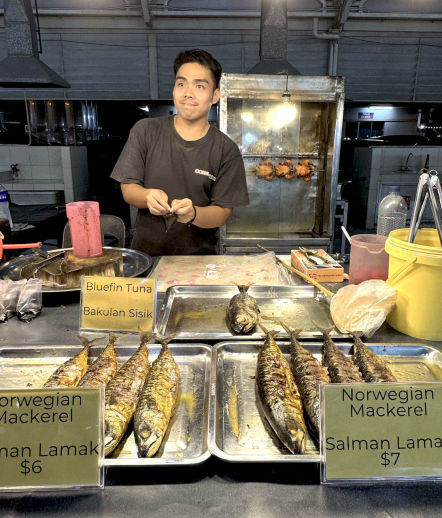
Brunei's marketplace pulse with the rhythms of daily life
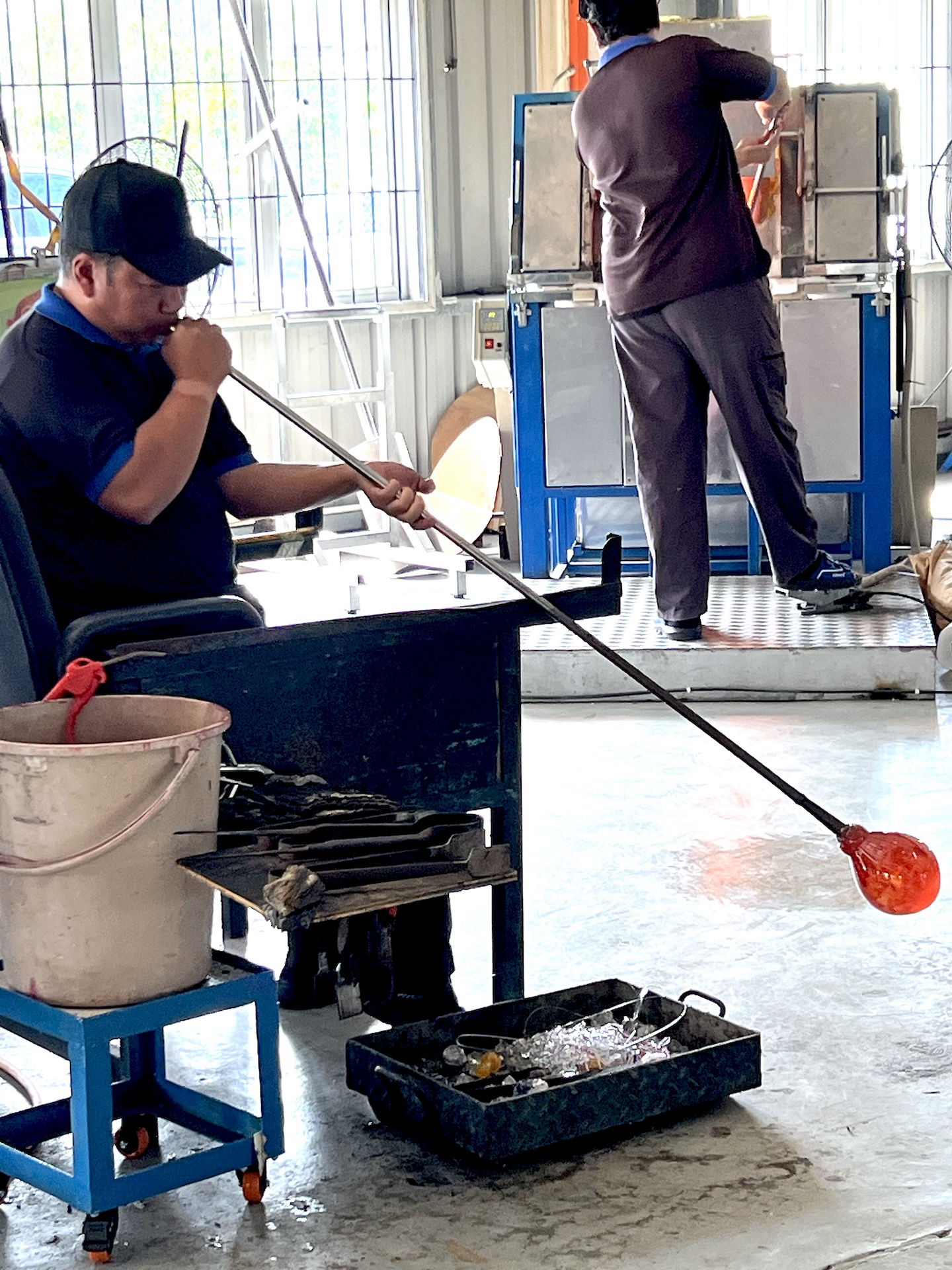
The delicate art of glassblowing comes alive at Artisan Abadi
After soaking up the sublime spirit of the Sultanate, we traveled to Melbourne, Australia for a few days before heading back to Brunei en route to Manila. Our final stop, The Empire Brunei, wasn’t just a place to rest overnight, it was a denouement. A sweeping, cinematic close to our hectic but gratifying journey.
Set on 180 hectares, the massive property boasts beachfront, forest, and manicured grounds. As we toured on board a golf cart, with convivial Filipina-Bruneian Fatin in the driver’s seat, a group of long-tailed macaques scurried across the golf course and swung from nearby branches—an unexpected and joyful highlight, as if the forest itself had come out to say, “Welcome back!”
With 522 rooms and suites (each one seemingly more opulent than the next), its own Jack Nicklaus-designed golf course, a movie house with three cinemas, a country club, and multiple pools, beaches, and dining spaces, the Empire doesn’t just wear its five-star badge—it inhabits it fully. But beyond the architecture and amenities, it was the gracious hospitality extended to us—warm, unobtrusive, and complete; hallmarks of the Bruneian way—that made our overnight stay feel less like a stopover and more like a deep breath. A perfect coda. A moment of stillness before our homeward flight. Maryani Sabtu, Director of Sales and Marketing at The Empire, who sat with us over coffee, personified this grace and generosity of spirit.
Before heading to the airport, we made one last detour—to Artisan Abadi (formerly Mahkota Crystal), Brunei’s only handcrafted glass studio. Since 2000, local artisans have shaped each piece by hand—formed through fire, breath, and years of quiet dedication. Delicate, purposeful, and deeply Bruneian, these glassworks aren’t just souvenirs—they’re small works of (he)art, carrying a little bit of the country home with you.
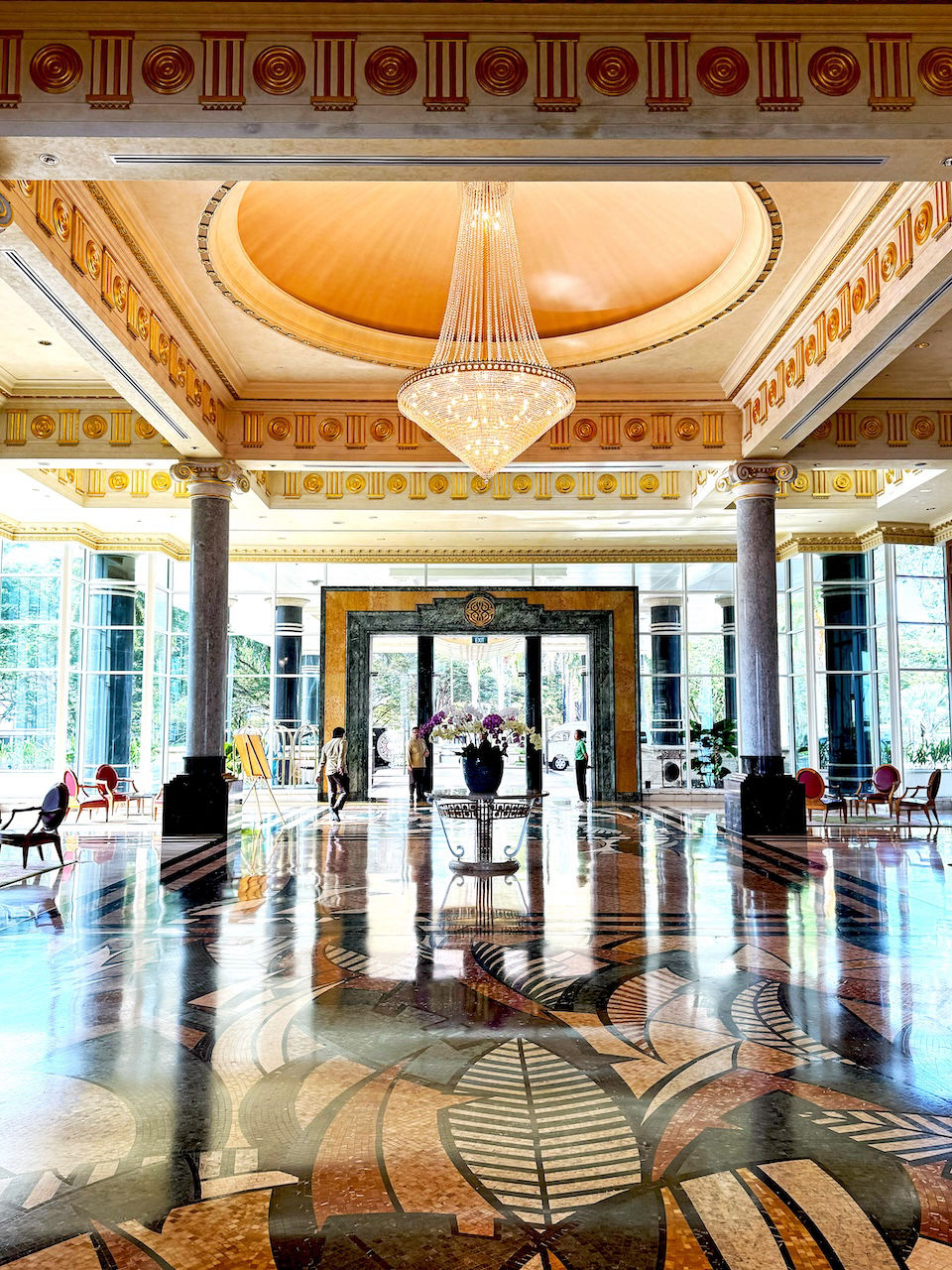
The Empire Hotel Brunei welcomes guests with its grand, stately lobby- a perfect blend of elegance and tradition.
This trip marked my third visit to the country, but it was the first time I came away with a newfound, niggling appreciation for it. Brunei lingers like rainforest mist—subtle yet unforgettable, slipping under your skin in unexpected ways. This isn’t a place you race through—it asks you to slow down, breathe deeper, listen. Here, true luxury isn’t measured in excess—it’s found in stillness, intention, and the sacred synchronies of nature. And if you let it, this green, gilded kingdom might just change the way you see the world.
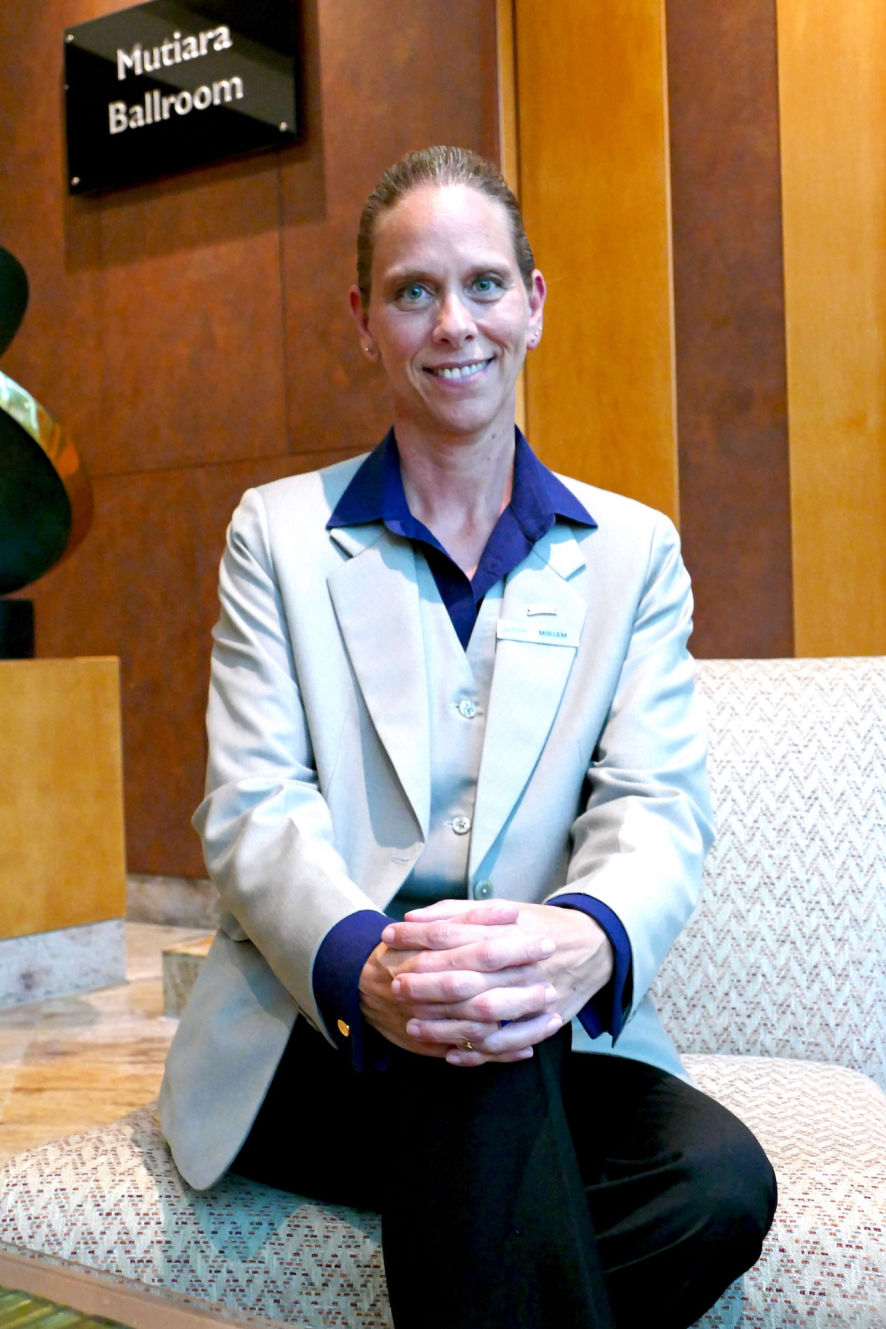
In a conversation with asianTraveler, Miriam Wolber, General Manager of Radisson Brunei, shared how the hotel balances sustainable practices with genuine hospitality.
“We see ourselves not just as a business hotel, but as an urban resort,” Wolber says. “Guests are in the heart of the city, yet look out from the pool into dense jungle. If you're lucky, you might even spot monkeys playing on the roof.”
Sustainability is a serious commitment for Radisson. “As part of the Radisson Hotel Group, we’re working towards Net Zero by 2050,” she explains. “Currently, that includes everything from wooden key cards and filtered water dispensers on guest floors to motion-sensor lighting in public areas.”
She adds: “When it comes to sustainability, we take it upon ourselves to lead by example—and educate,” she adds. “Change starts with the team.”
Indeed, training and passion are central to her approach. “You can’t teach hospitality without passion,” Wolber says. “Our staff may be shy at first, but with time and support, they grow into hosts who truly connect with our guests.”

Free AI Website Maker