Dinagat Islands: Strange Province No More

Emerging from obscurity, this province is here to wow!

As the year 2024 rolled in, the only remaining provinces I’ve yet to set foot on are Sulu, Apayao, and Dinagat Islands. I am familiar with the first two provinces because a few friends have called them their hometowns and have shared numerous stories about them with me. Apart from an infamous parricide case involving a member of a prominent family in the province that made headlines in the early 2000’s, my knowledge about Dinagat was limited to a fleeting suggestion from my friend Ariadne, who simply advised me to discover its beauty for myself. “I don’t want to be a spoiler, but you must see the island for yourself,” she told me.

The oddness of the province sparked a strong desire within me to discover it soon. I felt that I needed more information than what a Wikipedia entry or a few written travelogues about the province could provide me. As much as I yearn of visiting Sulu and Apayao soon, the strangeness of this island province grew on me.

But as the travel gods worked in mysterious ways, I suddenly found myself setting out on not one but two trips to Dinagat Islands in the last couple of months. As my trip to the province revealed, Dinagat Islands hid a captivating blend of history, natural wonders, and breathtaking landscapes behind its strangeness.  

DINAGAT ISLANDS DURING WORLD WAR II

Unbeknownst to me, Dinagat Island is a setting to one of history’s intriguing “what ifs.” Had General Douglas MacArthur chosen to disembark on the island on October 17, 1944, the province would have become the backdrop for a significant moment in the country’s history: the landing of General Douglas MacArthur and the allied forces, which signaled the start of the campaign to liberate the Philippines from Japanese occupation. As we all know, the landing would happen on Palo, Leyte, on October 20, 1944.

Three days before that, however, on October 17, 1944, the advanced landing force, consisting of Filipino and American forces led by Captain Robert Garrett and Colonel Henry Mucci, waded onto a stretch of beach fronting the waters of Leyte Gulf in the town of Loreto known as “Campintac Black Beach No. 2,” named after its World War II call sign “come intact.”

The Loreto landing was an important part of the Battle of Leyte towards the allied forces’ liberation of the Philippines from the Japanese, as it gave the liberators strategic sea positions that concluded with the defeat of the Japanese in the Battle of Surigao Strait.

Today, a 5-foot-tall memorial stands in the grounds of Campintac Beach Resort where we stayed for the night. The marker is engraved with a dedication honoring the landing on Loreto as an integral moment that helped open the passage of allied ships for the Battle of Leyte.  

Mobirise Website Builder

GIBUSONG QUINCENTENNIAL HISTORICAL MARKER

Fascinatingly, the marine-related historical events on Dinagat Islands extended beyond the October 17, 1944, landing on Loreto. Centuries ago, a fleet of ships had the privilege of sighting the province when the intrepid crew members of the Magellan-Elcano expedition sailed near the shores of Gibusong Island, one of the smaller islands that encircle Dinagat mainland.

The Magellan-Elcano Expedition was a Spanish expedition planned and led by Portuguese explorer Ferdinand Magellan. It departed Spain in 1519 with the goal of crossing the Atlantic and Pacific Ocean and opening a spice trading route with present-day Indonesia.

The expedition reached the Philippines, making a first landing on Homonhon, Samar, on March 16, 1521, before making another landing on the island of Limasawa in Leyte where the crew would spend a few days before celebrating what is believed to be the first mass in the Philippines on March 31, 1521.

Spanish navigator Juan Sebastian Elcano took the lead following Magellan’s death and steered the team’s return to Spain on September 6, 1522, after totaling more than 60,000 kilometers or an almost three-year voyage.

This historical marker on Gibusong Island was one of 34 commissioned and unveiled by the National Historical Commission of the Philippines between March and October 2021 to commemorate the 500-year anniversary of Magellan-Elcano’s first circumnavigation of the world in 1521.

Sketches from muralist Derrick Macutay, which reimagined the events of the voyage from the local’s point of view, served as the basis of the marble relief created by sculptors Jonas Roces and Francis Apiles and constituted the designs of some of the 34 quincentennial historical markers. 

Mobirise Website Builder

THE BLUE LAGOON IS LIKE A SCENE FROM A MOVIE

After a stop at the small port of Gibusong Island, we set our sights on Pangabangan Island. This petite islet is encircled by majestic karst formations, with a captivating tidal pool nestled at its heart, known to the locals as the Blue Lagoon.

Upon arrival, I was instantly captivated by the scenery, reminiscent of the stunning landscapes found in Coron and El Nido, Palawan. Like walking into a scene straight out of the movie ‘The Beach,’ I told myself that this is the kind of places I imagine Dinagat province to be. Mesmerizing yet unfiltered.
After spending nearly an hour perfecting my freestyle strokes in the swimmable areas of the lagoon, I ascended to the makeshift view deck to fully appreciate the breathtaking scenery and relish in the moment. Our stay here concluded with a hearty lunch feast and more conversation about Dinagat’s history, as shared by one of the Dinagat Islands Tourism and Cultural Office staff. 

Mobirise Website Builder

THE UNCANNY APPEAL OF LORETO’S PYGMY FOREST

A unique natural feature at the summit of Mount Redondo in Loreto can be found: a forest that is unparalleled in the Philippines, with the exception of Mount Hamiguitan in Davao Oriental.

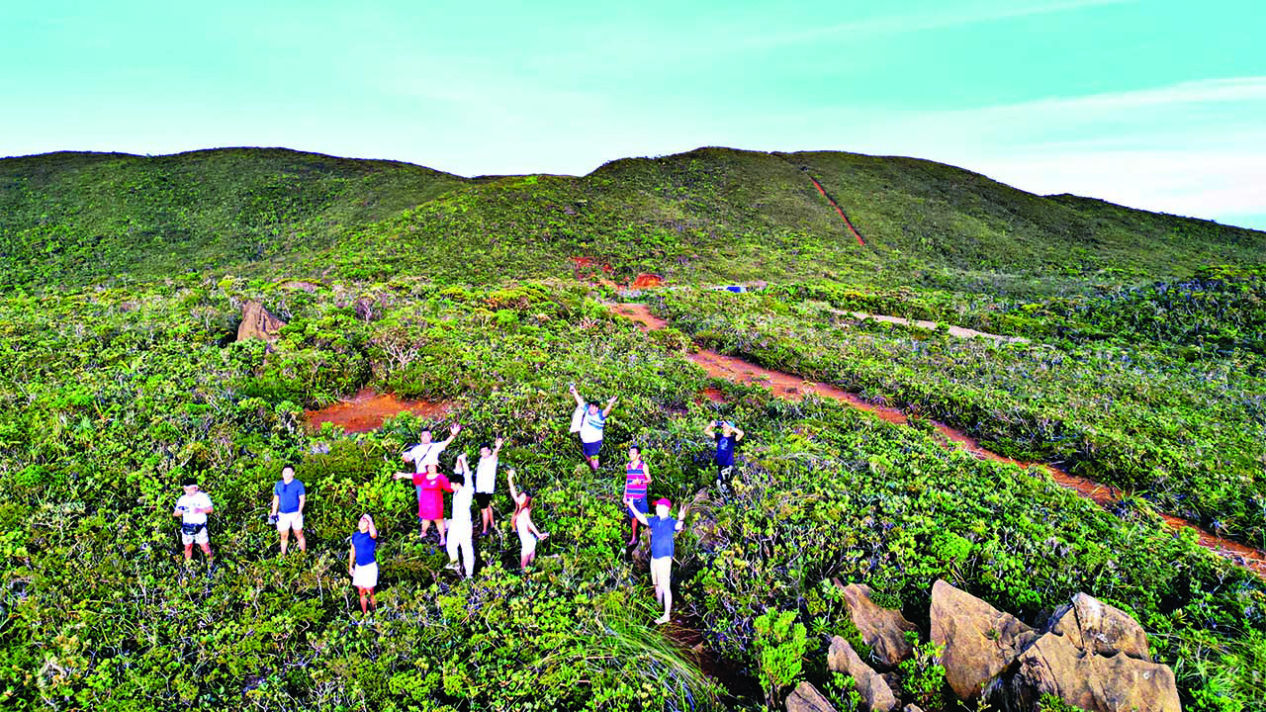
Primarily composed of bonsai trees, this pygmy forest, also referred to as elfin and dwarf forest, spans hundreds of hectares and boasts huge ecotourism potential. As you make your way through a rough mining road aboard a 4x4 truck, you will encounter a huge open-pit mining site—a relic from a chromite mining firm that ceased operations some thirty years ago.

This road bears witness to the abuse the mountain has endured since the province’s designation as a mineral reserve area open for mining in 1939. Although some nickel mining remains in operation in the province, the now defunct mining areas surrounding the pygmy forest could serve as another eco-tourism attraction where visitors can learn more about mining’s ecological effects.

The hundreds of hectares of bonsai forest, which have already been designated as Key Biodiversity Areas (KBAs), are up for designation as a protected area and a tourism destination according to a legislation that has been introduced and is currently awaiting passage in the Congress.

Arriving just moments before sunset, the scenery became even more astounding as the last rays of sunlight filtered through the vibrant foliage of the small trees. We stood there, taking in the incredible sight of the vast sea of clouds and the seemingly endless stretch of bonsai trees.

Mobirise Website Builder

Image with Description

San Jose, the capital of the Dinagat Islands, is the most accessible, having port connections with Surigao City. Unlike my first visit to the province, where we took a chartered speedboat from Hinunduyan, Southern Leyte, to Loreto, my second visit began here via a ferry boat from Surigao Port. Shortly after leaving my belongings at Vine’s Bed and Breakfast, my tour guide Al and I met our two boatmen at the resort’s jetty and began our day of island-hopping exploration.

Mere minutes into our boat ride, the long white sandy shores of San Jose arrested my attention. Amidst the rocky islets and lush green mountains, it’s easy to overlook the province’s declaration as a mineral reserve area, which allowed mining companies to operate on the islands.

Keeping that fact in mind, it instilled in me a renewed sense of hope that once the province sheds its anonymity and gains recognition among travelers, tourism revenue will increase, thereby making it possible to put the province’s mining history in the past.

What better way to introduce Dinagat Islands to the world than the Blue Lagoon in Pangabangan Island, the Pygmy Forest in Loreto, among many others, and one of our destinations this morning, the mysterious Lake Bababu.

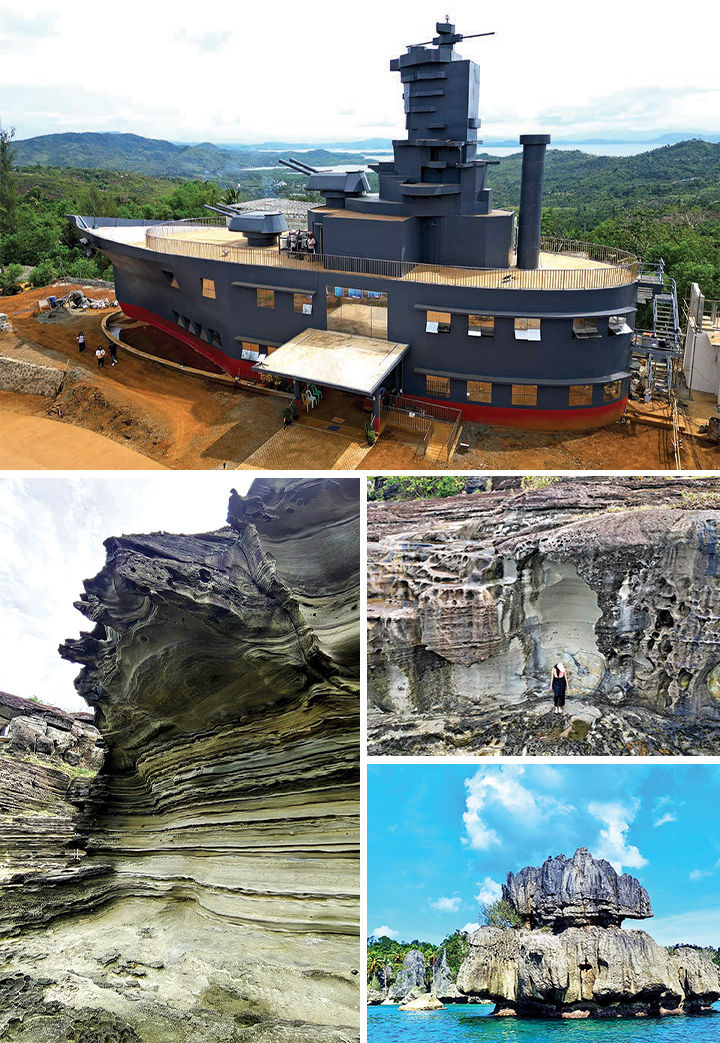
Along the course of our boat ride, we passed through the spectacular Hagakhak Rock Formation, which instantly brought to mind the rock formations of Biri, Samar. Despite being significantly smaller than the rock formations in Biri, the Hagakhak Rock Formation’s outer walls bear a striking resemblance. The rocky walls, made of sedimentary rock in a variety of shapes and forms, have patterns reminiscent of the moon, carved out by the ocean waves for thousands or even a million years.

Throughout the afternoon, we made brief stops at Cabacongan and Pagkawasan Beach, both of which provide rustic accommodations suitable for an island setting. If there is one attribute that distinguishes Dinagat from different locations in the country, it is its rawness. While I want tourism to grow in the province, I don’t want it to spiral out of control. Hopefully, this untouched natural beauty will continue to exist even when tourists in quest of more off-the-beaten-path locales starts visiting the province.
As the water beneath our boat became shallower, I began seeing the rich marine life and corals below, and not far ahead, the white sandy shores of Babas Cove grew more visible. After we finally docked, I wasted no time and jumped into the water.

Following a few laps, I rested on the sands and met a man who introduced himself as Mr. Ricardo Langit. He told me that since there were no land titles awarded to landowners back in the day, his family lay claim to the ownership of the property, which stretches to what he tells me, “Lake Bababu.” He further explained in Tagalog, “We only have a tax declaration to prove we own this land,” before he briefly explained what Lake Bababu looks like.

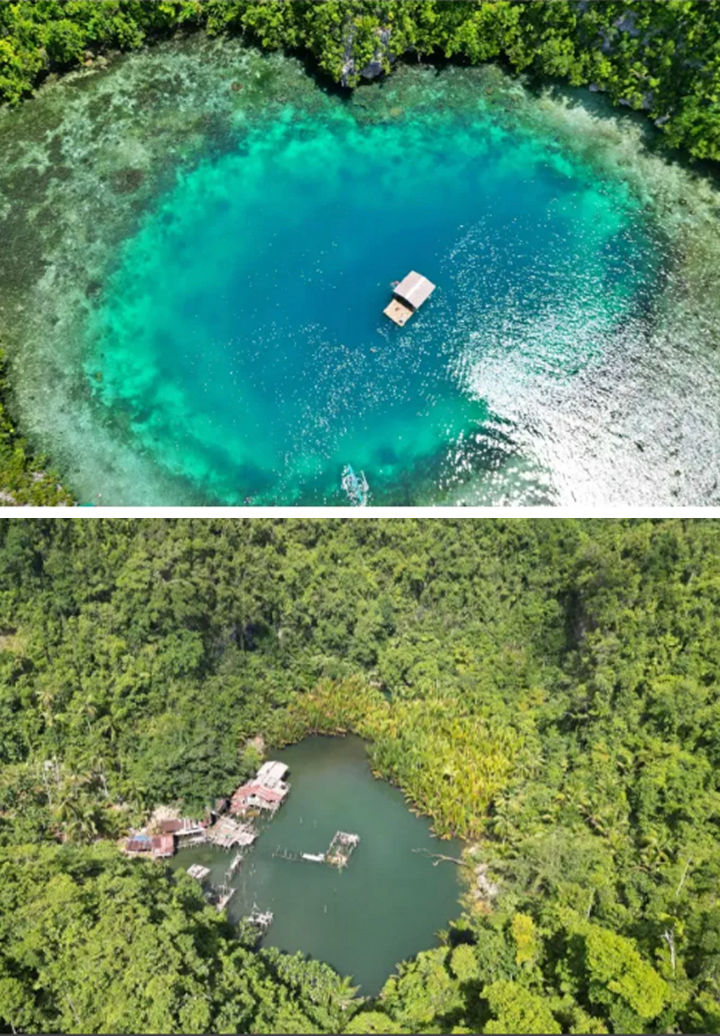
Since Mr. Langit informed me that hiking the lake and back would take a total of 2–3 hours, I decided to use my drone camera instead to capture a glimpse of it. Following his hand directions, I flew my drone toward a clearing of tall trees until it revealed a glimmering green body of water, almost spherical in shape and oozing with a peculiar vibe, right smack in the middle of the forest.

Despite Lake Bababu’s distance from Babas Cove, an underwater cave connects the two bodies of water, transforming Lake Bababu into a blend of sea and freshwater. A bill currently in the Senate advocates for the protection and promotion of Lake Bababu as a tourist destination, citing the lake’s 650-meter underground tunnel as the longest known submerged cave system in the Philippines. 

THE LAID-BACK REVELRY OF BUGKOSAN FESTIVAL

Coinciding with my return trip to Dinagat Islands is the celebration of this year’s Bugkosan Festival. This year’s Bugkosan, which means “to bind,” celebrates the 18th founding anniversary of Dinagat as a province.

After spending my first day island-hopping, I awoke at the first light the next day, excited to join the fray. As someone who has witnessed several Philippine festivals in different places before, I hyped myself, readying to body surf among a throng of crowds. My tour guide Al drove me on a brief habal-habal ride to the gathering stage by the port of San Jose, where we were pleasantly surprised by the sight of just about the right number of people.

Given the manageable crowd, I explained to Al how I could effortlessly wiggle myself into the action to capture photographs. He responds in Tagalog, “We have a small population, just over 100,000.” I nodded and explained to him the disparity in the sheer number of attendees at festivals such as Sinulog in Cebu. “I like this more laid-back festival,” I told him. 

Mobirise Website Builder

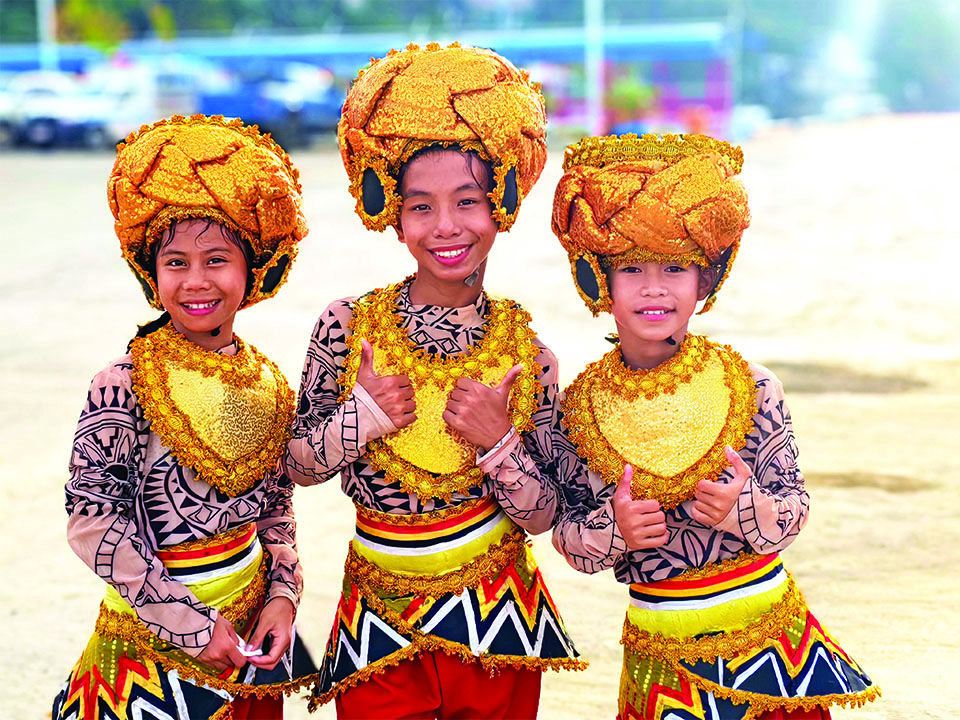
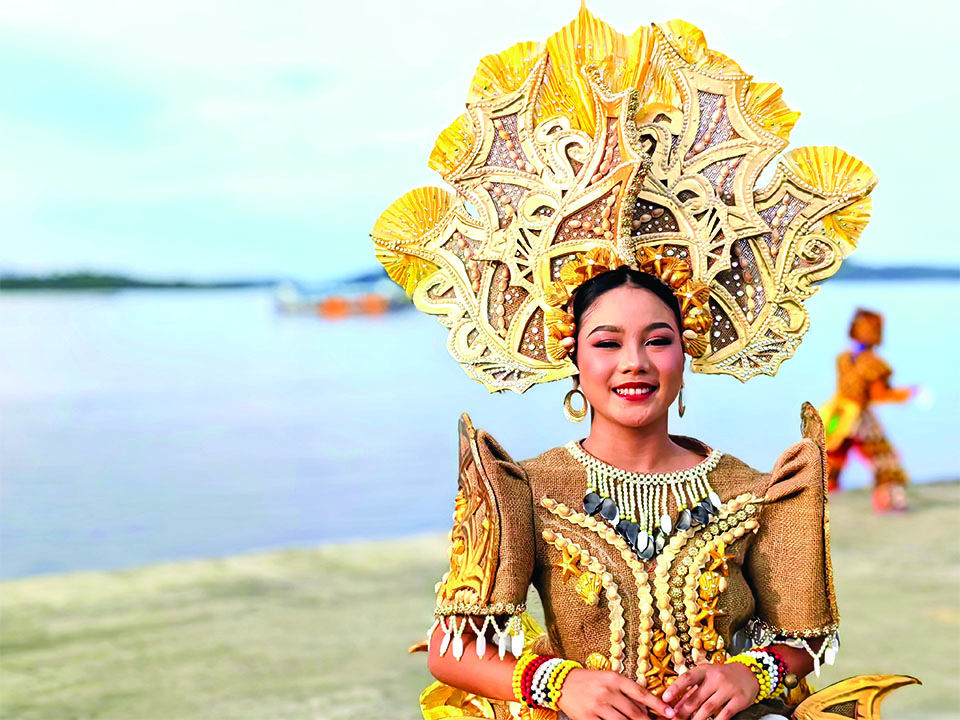
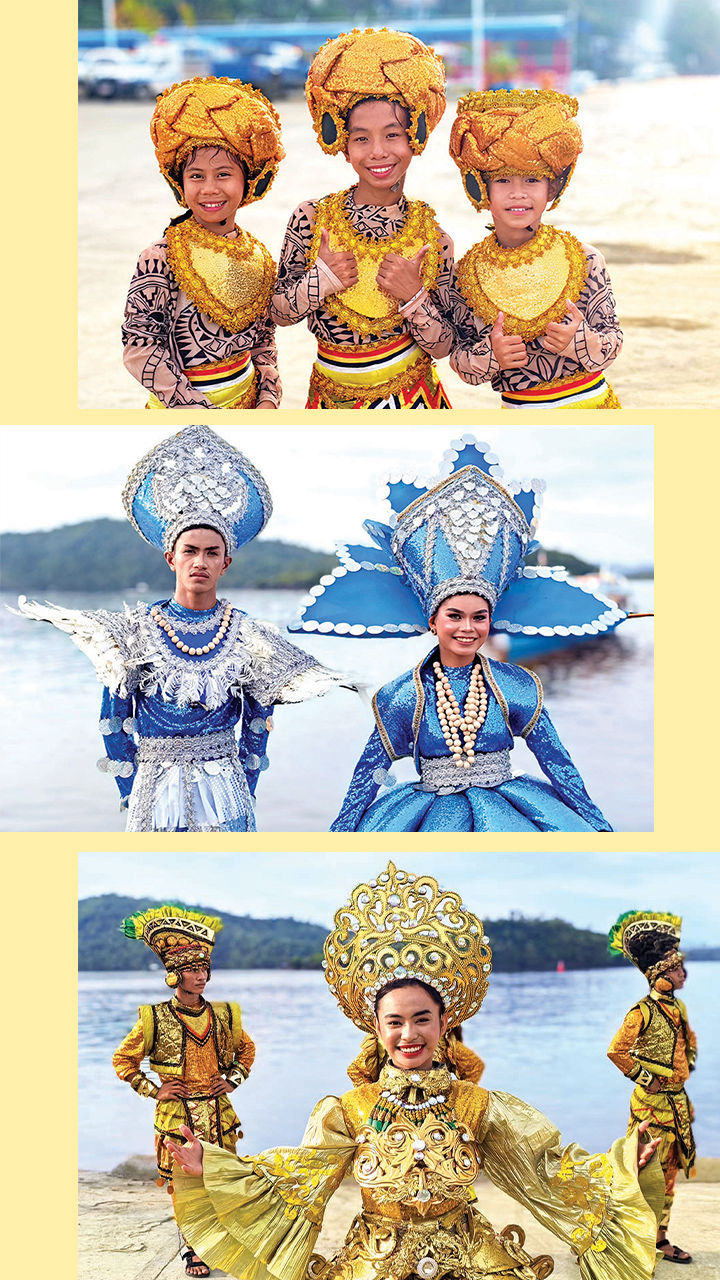
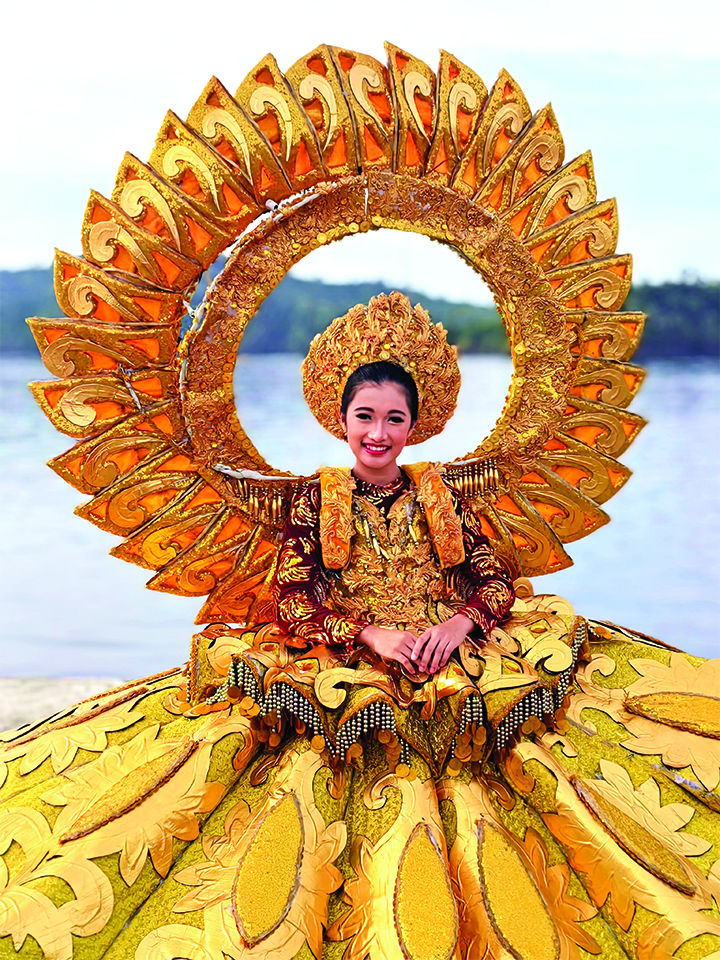
The festival featured mythical characters, Princess Dina and Prince Gat, children of two warring tribes who fell in love with each other. The Princess Dina and Prince Gat from each of the province’s seven municipalities then formed a circle to perform a ritual dance, signaling the start of the street dancing festivities.

The street dance snaked through the winding roads of San Jose until mid-morning, when the festival took a break for a reprieve from the scorching sun. As dusk approached, the drumming beats continued until the winners were announced. Lumad Kagjawnon from the municipality of Cagdinao won the stationary dance competition, while the contingent from Loreto won the street dance category.  

Mobirise Website Builder

BARELY LEAFING THROUGH THE PAGES OF DINAGAT

In my back-to-back visit to Dinagat Islands in a month’s time, I was able to transform the unfamiliarity of the province into lasting memories of the place. Having experienced exploring a whirlwind of intriguing attractions, and friendly encounters with the locals, it is clear that my exploration of the islands of Dinagat merely skimmed the surface of what it can offer to travelers.
Call it a fleeting look or a quick peek, I see Dinagat as a strange province no more. With the veil of peculiarity now lifted, it seems highly likely that I will be making numerous journeys to the islands of Dinagat in the near future. 

Subscribe to us

Exclusive offers in your inbox

HTML Maker