Peeling the Surface of Iloilo Province’s Nature, Culture and Heritage Trails

THERE’S SOMETHING ABOUT ILOILO THAT’S AS MELODIOUS AND SWEET AS ITS HILIGAYNON LANGUAGE.

Without fail, every trip I’ve undertaken to the province of Iloilo has turned out to be an unforgettable experience. Perhaps it’s because I feel a sense of belonging. Half of my roots came from the province of Iloilo, where my mother was born, specifically in Dumangas where she spent her formative years until the age of 16, when she, her seven siblings, and my grandparents relocated to Manila. Maybe it simply echoes my adventurous spirit, fulfilling my fondness for exhilarating journeys and my thirst for historical knowledge, as the entire province of Iloilo boasts a wealth of great outdoor sites and a diverse range of rich cultures.

Similar to how I would delight hearing the soft, spoken rhythm of Hiligaynon words, I find myself eagerly embracing the chance to wander to as many places as possible throughout the province.

And here I am again, out and about discovering both the known and hidden wonders of Iloilo. Since we’re starting our Iloilo rediscovery exploration in the islands of Sicogon and the Gigantes in Carles, we jetted off to Roxas City in Capiz, which cuts the distance in half compared to coming from Iloilo City. Our first destination is Sicogon Island.  

Mobirise Website Builder

Listening to the Huni of Nature in
Sicogon Island

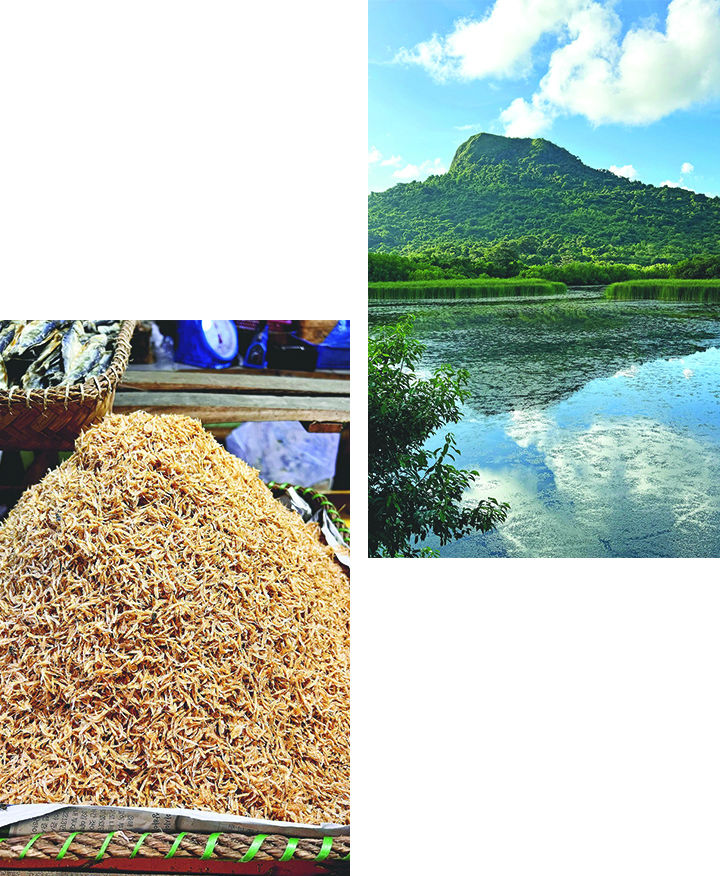
Aboard a van running at moderate speed, we reached the municipality of Estancia, the ideal jump-off point for Sicogon Island, an hour after leaving Roxas City Airport. As we waited for our speedboat at the port, I ventured into the fish market and marveled at the vast array of dried seafood being sold across numerous stalls. Our guide Melanie Ortega informed me that Estancia is renowned as the hub of commercial fishing in the country, drawing comparisons to Alaska in the early 1900s due to the extensive fishing activities in the area brought about by the large presence of marine life in the waters of Visayas Sea.

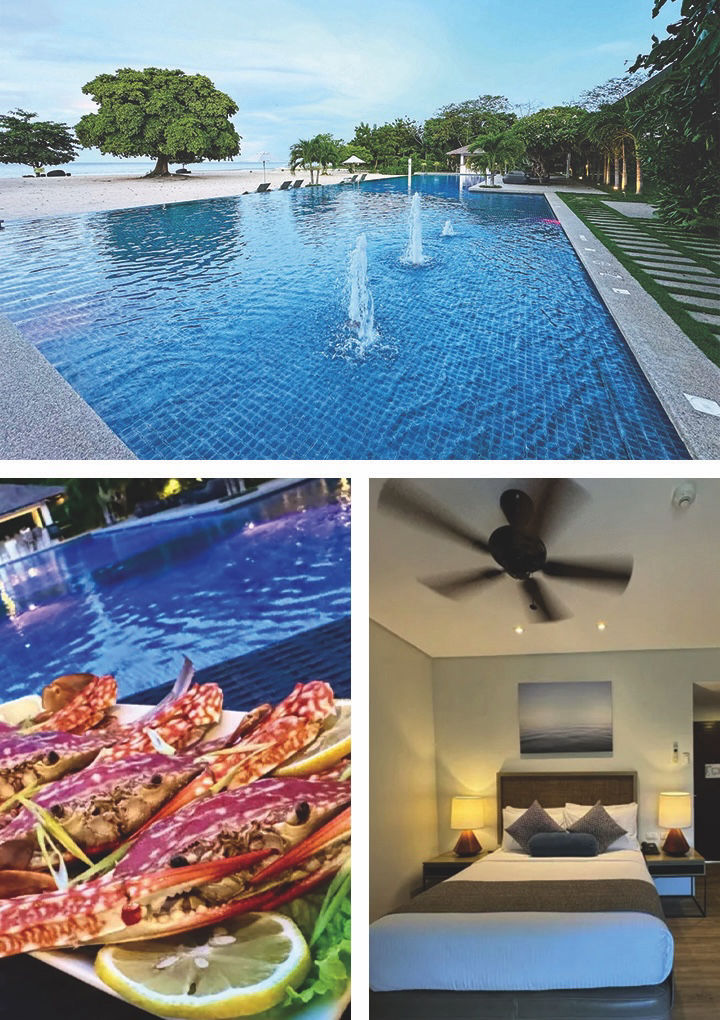
Less than an hour on speedboat later, we shifted from the busy fishing port of Estancia into the quiet and secluded setting of Sicogon Island where a short ride over land took us to our home for the night, Huni Sicogon.

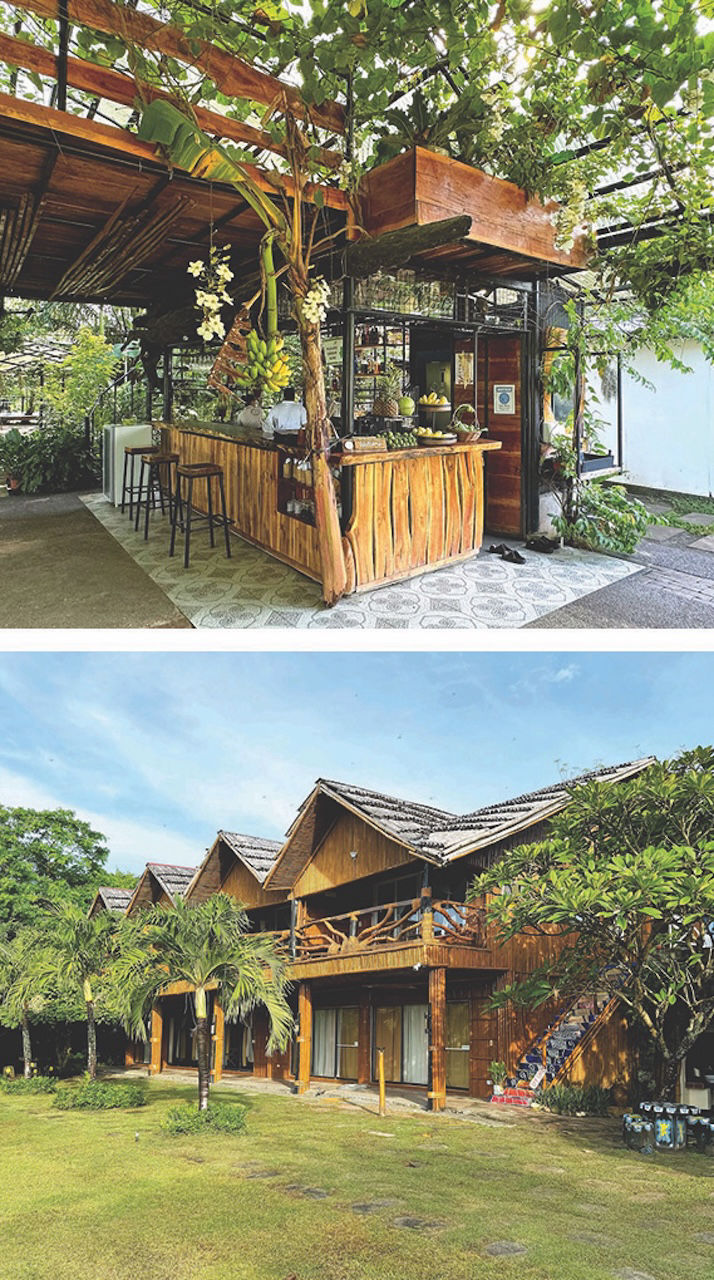
Featuring a spacious property laden with manicured lawns and gardens, a swimming pool, an outdoor bar, and a big shoreline, the resort spreads its 52 rooms on a 2-story building enveloped by the lush forest of the island and the majestic view of Mount Opao.

For those in search of tranquility, Huni Sicogon offers a serene escape, where the gentle sounds of nature create a soothing backdrop. Explore the picturesque landscapes, including a nature trail that guides you to a shimmering pond and the remnants of the island’s original resort. In Huni Sicogon, guests can immerse themselves in a world of yoga, meditation, and nature-inspired activities that invite deep connections with the surroundings.

Whether you’re a digital nomad, a business traveler, a vacationer, on a family holiday or with friends, and even for weddings and other special events, the isolated and pleasant vibe of Huni, like its name suggests, brings out the best humming melodies of mother nature.

Sicogon Island, based on my observation, is an ideal island for travelers looking for peace and quiet in nature. I envision the island’s major draws being those who enjoy yoga, meditation, and wilderness trips, which includes myself. This is why I particularly loved our brief hike through a mapped-out nature trail the next day, which led us to the remnants of a resort that operated on the island between the 1970s and early 1990s. The route also led to a scenic path that took us to a view deck, where we observed ducks floating on a glass-like pond as birds of various species flew against the backdrop of the 702-feet high Mount Opao.

Way before Boracay Island became popular, Sicogon Island was among the first islands to serve as a tropical playground for holidaymakers. If some accounts were to be believed, the island could have also played a role in one of the Philippines’ pop culture milestones, as a setting for actress Tetchie Agbayani’s epic Playboy Magazine photoshoot.

As evidenced by the ruins of the old resorts on the island, the ensuing decades following the end of Sicogon’s heyday in the 1990s, the once-vibrant island, succumbed to time rendering it a hidden gem of the past.

Mobirise Website Builder

That is until recently when a slew of positive developments began to unbox Sicogon and reintroduces the island once again. The landscape was quickly transformed as Ayala Corporation, the company that owns the island’s three resorts, relocated the small community in the coastal areas towards inland where the company also built new housing units that will soon be awarded to some residents.

There’s Huni Sicogon, which caters to those seeking a touch of luxury in seclusion, while Balay Kogon, perched on a rocky hill with stunning views of the Visayas Sea, offers a different experience and an environment conducive for digital nomads. For the adventurous traveler, Hatch provides a laid-back atmosphere that appeals to backpackers.

Being a first timer on the island, I can already sense that Sicogon is gearing up a potential tourism resurgence, positioning itself as a key attraction in Iloilo Province.

Despite spending only a couple of days on the island, the name of the resort where we stayed wasn’t lost on me. Huni, when translated to English, would mean a “bird’s call” or “sound of nature.” Even for such limited time, I found myself captivated by the enchanting melody of Sicogon.

With the cheerful chirping of birds, the gentle rustle of trees swaying in the wind, and the rhythmic echoes of waves lapping against the shore, the island appears singing its way to reclaim its former splendor. 

Standing on the Shoulders of Gigantes Islands

Third time’s a definite charm. Having visited Gigantes a few times before, I’ve come to the delightful conclusion that its lure never fades. The islands scattered here boast crystalline waters and powdery white sands, making them a perfect backdrop for enjoying a delightful lunch featuring an array of fresh seafood, including the popular scallops and wasay-wasay shells.

After a couple of days soaking in the beauty of Sicogon Island, we were welcomed aboard a spacious outrigger boat by its friendly crew, ready to embark on our island-hopping adventure. Our journey began at a stunning body of water, embraced by towering karst formations, where the landscape opens up to the vibrant blue skies above. They call it Tangke Lagoon.

Shielded by the rugged cliffs of Isla de Gigantes Sur, Tangke Lagoon hides in a natural saltwater pool. Other than its spectacular landscape, entering the lagoon affords you another thrilling experience. Towering razor-sharp passageways surround it, so a favorable wind and current, along with a balanced tidal level, are necessary for your boat to dock near the entry and for you to easily scramble into the rocky path. Trust me, it’s all worth it once you make your way to the lagoon.

Following our stop at Tangke Lagoon, we headed to the most popular island in the group, Cabugao Gamay. On this island, you’ll discover the renowned Instagrammable spot, perched atop a small boulder hill. This location offers a perfect vantage point to photograph the island’s contrasting shorelines, beautifully framed by its gentle curves that guide your eyes towards the vibrant greens of the island and the turquoise waters surrounding it.

As I basked in the sun, blissfully tanning my skin, I started feeling a gentle hunger stir within me. That’s why the words of our boatman and guide, Dondon, sounded to my ears like music when he told us in Tagalog, “Our next destination is Antonia Beach; that’s where we will have our lunch.” 

Mobirise Website Builder

Now that we’ve explored the beaches and islands, it’s time to delve deeper into the province’s history and culture by visiting several towns enroute to Iloilo City. But first, we deserve another good night’s rest and recreation time in the idyllic setting of Damires Hills Farm and Spa Resort in Janiuay, which is just an hour away from the city of Iloilo.

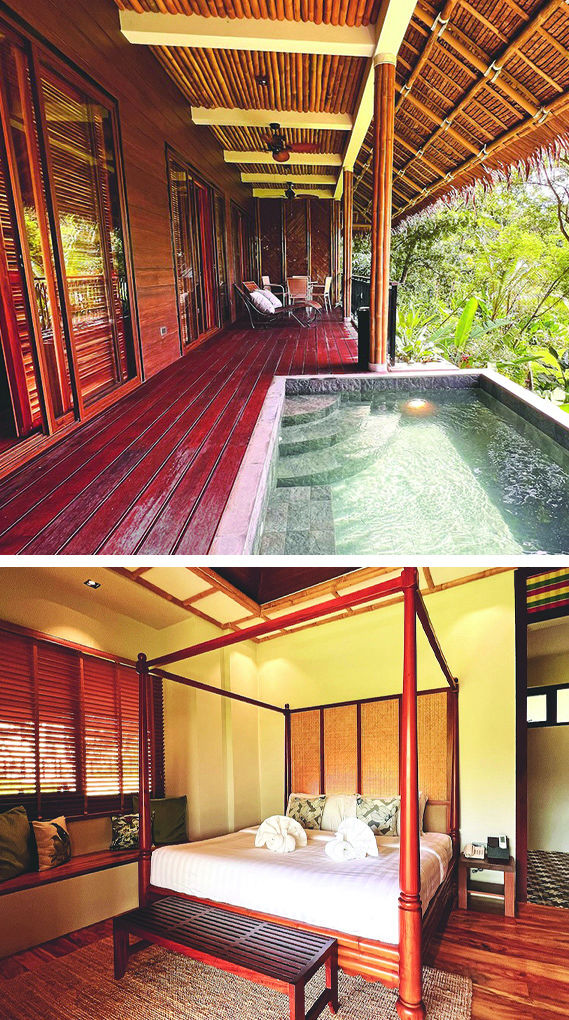
Nestled in the fertile and lush lands of Janiuay in Iloilo, Damires Hills Farm and Spa Resort is a peaceful sanctuary that whispers sweet nothings to the soul. This countryside-chic retreat, where verdant pastures meet serene and comely corners, an infinity pool, and scenic decks, promises a refuge from the noise of modern life. Originally, we were just content to have a comfortable place to sleep for the night. What we experienced was much more; we ended up enjoying the spa’s soothing wellness treatments and feasting while having casual conversations over their sumptuous farm-to-table food and homegrown chocolates. In addition to their stylish rooms and modern Filipiniana villas, Damires offers thrilling outdoor activities that we thoroughly enjoyed. These activities included ziplining, farm tours, ATV rides, and nature walks, including my personal favorite, a long canopy bridge that passes through towering trees. Damires appears to cater to every aspect of a vacation, including relaxation, excellent food, adventure, farm living, and much more.

Located just 45 minutes from Iloilo International Airport and an hour from Iloilo City, this 16-hectare property offers an ideal getaway with 28 well-appointed and nature-inspired rooms, as well as a set of newly built 2-bedroom Narra villas with a private dipping pool, where we stayed, all perfectly blending into the countryside environment.  

The UNESCO Church and Hablon Weavers of Miagao

Tanned skin on our backs and wonderful memories in our heads, we rolled back to Iloilo City for the tail-end of our Iloilo sea-to-land trip, and along the way we stopped by a few old charming towns. One of these towns was the Municipality of Miagao, where we had the opportunity to visit the town’s church and a community of Hablon weavers.

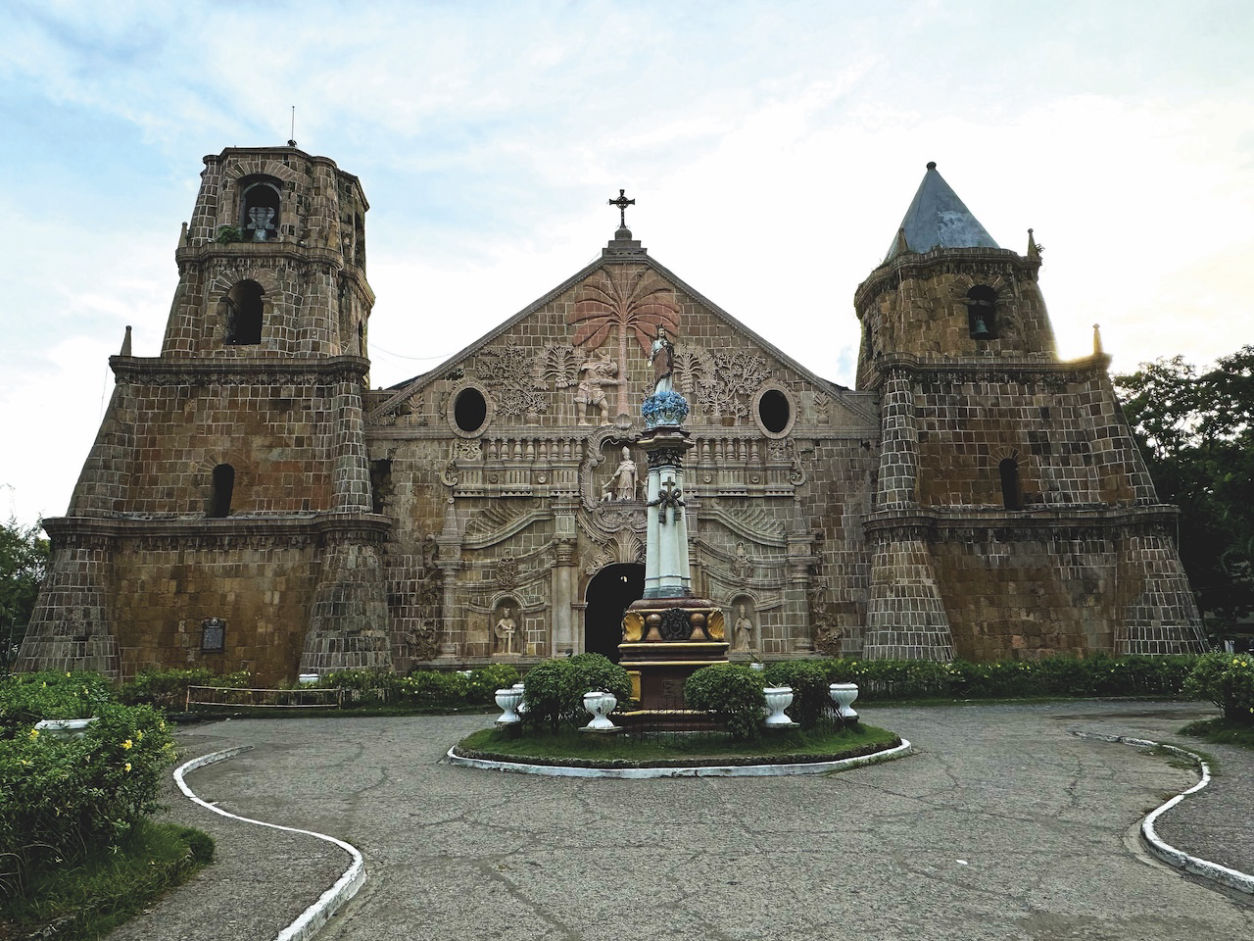
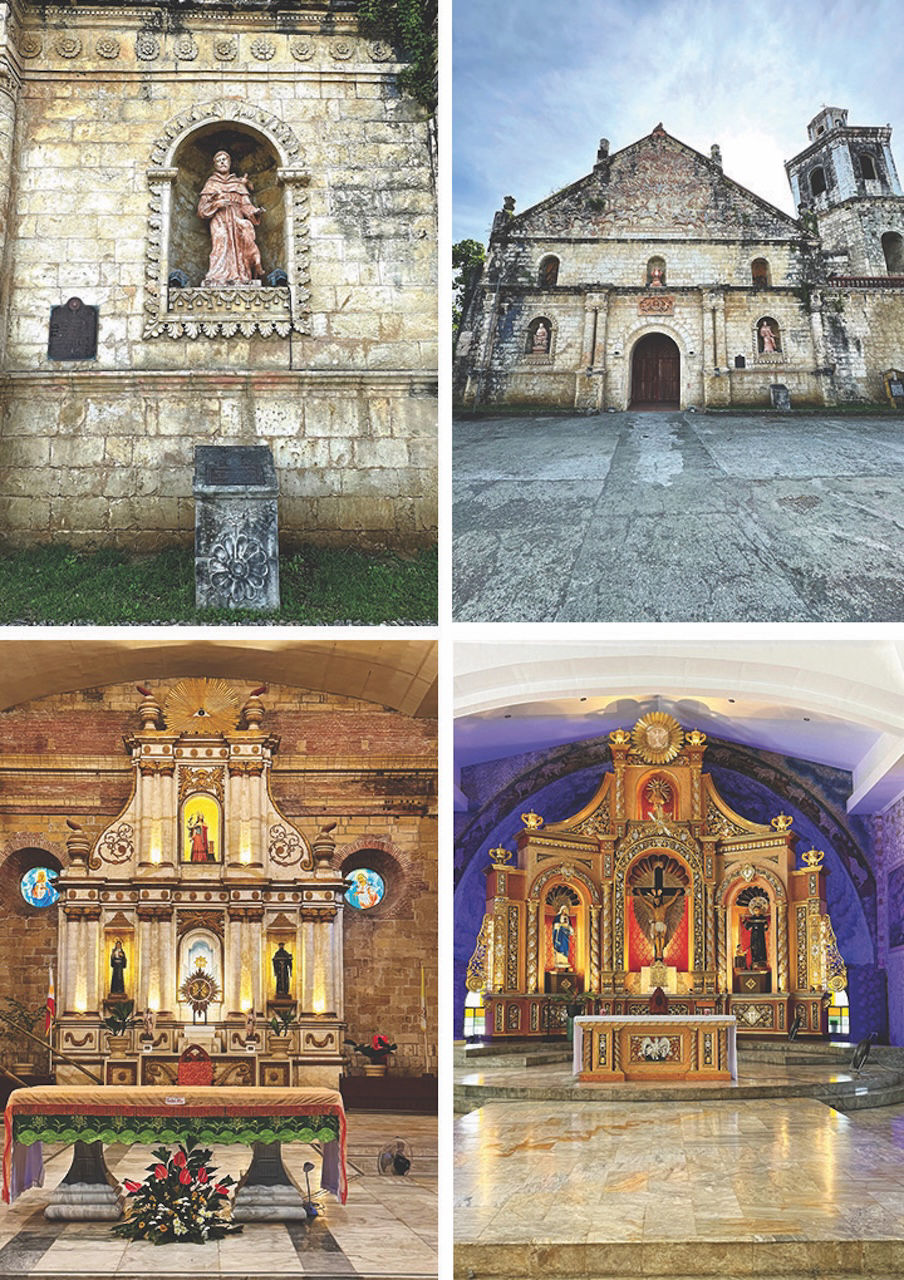
Miagao Church, officially known as the Santo Tomás de Villanueva Parish Church, stands as one of the four Baroque churches in the Philippines recognized as a UNESCO World Heritage Site. Its stunning architecture captivates visitors, and the unique construction technique—where egg whites were used to bind the brick walls—adds an intriguing layer to its historical significance, reflecting the traditional methods employed by the Spanish during that era.
First constructed in 1787 until its completion in 1897 by Spanish Augustinian missionaries, the church’s front facade depicts a coconut tree, which is also known as the “tree of life.” The artwork depicts Saint Christopher carrying the child Jesus Christ on his shoulder, reenacting the legend of St. Christopher carrying the poor and sick people across the river in the absence of a bridge, only to discover later that the heaviest person he carried was Jesus Christ who bears the weight of the world.

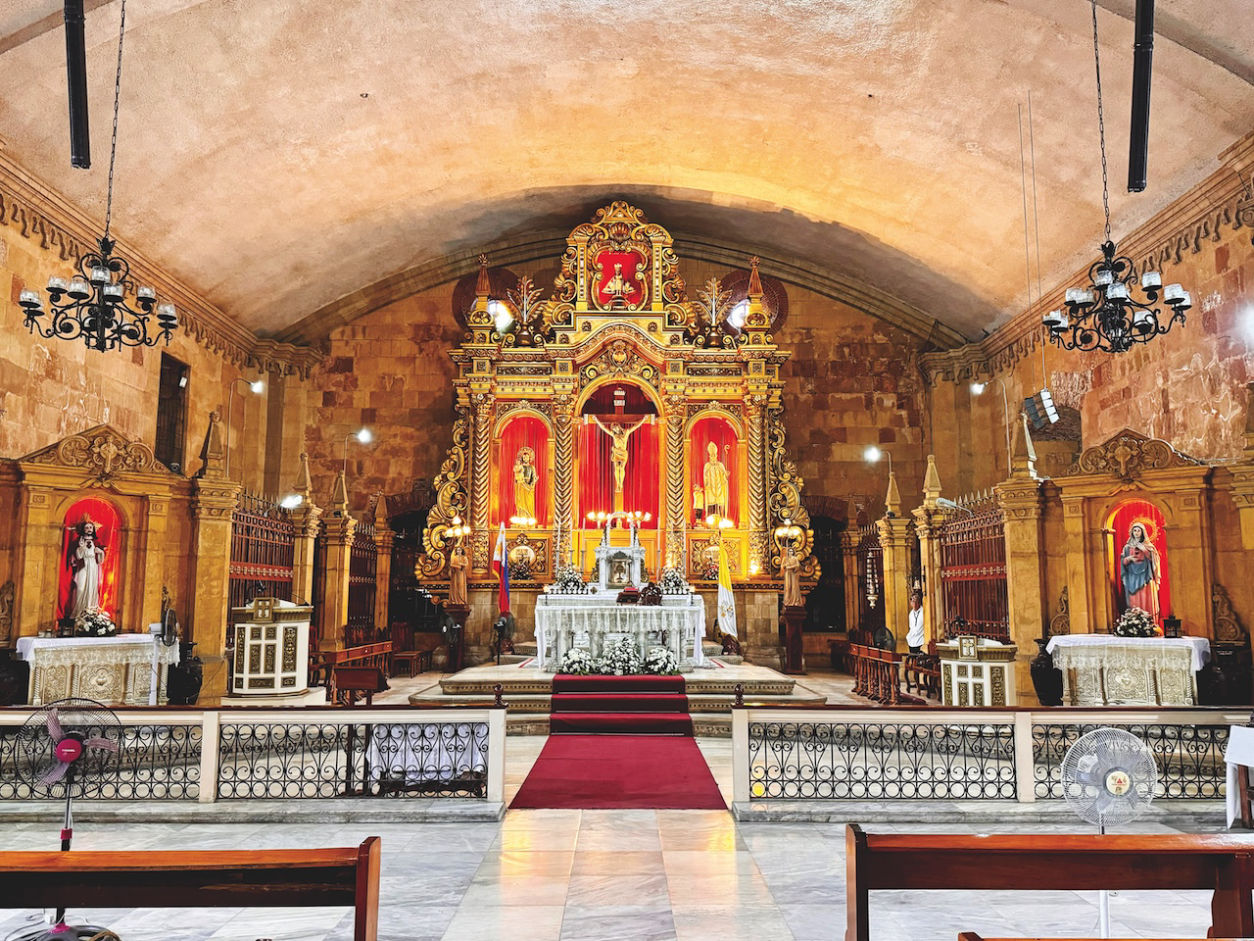
The church was declared a national shrine in 1973, and in 1993, the UNESCO World Heritage Site inscribed Miagao Church as a testament to its historical significance and cultural legacy. The interior of the church does not disappoint with its high ceilings, arching altar, and intricately carved religious statues. A variety of architectural styles, including Baroque Romanesque, with hints of Native, Muslim, and Chinese elements, inspired the design of Miagao Church 

Mobirise Website Builder

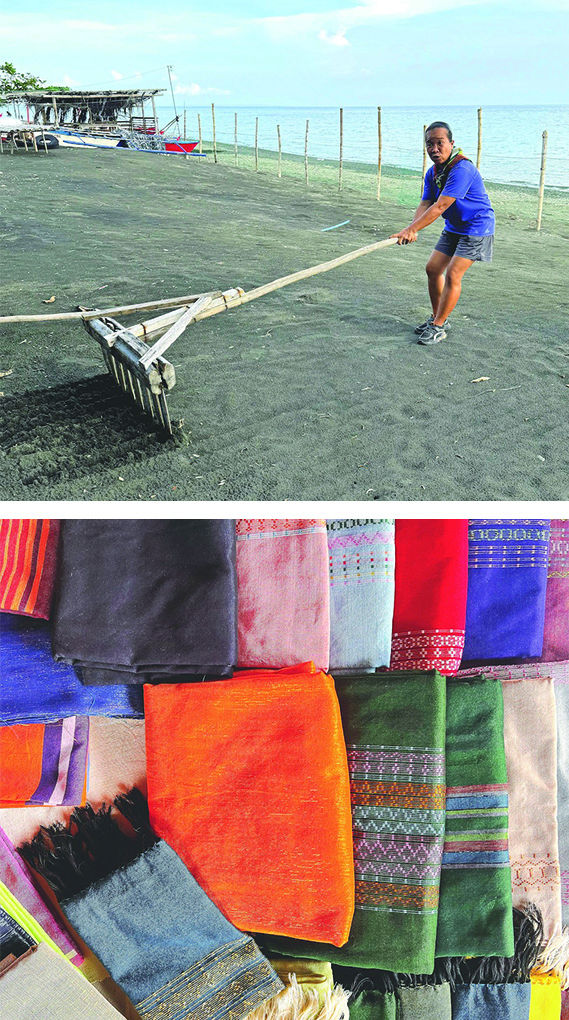
Still in Miagao, we learned about a story of a resurgence of a beautiful handcrafting tradition; that of Hablon weaving. “Hablon”, which was derived from the Hiligaynon word “habol” meaning “to weave”, is a hand-woven fabric made by the women of Panay for centuries even before the arrival of the Spanish — particularly in the towns of Miagao, Oton, Duenas, Igbaras and Badiangon.

During the latter half of the 20th century and the dawn of the 21st century, this weaving tradition skipped a generation. In an inspiring effort to breathe new life into this traditional craft, social enterprise groups, the Department of Trade and Industries, Department of Tourism, the Tourism Promotions Board of the Philippines (TPB), the local government unit of Iloilo, and institutions like the University of the Philippines Visayas (UPV) have come together to launch a program dedicated to reviving this custom of cloth creation.

Today, several cooperatives, such as the Hablon by Indag-an Primary Multipurpose Cooperative, are actively engaged in the production of hablon cloth which is now gaining popularity in the fashion industry especially in trade fairs in the country and abroad.

As we savored plates of Ilonggo kakanin, including Baye Baye—an Iloilo specialty produced from grated coconut and pinipig, served in rolls—and Ibos, the local take on suman, we had the pleasure of meeting some talented women weavers from Miagao. They shared exciting news about their upcoming participation in a trade fair at SM Megamall, set to take place just a week after our visit.

Also in Miagao, we came across a small group of asinderos, or artistic sea salt makers, who have managed to revive the dying “budbud” salt-making tradition. Lorlie Noblezada, the group’s head, informed us that she was the first woman to practice the traditional budbud salt-making method, a tradition previously exclusively practiced by men.

“I used to see my uncles doing it when I was a child,” Noblezada told us in Tagalog. However, numerous factors such as the dwindling of shorelines, the construction of concrete seawalls, climate change, and a lack of interest abruptly halted this traditional salt-making method, which dates back to the 1820s.

Noblezada, a trained social worker, spearheaded the revival of the Budbud sea salt industry under the guidance of the University of the Philippines Visayas, Department of Trade and Industries, and other organizations such as Kalipunan ng Liping Pilipina (KALIPI). 
Mobirise Website Builder

Stop and Smell the Coffee Beans of Kape Nagpana

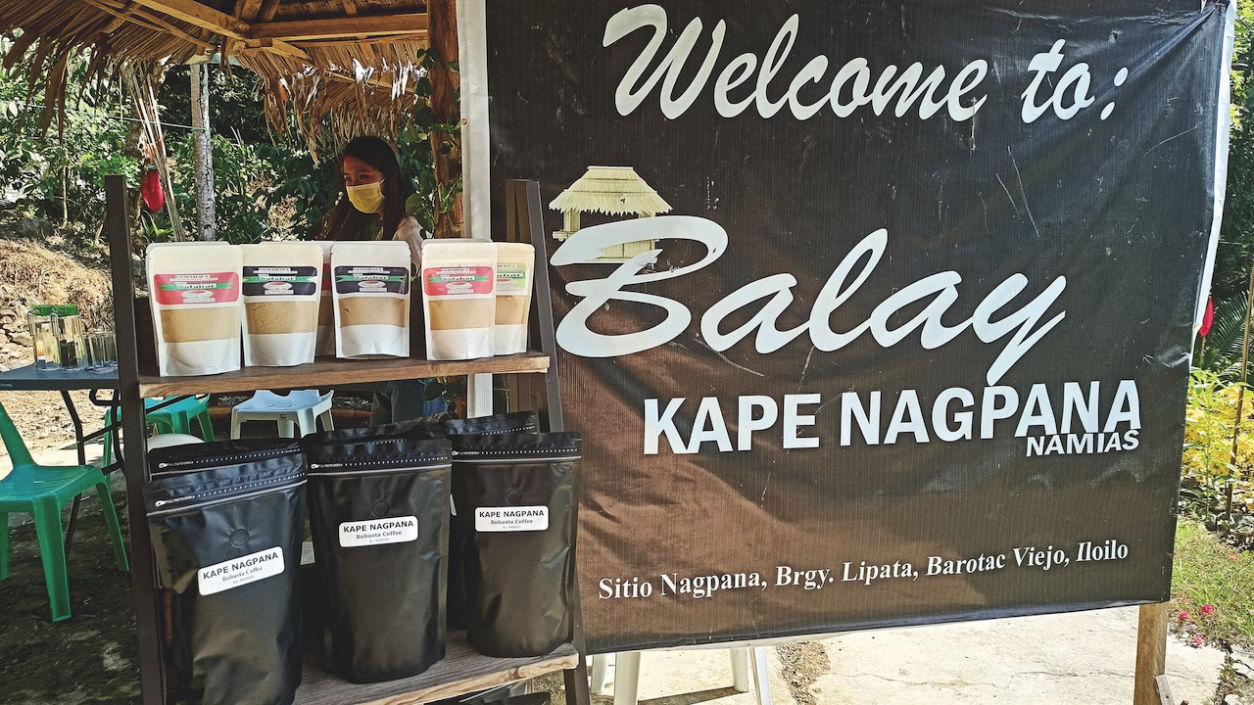
Across the province of Iloilo, you’ll discover a wealth of inspiring stories showcasing community empowerment initiatives. One such example I’ve come to know can be found in the Ati Community in Barotac Viejo, Iloilo, where a coffee farm has emerged as a haven for roasting exceptional coffee. It is called Balay Kape Nagpana.
Balay Kape Nagpana is a seed-to-cup coffee farm and café run by members of the Ati community in barangay Nagpana, Barotac Viejo, Iloilo through the funding and training of an NGO group Taytay Sa Kauswagan (TSKI) and the DOST.

The Ati women of Nagpana carefully handpicks the coffee beans and roast them to produce an aroma blend of robusta coffee beans.
Kape Nagpana also processes and sells Kape Miro. Miro is a Hiligaynon term for Asian Palm Civet usually found in the mountains on this part of Iloilo province. More prevalent in the lush forest surrounding Sitio Nagpana, they normally feast on coffee cherries, pulpy fruits and wild berries.

During our visit here before we tasted their coffee — which are grown and processed on site — several Ati women greeted us with a welcome dance and a song about the history of their community. 

Mobirise Website Builder

Follow the Heritage, Pilgrimage and Farm Trails in Tigbauan, San Joaquin and more 

Next to Miagao is the municipality of San Joaquin where another church also arrests the attention of both architecture-enthusiasts and religious devotees.

Built in 1869, the San Joaquin Parish Church’s facade has a unique sculptured relief depicting a battle narrative—the 1859 Battle of Tetuán in Morocco, where the Spanish vanquished the Moors. A similar reference to warfare may be found on the main gate of Fort Santiago in Intramuros, which shows a horse-riding Saint James’ stomping over a quartet of Moors fighters.

The reasons why a battle scene—especially one involving the Spanish—was chosen to adorn the church’s façade remain a mystery, as this can be taken as a reference to the Spanish conquests of other countries and their practice of coercing followers of other faiths to convert to Christianity. One thing is for sure: it all made San Joaquin Parish Church’s façade very unique and cements the town as an important pilgrimage site, especially during Visita Iglesia every Holy Week.

Erlyn Alunan, the Tourism Officer of San Joaquin and a veteran tour guide in the province, proudly provided us with a brief overview of what makes her town an intriguing destination in Iloilo. “Ours is the only town in the region with two national cultural treasures,” she tells us. “This one,” she pointed to the San Joaquin Parish Church. “And the Campo Santo,” she continued, referring to the nearby cemetery that Augustinian priest Mariano Vamba established in 1892.

I remember stopping by the cemetery during my first visit to Iloilo in 2010, where I also went on a Visita Iglesia, visiting the Spanish-era churches in Iloilo City, Molo, Guimbal, Tigbauan, Jaro, Miagao, and San Joaquin. Initially, I found the cemetery’s centerpiece, the Baroque mortuary chapel, a little frightening. However, on subsequent visits, including this one, I grew to appreciate how it contributes to the cemetery’s peculiar character, as it remains the most preserved of its kind in the entire island of Panay.

Just a short distance from San Joaquin Church, perched on a hill, a striking white edifice adorned with a towering cross and angelic statues awaits. Visitors can ascend the 480-step staircase, known as the Stairway to Heaven, or opt for a ride in a small vehicle to reach this spiritual spot. At the summit, a narrow and dark snaking path leads you to, literally, the light at the end of the tunnel, where you will come out to finally lay eyes on the Garin Farm Pilgrimage Shrine. On any given day, this sacred site draws in dozens of visitors, with numbers soaring into the tens of thousands during Holy Week. 

Also at the top of the hill, you’ll be rewarded with breathtaking panoramic views of Garin Farm and the expansive shoreline of San Joaquin stretching out before you.

Aside from the pilgrimage sites of San Joaquin, the town also boasts the longest and most scenic coastline in the province, stretching 26.5 kilometers of fringing coral reef where a community-managed eco-tourism site, Kuliatan Marine Sanctuary, is located. Here, visitors can engage in snorkeling and scuba diving activities. This shoreline is also believed to have served as the landing site for the 10 Bornean Datus who, according to a local legend, participated in the Barter of Panay in the 13th century.

Mobirise Website Builder


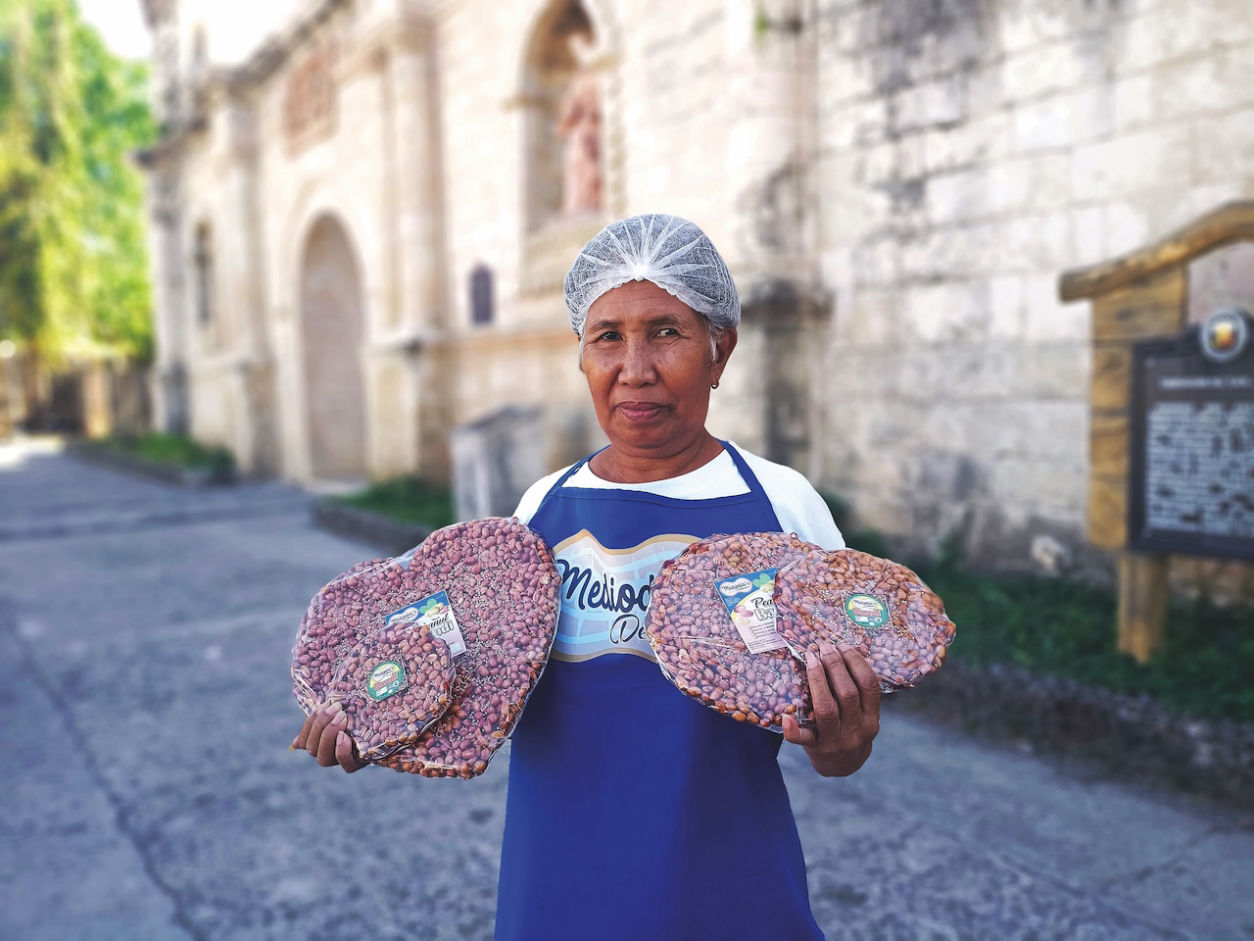
“You see, aside from our church, campo santo, Garin Farm, and our sinfully sweet bandi (an Ilonggo delicacy made of roasted peanuts and caramelized sugar), there’s a lot more reasons why one should include San Joaquin in their Iloilo itinerary,” Erlyn proudly told us.
We made our final stop before arriving in Iloilo City in the tranquil town of Tigbauan. I once passed by this municipality during my Visita Iglesia around the province more than a decade ago but only saw its church, the St. John of Sahagun Parish that is highlighted by a mosaic wall showcasing themes of Earth, purgatory and Heaven, and thereby missing out on the other interesting facts about the town.

Fortunately, Phoebe M. Torrico, the Tourism Officer of Tigbauan, made the most of our time during this trip by strategically incorporating numerous locations into our itinerary, providing us with a comprehensive understanding of the town’s rich history.

She led us to the town plaza, where she regaled us with numerous stories, including the one about the historical marker in the church yard commemorating Fr. Pedro Chirino’s establishment of the first Jesuit boarding school in the Philippines in 1592. Many people believe that Filipino saint Pedro Calungsod, whose birthplace remains undetermined by historical records due to claims from at least four Visayan towns in Bohol, Cebu, and Iloilo, might have attended this Jesuit school in his youth.

According to the late priest and biographer Catalino G. Arevalo, S.J., also known as the Father of Asian Theology, “It is not unlikely that Calungsod could have come from nearby and joined the Tigbauan school.”

Near the church, one can also see the Tigbauan Bas Relief which was created by local artists depicting a timeline of the town’s history. Also within the plaza near the fountain, there’s a war memorial dedicated to unknown soldiers from Panay who died during World War II.

At SEAFDEC FishWorld, a museum-aquarium and visitor center dedicated to science and environmental education for the general public, I met Geraldine, a staff member who showed me a rescued sea turtle. Unfortunately, the turtle’s unusual condition prevents its release back into the ocean.

Geraldine told me that the turtle suffers from “Bubble Butt Syndrome,” where air has entered its shell, thus making it impossible for the poor turtle to dive underwater to feed or avoid predators.
“She’s always buoyant, so I have to hand-feed her all the time,” Geraldine told me in Tagalog. I inquired about the possibility of the turtle losing its air in its shell. Geraldine informs me that the lack of marine veterinarians in our country significantly reduces the likelihood of releasing the turtle into the ocean.

Mobirise Website Builder


We concluded our Tigbauan episode of our Iloilo trip with a health breakfast at Café Verde, located inside Sol y Mar Eco Farm. In addition to enjoying farm-to-table food, we also enjoyed a brief tour of the farm, which features a man-made lagoon, cogon-thatched cottages, a vineyard, and various fruit and vegetable plantations.

For the night, we stayed at the rustic and charming Sol y Mar Beach Resort, where warm wooden hues and natural materials reminded me of the family-friendly resorts of yesteryear, when people came to enjoy a charming time by the beach, whether over a picnic spread or a buffet feast of the freshest seafood and savory Ilonggo cuisine. It definitely brings a homey environment.

Gentle waves caress the shore, while fine gray sands and lush palm trees come together to offer a tranquil escape for those seeking respite from city life. This peaceful atmosphere invites a sense of creativity and relaxation, making it the perfect backdrop for inspiration. It’s not surprising that an art exhibit coincided with our visit, demonstrating the setting’s ability to foster artistic expression.

Other places of interest you may include in your Iloilo road trip include the Terra Verde Heritage Farm in Ajuy, which is located next to Barotac Viejo and approximately 90 kilometers from Iloilo City.
Stepping into the shoes of the historic Hacienda San Antonio which dates back to the early 1900s, the contemporary Terra Verde embraces the legacy of this former muscovado mill. Blending the remnants of its past as a sugar cane plantation, it now provides a unique glimpse into its rich heritage. Today, visitors can relish the fresh air and expansive green spaces while delving into the rich history of the area.

Terra Verde, utilizing both modern and traditional farming practices, serves farm-to-table food such as cassava custard, buko pie, and coconut candy balls, complementing other local Visayan dishes made with ingredients sourced from the farm.

Visitors to this farm can still see the original “Simboryo”, a smokestack where sugar cane juice is cooked into muscovado sugar, used by the sugar-makers of Hacienda San Antonio.

Also in Ajuy, a mangrove forest comparable to Bakhawan Eco-park in Kalibo, also in Panay, can be visited as part of one’s nature tripping across the province of Iloilo.

The Silagon Mangrove Eco-Park is a community-driven initiative that spans 283 hectares of an Ideal Marine Protected Area. Within this expansive sanctuary, you’ll find 37 hectares of lush mangrove forests, 7 hectares of vibrant coral reefs, and 3 hectares of serene seagrass beds, all waiting to be explored. At this eco-park, guests can stroll along a 300-meter bamboo boardwalk that leads to the gentle seabed. Here, you have the opportunity to participate in planting young mangrove trees, an experience our small group enjoyed during our visit. 

Mobirise Website Builder

The First Call of Fore and the Bobbin Lace Makers of Santa Barbara

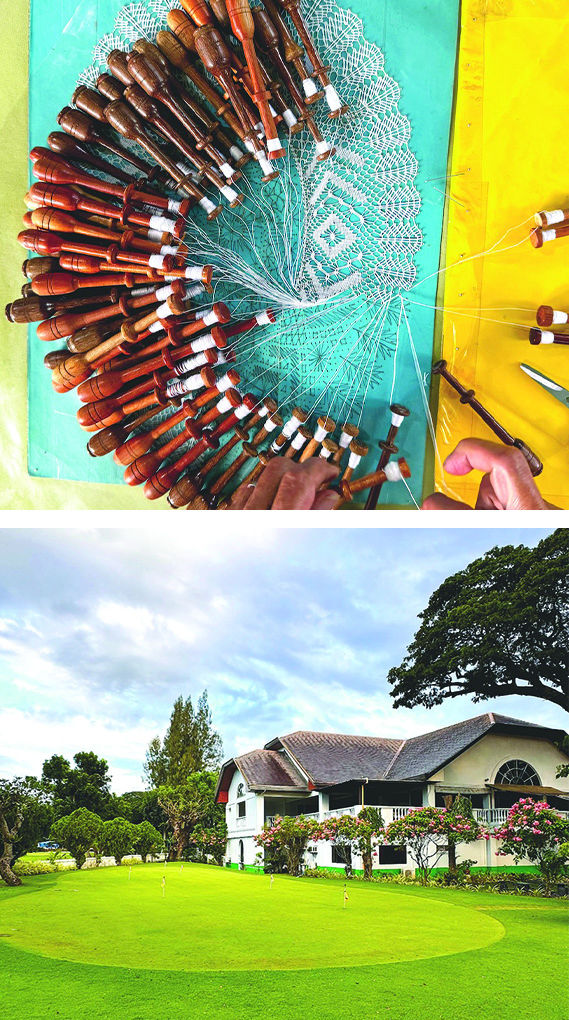
Before heading to the airport, we stopped by the town of Sta. Barbara to meet the members of WUHTLE (Women United Through Handcrafted Lace and Embroidery), which specializes in bobbin lace making and fine embroidery.

The story of WUHTLE began in the 1980s at the Western Visayas Sanitarium in Sta. Barbara, when the daughter of one of the sanitarium’s patients gave a beautiful, embroidered handkerchief to a Belgian missionary Sister Madeleine Dieryck, who was at the time caring for people with leprosy (or hansenites).

Immediately loving the art of embroidery, sister Dieryck started teaching the women but soon discovered that many of the leprosy patients who had suffered deformities in their hands had a difficult time holding a needle.

While on leave in Belgium, sister Dieryck ended up learning the art of bobbin lace creations, an embroidery method that doesn’t rely on the use of needles but more of pins, threads, and bobbins. Upon returning to the sanitarium, she started teaching the Hansenites the art of creating bobbin lace. In 1996, the group of bobbin lace makers became a cooperative.

Among the women we met here was Lola Delia. Despite having deformed fingers, 75-year-old Lola Delia has been a bobbin lace maker for over 30 years. She and the other women of WUHTLE are now churning beautiful lace and embroidered items that are even sold abroad.

Conversing over a hot bowl of batchoy inside the old convent beside the Santa Barbara Church, considered the “Cradle of Independence” in the Visayas, the town’s tourism officer and museum curator, Irene Magallon, told us, “Too bad, your time here is limited. We could have shown you the rest of our heritage district, which includes a beautiful ancestral home we call the cake house”.

With our departure just a few hours away, we squeezed in a quick visit to Iloilo Golf and Country Club. Commonly referred to as Santa Barbara Golf Course, this is where the first shout of “Fore” echoed across the fairways in the country since it is the oldest golf course in the Philippines, having been built by the Americans in 1907. 

Iloilo isn’t just the city; it’s a whole province brimming with some of the Philippines’ best

On the heels of Iloilo City’s designation as a UNESCO City of Gastronomy, which places it alongside Baguio and Cebu City as the only three cities in the country to be part of the UNESCO Creative Cities Network (UCCN), observers anticipate a snowball effect that will enhance the province’s appeal to tourists.

Krisma Rodriguez, the Regional Director of the Department of Tourism for Region 6, is optimistic about Iloilo province’s potential to become among the top tourist attractions in the country. “Iloilo Province is a place where history and progress blend seamlessly, offering travelers a warm, welcoming experience,” Rodriguez said.

“Fun, Foodie, Friendly Iloilo” is not only the new slogan of Iloilo province; it also reflects its identity. All over the province, visitors can find countless reasons to be amazed, try out local dishes, and meet friendly locals, all while enjoying an almost endless array of wonderful nature, historical towns, vibrant culture, and hearing a string of melodious and sweet-sounding Hiligaynon phrases that creates an essence of belongingness.
RD Krisma Rodriguez further encourages everyone to include Iloilo into their future travel plans, stating, “From its historic landmarks to its rich traditions and delicious cuisine, Iloilo invites you to explore and feel at home.”

During our brief five-day Amazing Race-style exploration of as many places as possible, our companion tour guides Melanie Ortega and Erlyn Alunan, along with the tourism officers of each town we visited, all advised us that we must pay the province numerous return visits in the future, as the places we’ve seen and experienced in this almost weeklong journey barely scratch the surface of what Iloilo province has to offer.

This trip, combined with my previous journeys to Iloilo province, has solidified my belief that it stands out as one of the finest destinations in the Philippines. It’s a place that deserves to be recognized and explored for its exceptional appeal and experiences.

Upon my return home, I immediately asked my mother if I could spend a few months living in the house of our last remaining relative in Dumangas, Iloilo. She responded, “Of course, just introduce yourself as the son of Nene.” I guess traveling back to Iloilo is not the only card on play, as it also included temporarily settling there to enjoy more of the province.


Discover More: 

Browse Our Archive for a Journey Through Time 

Exploring Local Spots in Iloilo 

Subscribe to us

Exclusive offers in your inbox

HTML Website Maker