
Jakarta. The name evokes something wonderfully exotic like the inviting aroma of a strange spice, or a magical incantation to bewitch the senses and hold the imagination captive. It was my first time in the capital city of Indonesia—a megalopolis measuring 6,392 sqm and home to more than 10 million people—and I didn’t know what to expect.
During dinner on my first night, I asked the jovial Hari Wibowo, Head of Marketing & Attraction Division of the Jakarta Tourism & Creative Economy Office, what Jakarta has to offer, knowing how tourists often skip the capital to go directly to the famed hideaways of Bali.
“Jakarta has a lot to offer to tourists. First, it is a melting pot of diverse cultures, traditions, and religions. Jakarta has a rich history that dates back to the 4th century and so it is home to several historical sites. It is also a shopper's paradise with its numerous shopping malls, street markets, and boutique stores. Furthermore, Jakarta's nightlife is diverse and vibrant with numerous bars, nightclubs, and music venues,” he enumerated.
And indeed, as I explored the city in the following days, Jakarta made itself known… layer after exquisite layer.

The Bundaran HI Roundabout with the Selamat Datang Monument in the middle.
To know present-day Jakarta, it’s probably best to learn more of its past—which means visiting the “old town,” or Kota Tua. The Dutch United East India Company (Vereenigde Oost-Indische Compagnie, or VOC) established the Old Town of Jakarta in 1619 and called it Batavia, which became the center of world trade in the 17th and 18th century.
I made my way to Kota Tua through narrow streets lined by shops, old houses, and colonial buildings. Vendors shouted from their carts and makeshift stalls, inviting pedestrians to have a bite. The smoke drifted from their stoves and grills, lacing the air with the smell of aromatic spices.
The maze of roads led to the capacious Fatahillah Square which is filled with people on this late, breezy morning. Many whizzed by on vintage bicycles called sepeda ontel bedecked with colorful paper flowers and wearing hats also festooned by the vivid blooms. Bordering the perimeter of the square are dignified-looking buildings from the Dutch colonial era.
Of these, the former Dutch Stadhuis is the most prominent, having been designed after Amsterdam’s Paleis op de Dam. The building was built in the 17th century as the seat of the powerful Dutch rule in Indonesia. Today, the majestic edifice houses the History of Jakarta Museum where visitors can view artifacts that date back to the time when Jakarta was still called Sunda Kelapa.

The History of Jakarta Museum
On the other side of the square stands the acclaimed Cafe Batavia. Built in 1805, the structure has gone through several transformations (as an art gallery, a warehouse, and finally, a restaurant). Fortunately, it has retained much of its colonial ambience including the tall slatted windows, high ceiling, and exquisite objects dating from the colonial times, such as the period furniture, vintage lamps, and old photos hanging on the walls.
Across the street is the famous Wayang Museum. Once a Dutch church, it now showcases traditional Indonesian shadow puppets such as wayang kulit (flat leather shadow puppet), wayang klitik (flat wooden puppet), and wayang golek (the three-dimensional wooden puppet). The museum also keeps a collection of puppets from Burma, Thailand, and China.

Mayoshi's hand-painted wooden slipper
While batik is a ubiquitous item of clothing in Indonesia, Ethys Mayoshi’s creations—under her own label Batik Gobang Jakarta—are unique expressions of her origins. Born in Tegal, a large city in the northwest part of Central Java, this lovely and soft-spoken artist-cum-businesswoman says she learned the craft early on. “My grandmother was a batik master, and a handmade batik producer in Tegal. So, as a child, I grew up surrounded by my grandmother’s beautiful batik creations. That inspired me to continue the craft, which was already beginning to die,” she tells.
In her palatial showroom in Jakarta, I stood in the receiving room filled with Indonesian masks and exotic wooden carvings, Javanese artifacts and décor. At the back is a private showroom where guests are taken to view her latest batik creations and the clothes she designed using her batik textiles.
Through her craft, Mayoshi is able to showcase the rich Betawi culture by using the colors and patterns indigenous to her people. But the artist has distinguished herself for recreating one of the elements of Betawi culture: the ondel ondel giant puppets. She also showed the kawung pattern, which represents the cyclical nature of life and embodies balance and harmony.
A strong advocate of batik, her company employs at least 50 batik makers, most of which are women. “I also employ disabled and deaf people as batik makers to give them a chance to earn a livelihood and be useful members of society,” she adds.

The JPO Phinisi Sudirman overpass.
For tourists, the modern public transport system in Jakarta provides a convenient and affordable way to explore the city. The MRT and LRT systems offer air-conditioned trains with comfortable seating and free Wi-Fi. The TransJakarta bus system is an economical way to explore the city and covers a vast network of routes. With dedicated bus lanes, passengers can avoid traffic and arrive at their destinations faster.
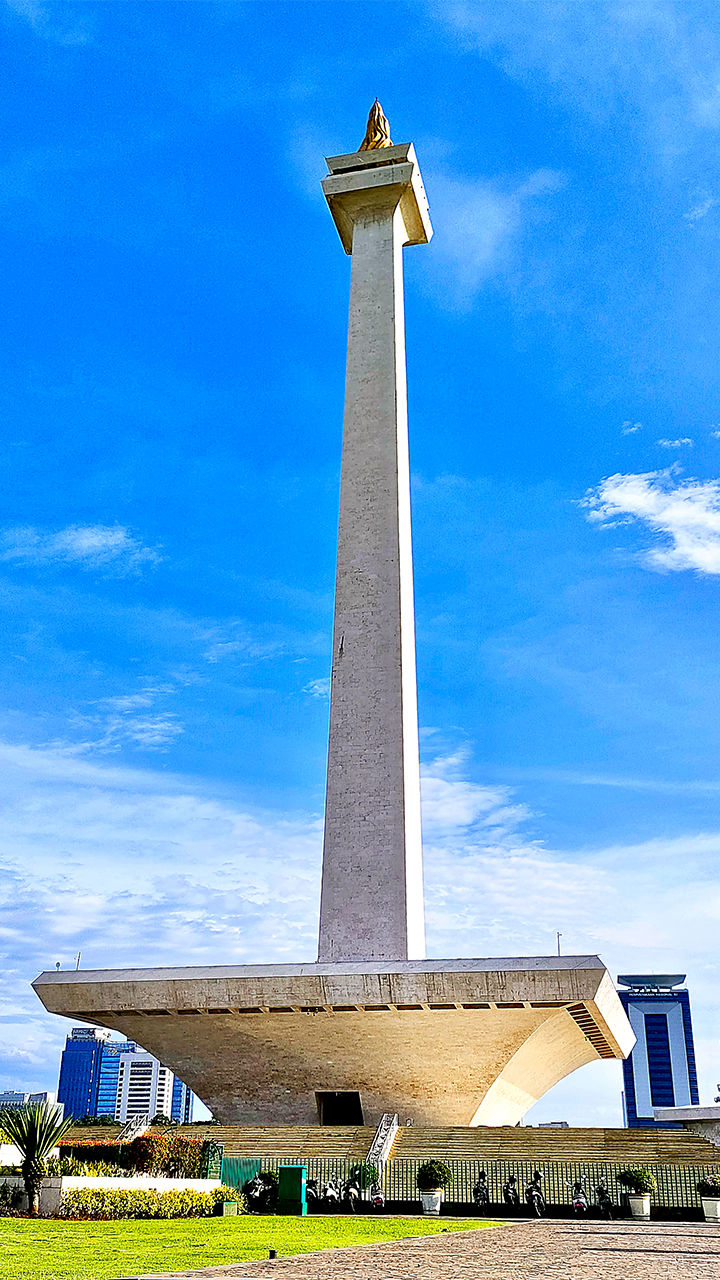
Aboard the bus, the main Sudirman-Thamrin avenues in Jakarta led to the Merdeka Square, where the National Monument (also known as Monas or Monumen Nasional) stands in the center. The monument is a towering 132-meter-tall tower made of Italian marble and bronze inspired by the lingam (an ancient Hindu symbol of fertility) and the yoni (the female counterpart).
Crowning the top is a sculpture of a flame known as “Lambang Kemerdekaan” or “Flame of Independence.” The flame is made of bronze coated with 32 kilograms of gold leaf and weighs around 14.5 tons. Illuminated at night, it creates a beacon that can be seen from far away.
Our next stop was the JPO Phinisi Sudirman, a pedestrian overpass located in the heart of Jakarta. Definitely not your run-of-the-mill elevated pass, its design is a unique representation of the traditional Indonesian sailing ship called pinisi that is often used as a symbol of the country's maritime heritage. On the landing going to the view deck, the names of doctors and nurses who perished when the first wave of COVID-19 hit the city have been engraved over the railing, reminding passersby of their selfless devotion to duty.
Another public facility that is attracting local and foreign tourists alike is the SkyDeck at the Bundaran HI Roundabout bus stop. Shaped like a bow of a cruise ship, the second floor has a platform that opens to a dramatic view of the skyscrapers in the area, offering an unimpeded panorama of the Selamat Datang Monument, the playful water fountain beneath it, and the towering buildings that surround the complex.
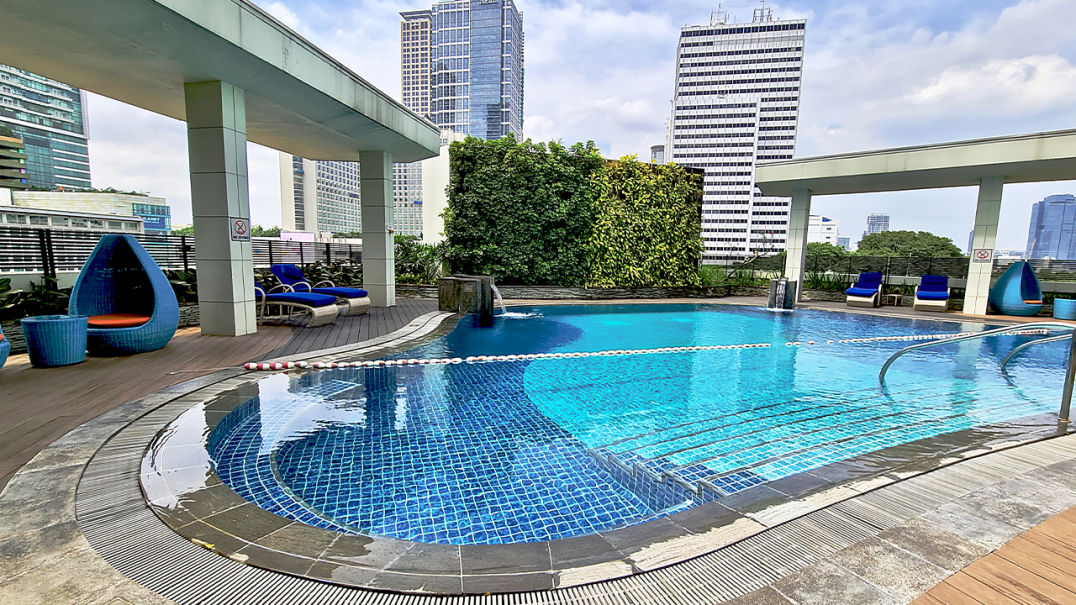
The pool at Mandarin Oriental, Jakarta.
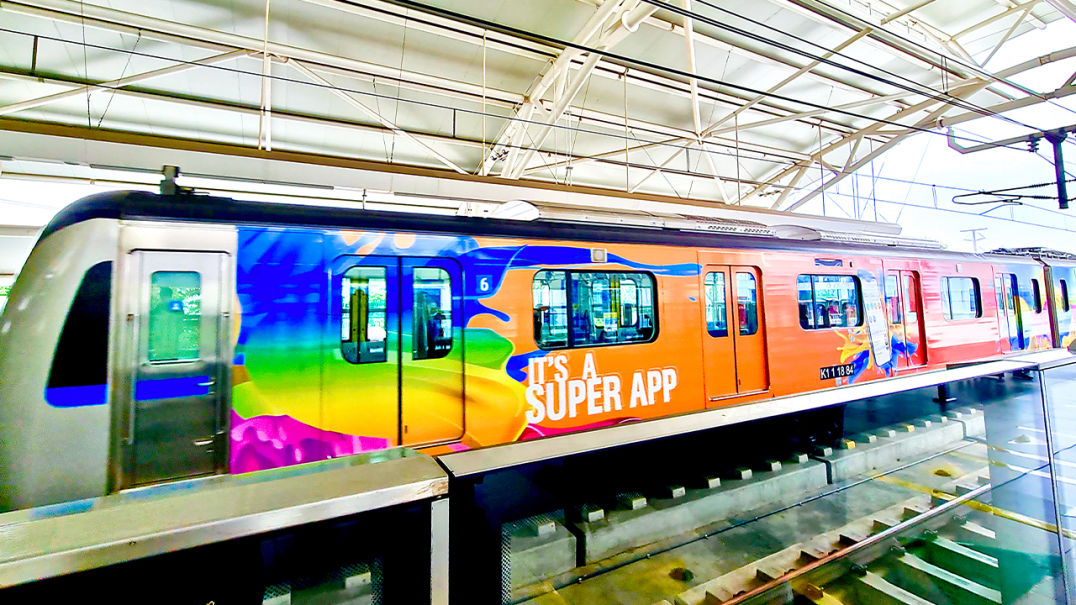
Jakarta's modern train system
But Jakarta isn’t just about monuments or multi-purpose public spaces. The city abounds with malls and shopping centers that will please compulsive shoppers and bargain hunters. Thamrin City houses many stores that specialize in batik, ranging from traditional to modern designs from different regions of Indonesia. These stores offer a variety of batik textiles, including sarongs, scarves, shirts, and dresses, as well as batik accessories such as bags, hats, and shoes.
Newer and notches more upscale is the New Sarinah Shopping Mall, a modern redevelopment of the original Sarinah department store, which was one of the first modern shopping centers in Jakarta when it opened in 1966. The project was conceived by President Soekarno, who named it Sarinah after his childhood nanny.
The new mall comprises several floors of retail space, with a range of stores selling clothing, electronics, and other goods. There is also a food court and several restaurants offering a variety of local and international cuisine. We ended up in a store called Sari Sari. Specializing in traditional Indonesian cakes, the shop offers such sweet treats as nasi bakar (baked rice), pisang ijo (Manado's delicious famous dessert made of moringa leaf flour), black sticky rice dumplings, klepon, vegetable arem-arem, bangka lemper, and many others.

Clockwise: the lobby of the Mandarin Oriental, Jakarta and one of the guest rooms; the pool at Café Cali
Exploring the many attractions of Jakarta can be an exhausting undertaking, so it’s wise to book a hotel that could offer utmost comfort and pampering after rambling through the streets of this huge metropolis. Mandarin Oriental, Jakarta provided just that.
Conveniently located in the city’s financial and diplomatic district, Mandarin Oriental, Jakarta offers spacious rooms and suites with modern furnishings and luxurious amenities. While my room is outfitted with a large flat-screen TV and a hedonistic marble bathroom with a deep soaking tub, it was the high-quality bedding I loved most.
The hotel offers a wide range of amenities, including a state-of-the-art fitness center, an outdoor pool, and a luxurious spa that offers a range of treatments and massages. Needless to say, the service at the Mandarin Oriental, Jakarta is top-notch, with highly trained staff who are dedicated to providing guests with a memorable and comfortable stay.
As a wonderful bonus, I was booked at the Monument View Room which offered a magnificent scenery of the traffic circling the HI roundabout, the high rises of glass and steel, and, of course, the dramatic Selamat Datang Monument which welcomes visitors and residents alike to the heart of this vibrant city.
I spent my last night in Jakarta with the curtains of my room open—watching the twinkling lights from the towering buildings, and happy in the thought that I was able to know this city that never ceases to delight. One simply needs to experience its magnificence, and discover why this bustling metropolis is truly one of a kind.

AI Website Maker