Kaohsiung and Tainan: Southern Surprises 

These two southern Taiwanese cities spring a surprise on the return traveler, with offerings that are a laidback version of Taipei’s, and then some.

Imagine Taipei, but more relaxed. That is how I would describe Kaohsiung, Taiwan's second-largest city. Despite being laidback, the city has evolved into a thriving metropolis brimming with modern living necessities such as charming cafes, walking paths, cycling routes, outdoor parks, museums, jazz bars, art districts, and more, all surrounded by adjacent beaches and expansive, lush, forested mountains.

While most tourists are familiar with Taipei—the capital city—and its stunning blend of modern and traditional architecture, night markets, and cultural and historical sites, they might be surprised to learn that Kaohsiung shares much of the same vibe—albeit with less hustle and more solitude. Here, curious visitors to Taiwan might find a southern charm just waiting to be explored.

It’s been a while since I last traveled abroad, so the sighting of wide roads, spacious sidewalks, and the presence of airy parks at almost every other block astounded me. The city is well-known for its petrochemical and technology industries, but it also manages to raise its residents' standard of living through thoughtful urban planning that incorporates livable space. 

Mobirise Website Builder

One of the most important aspects of effortless mobility is the availability of an efficient transportation system, and what better place to highlight Kaohsiung's transportation than the Formosa Boulevard Metro Station? It is a three-level underground station known for its "Dome of Light," which was designed by Italian artist Narcissus Quagliata and is the world's largest glass sculpture made from individual glass pieces. The art glass piece, which consists of over 4,500 glass panels, is 30 meters in circumference and spans an area of 2,180 square meters.

Every day, various light shows lasting approximately 10-15 minutes take place under the Glass Dome route. Another noteworthy feature of the station are the four glass pedestrian entrances designed by the world-renowned Japanese architectural firm Shin Takamatsu Architect & Associates.

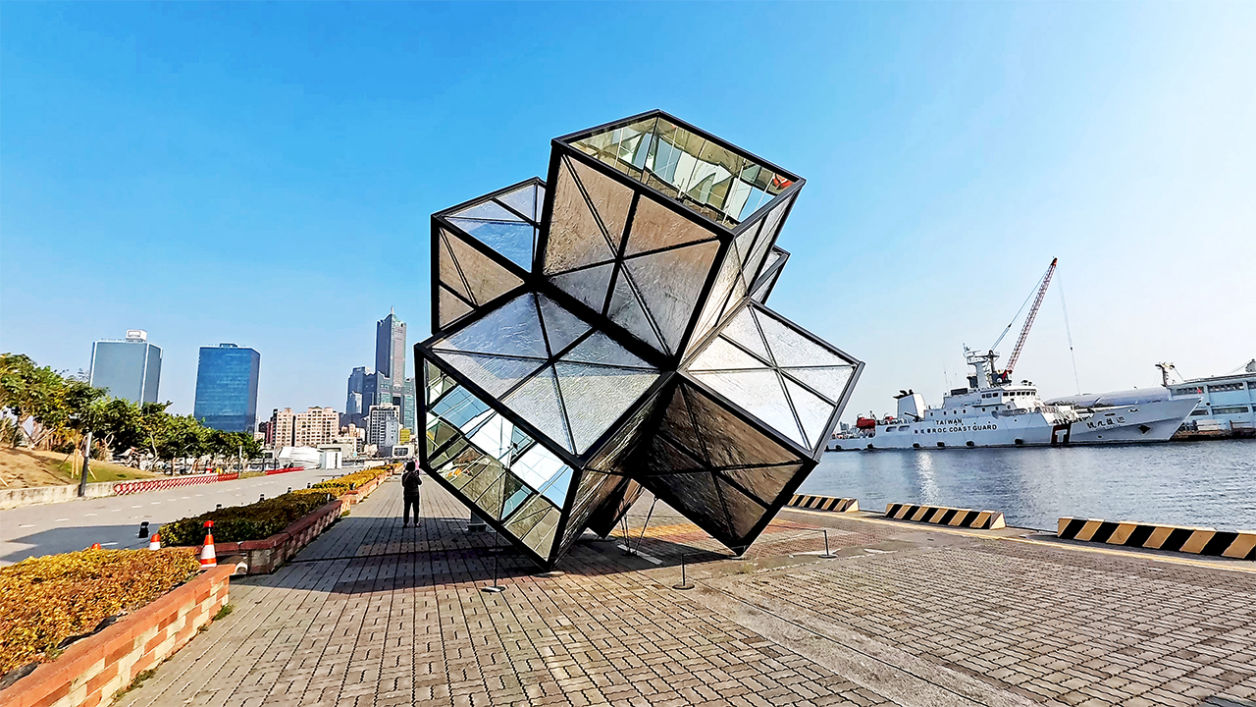
In an hour, you can see a lot of the city since there's minimal traffic. We achieved just that, as we quickly found ourselves basking in the afternoon sun and refreshing breeze near the seaside, not far from the Pier-2 Art District, where converted warehouses now house galleries and art spaces. I also discovered that you could learn more about Kaohsiung's art and architecture scene by walking along the canal-side promenade that leads to the Great Harbor Bridge, where an impressive building catches your attention, the Kaohsiung Music Center, which features a geometrical shape inspired by the ocean waves and other aquatic creatures. A hundred steps beyond that, you’ll come across the Kaohsiung Museum of History, which is another eye-popping structure designed in the classic imperial crown style distinctive of Japan. 

Another attraction in the same area is the Love River, which flows through the heart of Kaohsiung and serves as a model of urban renewal, thanks to its transformation from a polluted river into a peaceful stretch of water surrounded on each side by restaurants, cafes, parks, and galleries. Following the beautification of this river, it became a popular dating place for lovers, therefore earning the name Love River.

Not too far from the bridge on the Love River, one can find the Basilica Cathedral of Our Lady of the Holy Rosary, the oldest Roman Catholic church in Taiwan. First established in 1858 by the Dominicans, the church underwent various restorations before being rebuilt into its current Gothic and Romanesque form in 1928.
There are so many interesting locations to visit in Kaohsiung that you may not realize it, but you'll be amazed to find that you've already walked over 20,000 steps. 

Mobirise Website Builder

A Taste of Kaohsiung’s Street Food Culture

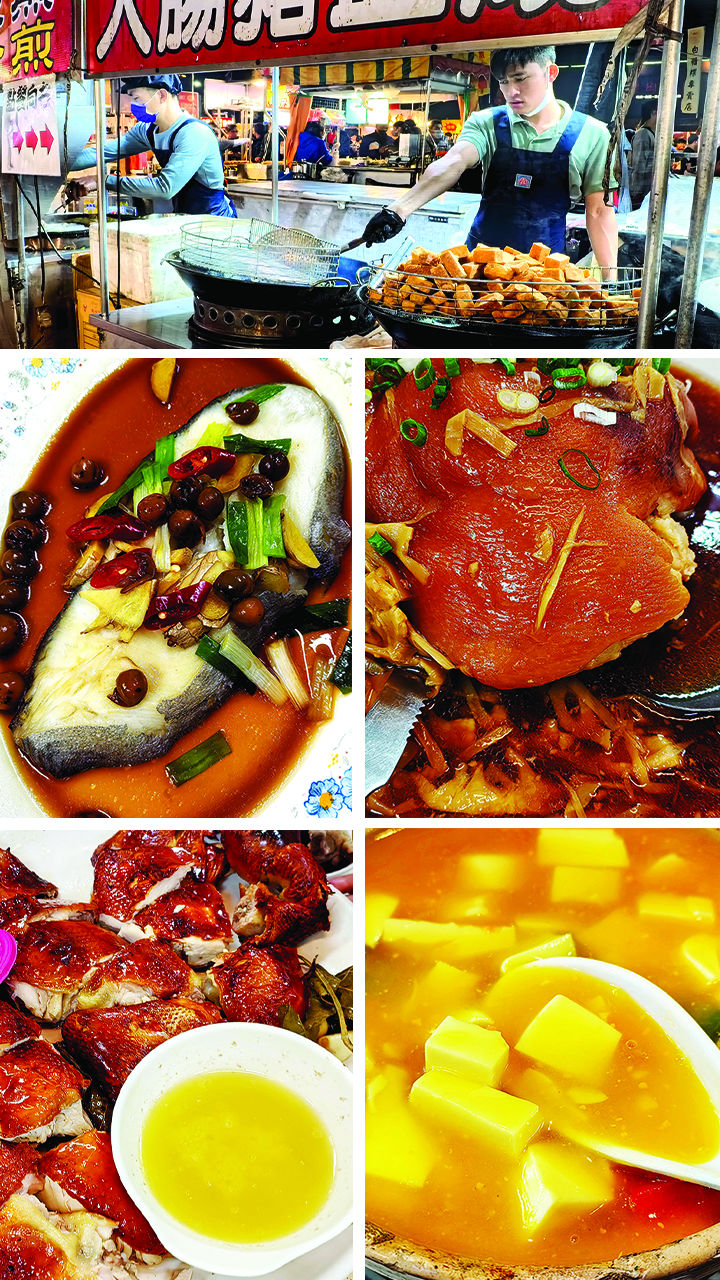
Despite a long day and more than 20,000 steps, we didn’t let the opportunity to explore Kaohsiung’s night market go to waste. The Liouhe Night Market, a straightforward 300–400 meter street with food stalls on both sides, is a good place to get to know Taiwan's street food culture despite being shorter than Raohe Night Market in Taipei.

The almost kilometer walk from our hotel worked to my advantage as I was able to tone down what I had for dinner and create room for some street food-tripping. The staples of Taiwanese street gastronomy were on full display and already attracting a growing crowd by 9 p.m.

For first-timers in Taiwan, it is imperative not to miss the mysterious stinky tofu, which is an acquired taste and one of the hallmarks of Taiwanese cuisine. Having tried it in my earlier visit to Taiwan, I took a pass this time and focused on the others that made me drool to no end. There's the oyster omelet, green onion and oyster cake, taro balls, peanut ice cream wraps, oyster vermicelli, gua bao—also known as Taiwanese hamburger, albeit saucier—fried chicken fillet, mango shaved ice, grilled squid, gao bao (pork belly buns), flame-torched beef, Taiwanese sausage, and more.

While I would have liked to sample everything, I settled for a Taiwanese sausage from one booth, some green onion and oyster cake from another, and a glass of bubble tea to wash it all down. 

Mobirise Website Builder

Before proceeded to Tainan, we wrapped up our Kaohsiung tour with a stop at Fo Guang Shan Buddha Museum.
Widely regarded as Buddhism's spiritual epicenter in southern Taiwan, a visit to Fo Guang Shan Buddha Museum provides an excellent opportunity to delve deeper into the Buddhist teachings. Laid out over hilltops spread over 30 hectares, visitors can explore a variety of religious and educational sites, including historic Buddhist temples as well as the more modern Buddha Museum.

Eight symmetrical pagodas line up a wide walkway in the Buddha Museum, with a main hall and a gigantic statue of Shakyamuni Buddha at the end. The pagodas house exhibits, interactive spaces, and a wedding hall for Buddhist ceremonies. Several galleries display fascinating Buddhist artifacts and relics in both permanent and scheduled exhibitions, while the main hall is home to numerous shrines. 

Mobirise Website Builder

Tainan, another southern surprise

Having celebrated its 400th anniversary this year, Tainan continues to hold dear the ancient culture of Taiwan. It is the country's oldest city and once served as the capital of Formosa, the previous name of Taiwan, for 260 years spanning the rule of the Dutch, the Kingdom of Tungning, and finally, the Qing Dynasty.

Chosen by CNN as one of the 24 best travel destinations in 2024, there's no shortage of scenic sites around. From picturesque natural landscapes, salt farms and flower farms, old temples, museums, and a rich culinary scene, Tainan provides travelers with another pleasant southern surprise in Taiwan. Following our Kaohsiung exploration, we raced to Tainan for an additional cultural trip. Our first stop: Chimei Museum.

Being a museum enthusiast, I have high expectations for whatever museum I visit. And because of the magnificent collections housed in our National Museum Manila — all three galleries of the Museum of Fine Arts, National Museum of Natural History, and National Museum of Anthropology — I anticipate that others in different cities and nations will be nearly as good as ours.

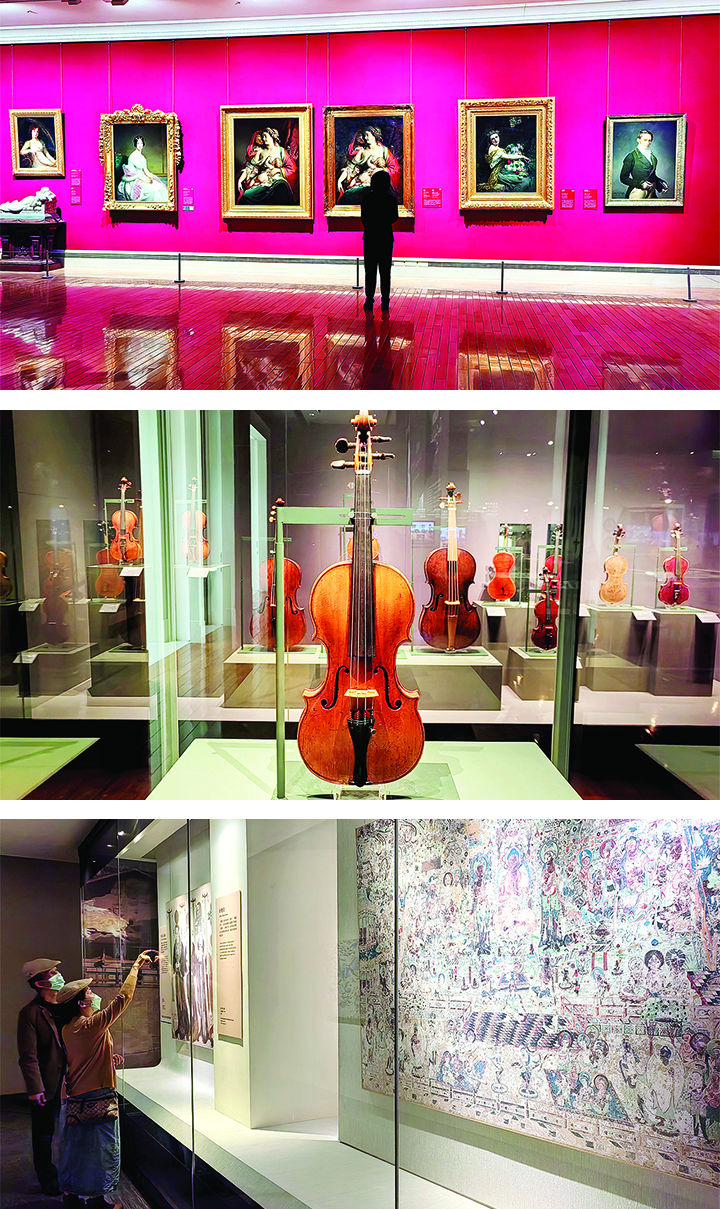
Fortunately, I was thoroughly impressed by Tainan City's Chimei Museum. It would take more than a day to see everything, just like at our own National Museum complex in Manila.

The museum's five galleries cover a wide range of topics: the Fine Arts, Musical Instruments (including the largest collection of violins in the world), Natural History and Fossils, and my favorite, Arms and Armor, which displays a variety of weaponry and armor from different time periods and cultures.
Art breathes freely in the city of Tainan, as dotting the region are a number of museums such as the National Museum of Taiwan Literature, the Thousand Fields Seed Museum, the Ciji Temple Museum, the National Museum of Taiwan History, and countless temples and creative spaces.  
There is also the Blueprint Culture and Creative Park, which is a fascinating spot bubbling with creativity, and was formerly a block full of rundown dwellings before it underwent gentrification and opened to the public in 2015. Most of the houses, which are now souvenir shops and charming cafes, were meticulously restored to their original beauty using the technical drawing style of blueprint design as inspiration.

The Old Judiciary Dormitory in Tainan's neighborhood has undergone a transformation, with kaleidoscopic lines, animated patterns, and interactive artworks now adorning its walls. The dorms were once home to employees of Tainan Prison. The two or three blocks of tiny, vibrantly colored shops are located in the middle of a busy business center and are surrounded by similarly vibrant wall paintings. Be on the hunt behind every plant box, roof, and wall because although most of the artworks are plainly visible, others are hidden. 

From culture tripping, we set out on a nature trail in Tainan, passing by the blooming fields of Arwin Therapy Garden and into the mountainside. There, we savored a steaming mug of coffee and resisted the temptation to plunge into the waters of Guanziling Hot Spring, home to Tainan's mud hot springs.

Our Tainan journey came to a close at Anping Old Fort, where we wandered through its olden streets’ maze of narrow lanes and explored the neighboring Mazu Temple, which previously served as the palace of Ning Jin, the last ruler of the Ming dynasty.

Formerly held by the Dutch, Anping Old Fort was taken over in 1661 by Koxinga, also known as Zheng Chenggong, the Prince of Yanping, a Southern Ming general who opposed the Qing invasion of China in the 17th century. Despite extensive renovations, the Anping Fort grounds are still a fascinating historic site. There are artifacts from the original 70-meter-long fort walls and a museum that tells the narrative of Tainan, its culture, and the Dutch occupation.

Our trip to Tainan and Kaohsiung opened my eyes to the fact that Taiwan is home to much more than only Taipei's culinary delights, Jiufen Old Street's endearing atmosphere, Sun Moon Lake's romantic allure, Yangmingshan National Park's jaw-dropping beauty, and so on. Taiwan truly offers a limitless array of experiences for inquiring travelers like me, and this southern journey is but one more unforgettable taste of what the country has to offer. 

Subscribe to us

Exclusive offers in your inbox

HTML Generator