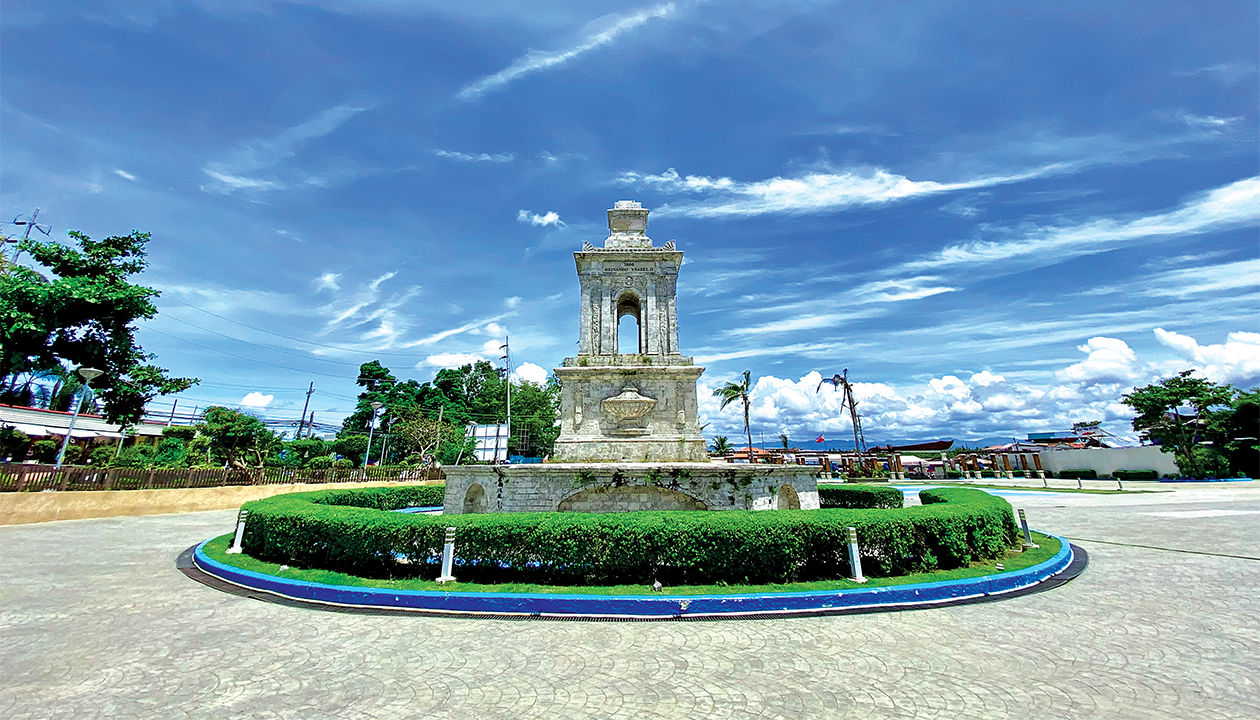
When morning came, forty-nine of us leaped into the water up to our thighs and walked through water for more than two crossbow flights before we could reach the shore. The boats could not approach nearer because of certain rocks in the water. The other eleven men remained behind to guard the boats. When we reached land, those men had formed in three divisions to the number of more than one thousand five hundred persons. When they saw us, they charged down upon us with exceeding loud cries, two divisions on our flanks and the other on our front. When the captain saw that, he formed us into two divisions, and thus did we begin to fight.”
So recounted the Italian scholar and ethnographer, Antonio Pigafetta, who, as a crew member of Ferdinand Magellan’s historic expedition that first circumnavigated the world in its charge by the Spanish crown to find a westerly maritime route to the Spice Islands in the east, documented the events that transpired during one of the most defining moments in the Philippines’ history. Most Filipinos will certainly know the significance of Mactan Island, and perhaps every Filipino schoolchild knows the story of how the historical local chieftain, Lapu Lapu, and his men, in their defiance to be subjugated under a foreign king, defeated the interloping Spaniards in what is etched into the Filipinos’ nationalist consciousness as the Battle of Mactan.
From its storied past, Mactan today remains as spirited as ever, bravely facing on the challenges and opportunities of modern times, though with a completely warm and welcoming will. Divided into the city of Lapu-Lapu and the municipality of Cordova and being blessed with white sand beaches and spectacular diving, along with harboring a burgeoning industrial economic zone and Cebu’s international airport, Mactan Island presently stands as one of Cebu province’s primary growth and development centers, drawing to itself numerous travelers and visitors from all over the country and the world.
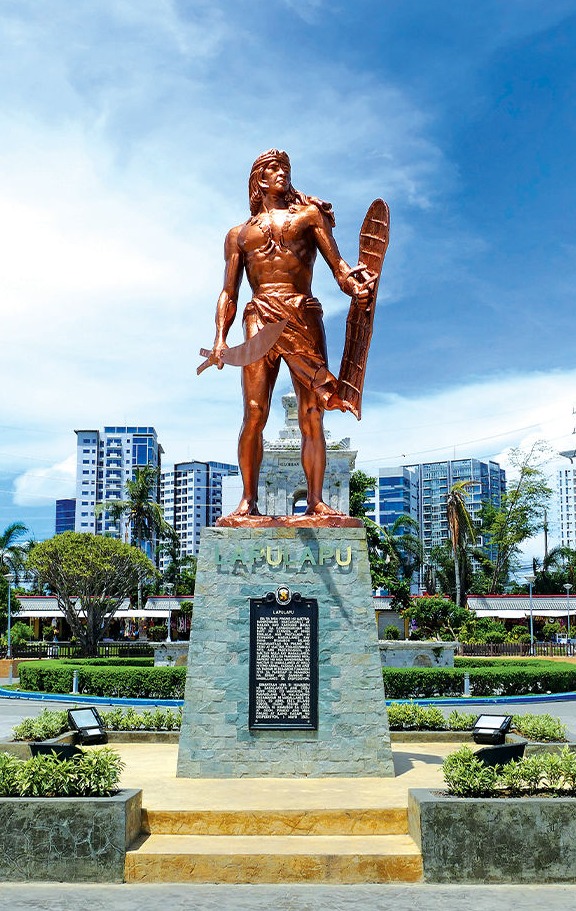
painted statue of the historical local chieftain after whom the city of Lapu-Lapu is named. With a drawn kampilan, the traditional sword of Filipino ethnic tribes, in its right hand and a shield held in its left, Lapu Lapu’s statue, depicting an idealized image of the man as a virile ancient warrior with a bodybuilder’s physique, stands seemingly as an opposing antithesis and token of defiance to Magellan’s monument and all that it represents.
Every year on April, the Kadaugan sa Mactan celebration, the name meaning “Victory of Mactan” in the Cebuano language, commemorates the history of the place with a reenactment of the historic battle fought more than 500 years ago whereby ancient Filipinos successfully repelled and vanquished a colonizing power.
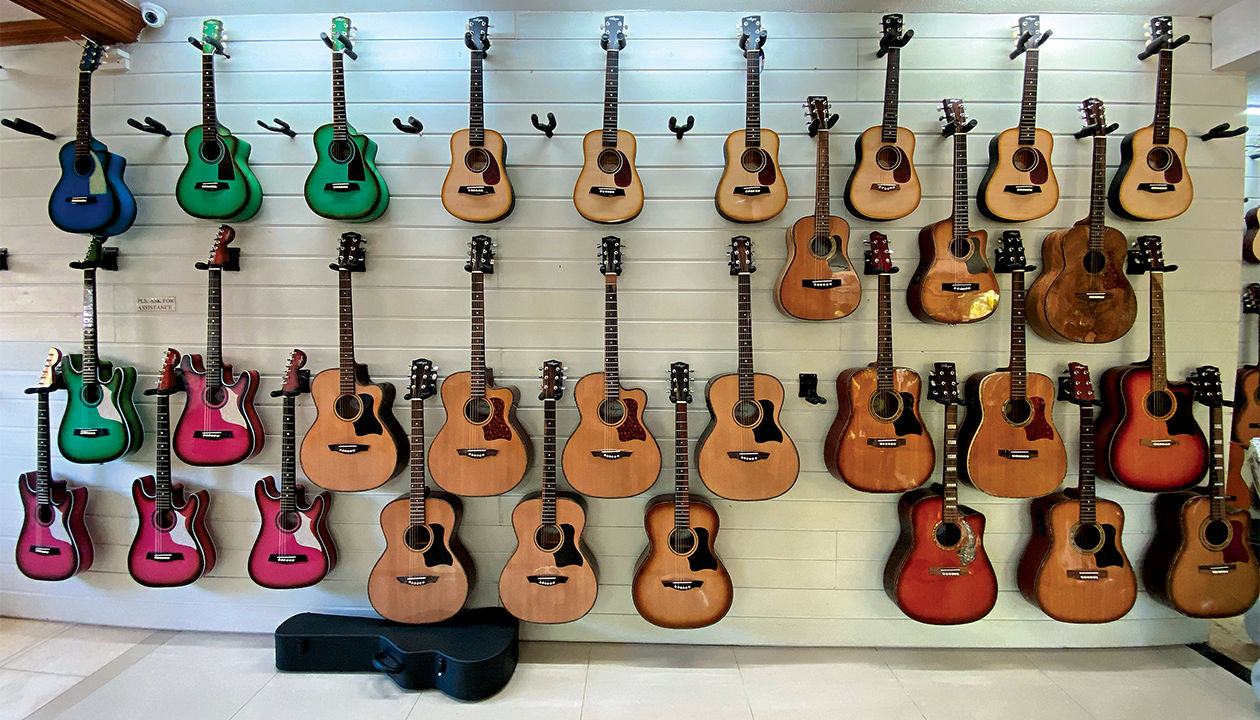
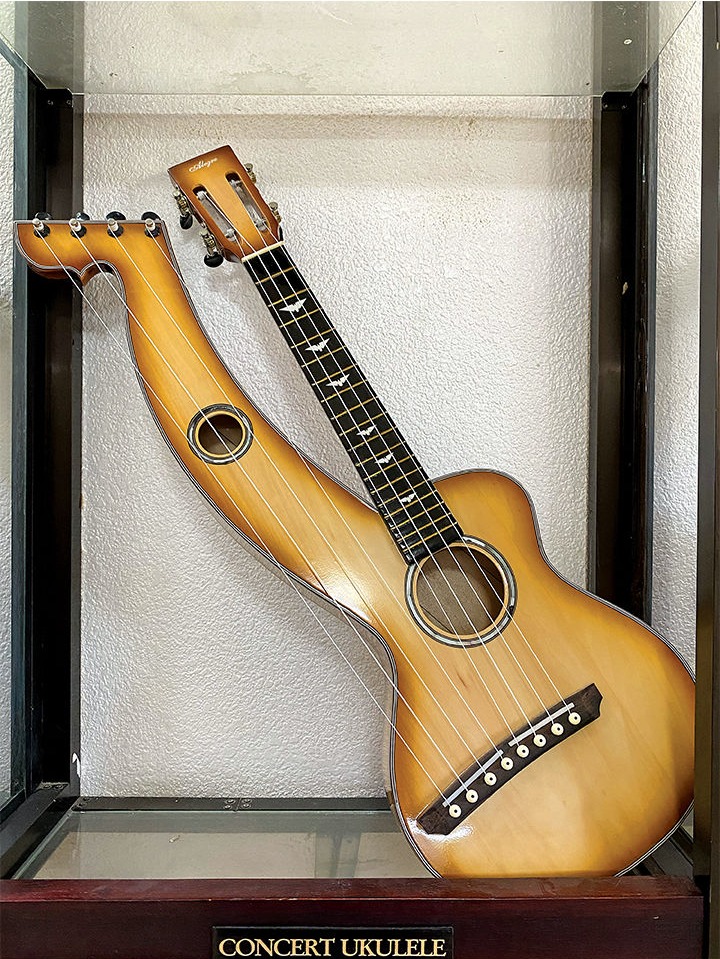
Walking into the Alegre Guitar Factory in Lapu-Lapu City, visitors are greeted by the smell of wood and the clear, silvery sound of the acoustic guitar. A wall near the entrance displays different soundboard patterns and a selection of all kinds of wood including acacia, narra, cedar, German spruce, and rosewood.
As the first place in the Philippines to be Christianized, Cebu became intimately acquainted with guitars when Spanish friars introduced the instrument during the country’s Spanish colonial era. At the time, the friars, needing a more practical solution to repairing their instruments locally rather than shipping them back and forth to Mexico, taught the locals of Opon, which is Lapu-Lapu City as it was called back then, the craft of guitar making. It is thus upon the province’s long history of guitar artisanship that guitarist and luthier, Fernando Alegre, from his roots in Manila where he first learned to play the guitar from the customers of his guitar-maker father, decided to move to Cebu to establish his own guitar factory.
Now on its third generation of proprietorship, the Alegre Guitar Factory is perhaps the most renowned guitar shop in Cebu, offering a walk-through of each stage of the manual production and showcasing an impressive array of top-quality guitars in the shop’s two large showrooms. Meticulous traditional guitar-making techniques are still employed, and the craftsmen are frequently seen working barefoot with homemade chisels and gourds, creating beautifully fashioned instruments of impeccable and world-class quality. Cebu’s exhilarating gateway
Harboring the Mactan Cebu International Airport, the Philippine’s second largest and busiest airport which serves as the southern hub of the air transportation system in the country, Mactan Island is the primary entry point to all the attractions that Cebu has to offer. Separated from the Cebu mainland by the narrow Mactan Channel, Mactan connects to the greater Cebu metropolis via three bridges: two of which crosses from Lapu-Lapu City while the third and newest one, the Cebu-Cordova Link Expressway (CCLEX), traverses from Mactan’s southern municipality of Cordova.
Yet more than just being a gateway to Cebu, Mactan is already in itself a sought-after destination, courtesy of its booming economic zone and its plethora of beach resorts.
Apart from the airport, Mactan today is also known for its industrial factories, many of which are located within the Mactan Export Processing Zone (MEPZ), an industrial tax-free zone that accommodates both local and multinational business ventures. And with the economic development that the MEPZ brings into the region, high-end business and lifestyle townships, such as The Mactan Newtown, are newly cropping up, ushering the influx of many expats who have come to regard Mactan as an ideal address for work and leisure.
And being a coral island lined with brilliant white sand beaches and an underwater topography of vibrant coral reefs, Mactan bustles with a slew of beach and dive resorts, such as Bluewater Maribago Beach Resort which offers tourists luxury accommodation and a full menu of water sports activities such as scuba diving, jet skiing, and kayaking. Many of the resorts on the island are located within Lapu-Lapu City, which takes up most of the geography of Mactan and, since being where the island’s historical landmarks are located, has been dubbed as the “Historic Resort City”.
From its nationalistic significance as inscribed in the canon of Philippine history, to its present-day relevance as a center of economic growth and development for a province as well as for a nation, Mactan stands as a dynamic and mettlesome destination, boldly taking on the world on its own terms.

AI Website Generator