EXPLORING THE PROVINCE’S RUGGED TRAILS AND RAW BEAUTY
The province of Romblon became synonymous with the marble trade when the vast deposit of this type of metamorphic rock in the three islands of Romblon drove this industry to its peak during the 1980s and 1990s. Since ceramic tiles mimicking their appearance and cheaper ones from other countries entered the market, along with environmental concerns about the potential depletion of marble deposits in the province, the marble industry has experienced a gradual decline.
Though agriculture, fishing, and marble continue to be Romblon’s top three economic industries—thanks to a creative endeavor into marble sculpture—the province’s tourism potential remains untapped and waiting to be unleashed.
Having recently returned for a second time, this writer feels strongly in putting all the marbles in the tourism potential of Romblon, after being inspired and awed by the diverse natural treasures that grace this island province.
Returning to Romblon with warm recollections of my first visit a decade ago had me on the verge of excitement. Instead of the stomach-churning 12-hour ferry voyage from Batangas, I’m flying with Air Swift (already bought by Cebu Pacific Air as of today) this time.
Pressed for time to fit all three major islands of the province into our almost week-long exploration—Romblon Island, the archipelagic municipality where the provincial capital beats; Tablas Island, the biggest of the three and boasting the province’s only commercial airport, Tugdan Airport; and our first stop, an adventurer’s playground Sibuyan Island—we charged towards San Agustin Port with an overflowing feeling of anticipation.
As we hit the ground running, and the looming view of Mount Guiting-Guiting, said to be the most demanding climb in the country, reminded me of my long-shelved plan to hike it, I wonder at the other elements that contribute to Sibuyan Island’s appealing landscape.
As our van rolls past, I see the passing streams of clean rivers and blue-colored seas from the beachside road, and I wonder if Sibuyan Island, known as the “Galapagos of Asia” due to its abundant biodiversity and endemism, is still under threat from nickel mining.
I remember my first trip to Romblon, which was around ten years ago, when we took a ferry ride to Sibuyan Island. While we were chatting, my friend Dazzle pointed out to me how many dolphins and whale sharks swim in the seas between the islands. In an instant, our attention was captivated by a solitary flipper, which gracefully lifted its tail before descending into the depths of the ocean. She says to me, “You saw that? That and among many other things is why we should protect this island at all costs.”
Gazing through the window of our van, the lushness of Sibuyan captivates me. From the thick forests covering the island to the white sandy shores surrounding it, I recall the picket line in front of the DENR office in Quezon City, which consisted of Sibuyan locals protesting against the mining companies that threaten the island. I crossed my fingers that both the government and us travelers would contribute to the preservation of this province teeming with biodiversity.
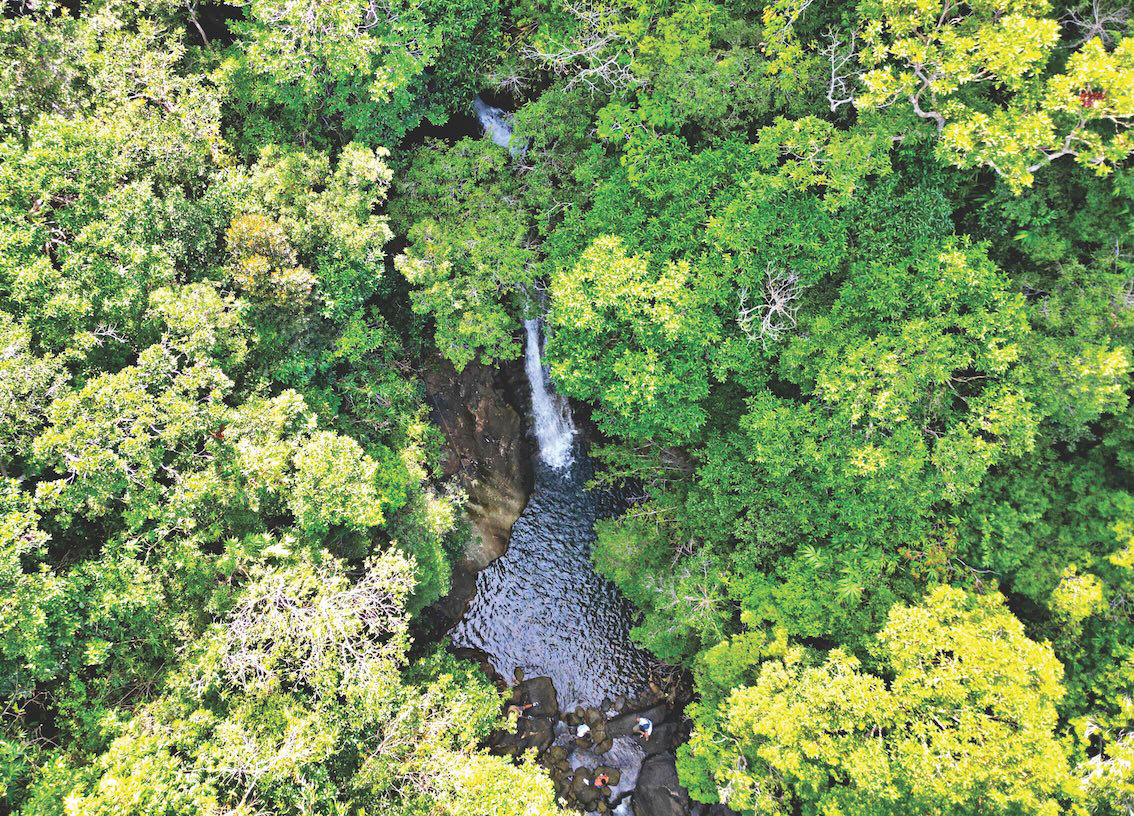
With little time to sandwich the many waterfalls found on Sibuyan Island, namely Cataja, Busay, Gomot, Dagubdob, and Lambingan Falls, we decided to just visit the easily accessible Lambingan. Lambingan’s cascades, although not that high, drop into a large dual-level pool where a small group can swim together.
Dripping from a brief swim at Lambingan Falls, we continue to another natural water attraction on the island, the Cantingas River, which is said to be one of the cleanest bodies of water in the Philippines, sourcing its fresh stream directly from Mount Guiting-Guiting. Despite nobody from our group mustering up the nerve to leap from the 50-foot-tall concrete diving platform, we still managed to have a great time hanging out by the river and admiring the verdant mountainside.
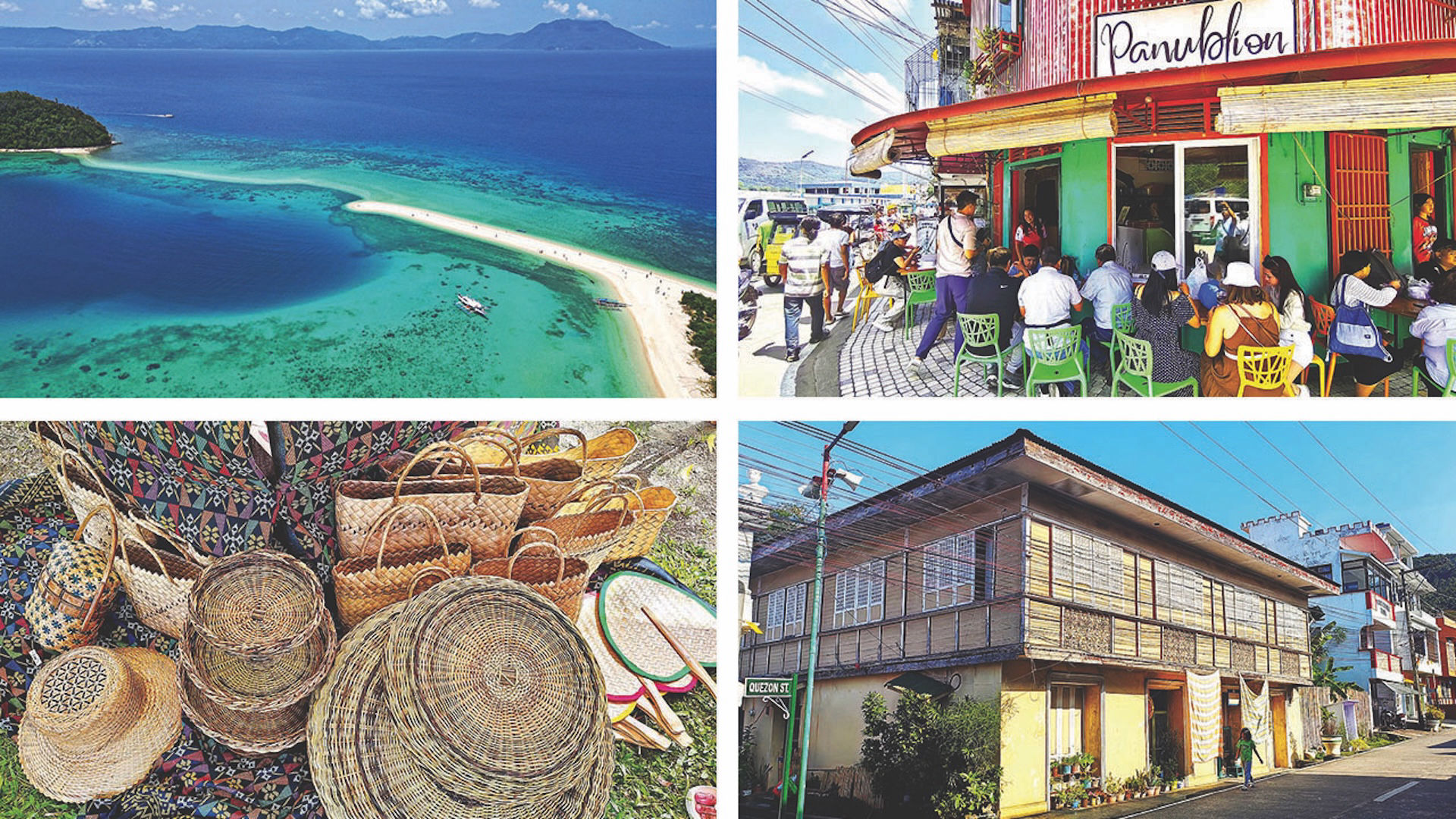
Finally, after a couple of shelved plans to visit Cresta de Gallo, I set foot on its long stretch of powdery white sands on our second day in Sibuyan Island. The Spaniards named Cresta de Gallo, which translates to “Rooster’s Crest,” after the spiky shape on top of a rooster’s head that the island’s sandbar was believed to resemble.
We arrived at Cresta de Gallo shortly after 8:00 in the morning following a brief boat ride from Sibuyan Island, giving us plenty of time to unwind on the lengthy, powdery shallows.
A lighthouse stands sentinel on the far side of the island, while an almost kilometer-long sandbar leads to a secluded area adorned with trees and lush greenery on the other end. Stumbling barefoot across the fine, powdery sands as the cool breeze whipped around me heightened my wonderful experience of Cresta de Gallo, until I topped it off by diving into the cyan-colored waters to practice some swimming laps.
Leaving Sibuyan the following day without stepping foot on the jump-off trail to Mount Guiting seems a little strange. Well, I guess that’s one excellent reason to come back to Sibuyan Island, Romblon, in the near future—well prepared to meet the challenges of the mountain known as G2.
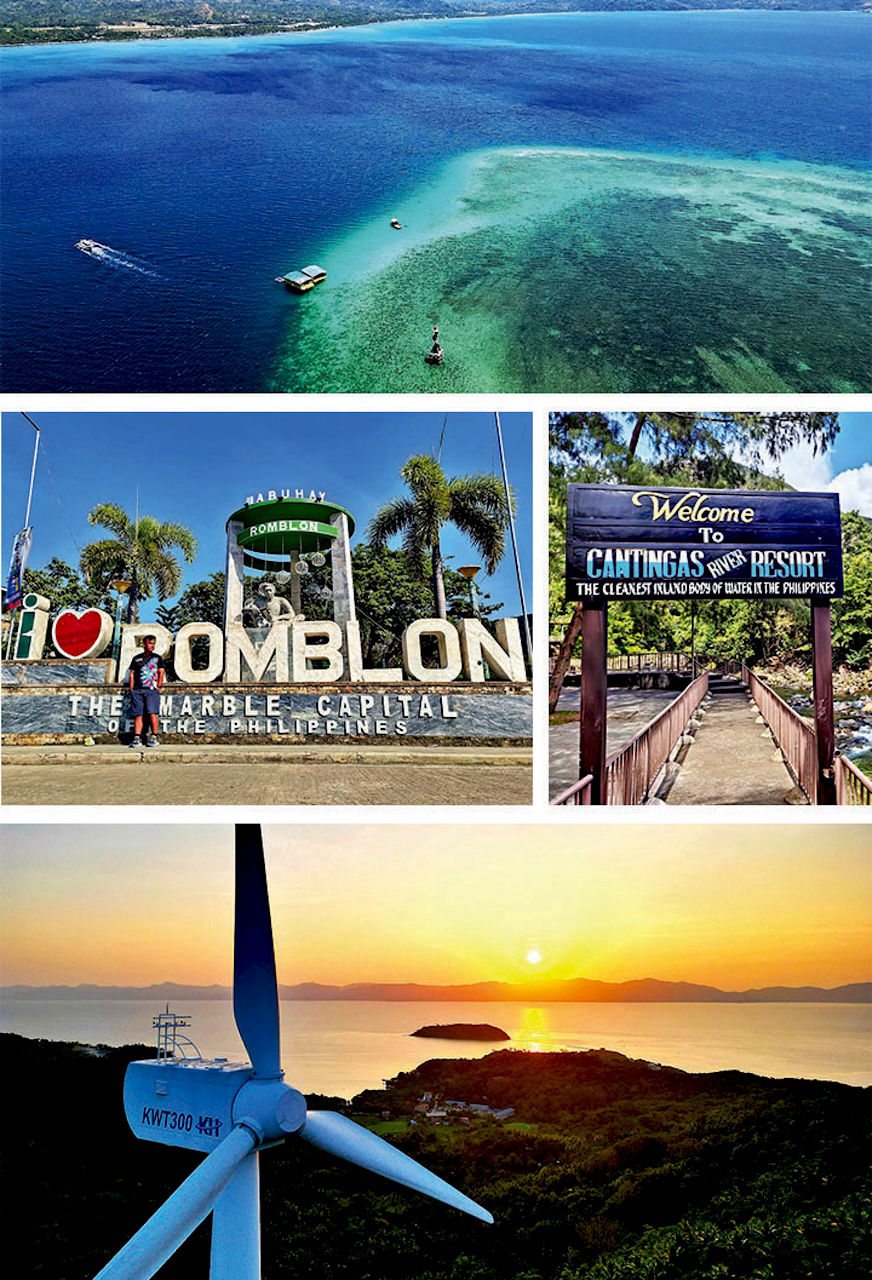
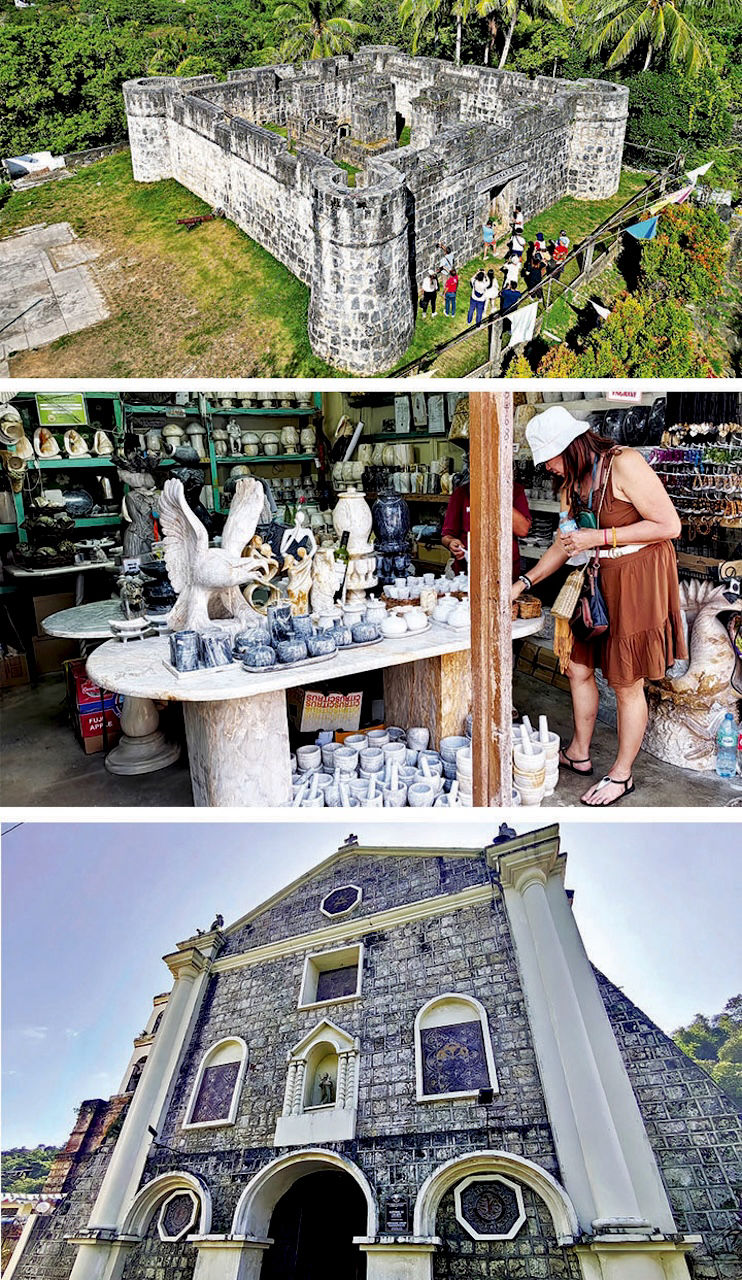
We left Sibuyan after a couple of nights and headed to the island municipality of Romblon, where we spent the following days sightseeing the town, its surrounding islands, and its beaches. Near the town’s center, one can easily hike to the top of a hill to see the 17th-century Fort San Andres, the remaining half of the Twin Forts of Romblon, which stand overlooking the Bay of Romblon and the islands of Tablas and Sibuyan.
The Spanish built the Twin Forts of Romblon in 1644 as a watchtower and defensive point against the brave Muslim raiders and the Dutch, who were at the time engaged in an 80-year war with Spain.
A stroll through the town center of Romblon invites you to journey into the past, revealing a collection of heritage houses that echo the stories of the late 19th century through to the pre-war era. This includes the 16th-century Saint Joseph Cathedral Parish located in front of a small plaza. While much of the church’s structure now reflects the extensive renovations done in the late 18th and 19th centuries, it carries a captivating narrative about the disappearance of the Santo Niño de Romblon during a fierce typhoon in 1991. After years of extensive search and investigation into its disappearance, the image remarkably resurfaced in an antique shop in Aklan province, where a devoted admirer recognized it and sought the expertise of scholars to confirm its authenticity.
By late afternoon, we made our way to Romblon Wind Farm located on a hilltop in Barangays Agnay. Here, three 136-foot wind turbines run by ROMELCO (Romblon Electric Cooperative) produce a total of 900 kilowatt hours of renewable electricity. As we drew to a close on yet another unforgettable day of exploring Romblon province, we watched the breathtaking sunset from this vantage point.
More pristine white sands and azure-colored sea water awaited the next couple of days. Cobrador Island, a diver’s paradise and home to a “blue hole,” an underwater phenomenon that resembles a sinkhole and extends deep into the sea, was our next stop. Beachgoers can enjoy the long white shoreline of the island as a relaxing natural playground, while adrenaline seekers can find thrills in Takot Reef, a small islet off the waters of Cobrador, where they can cliff dive from a platform into the clear blue waters filled with colorful corals below. On the island itself, one can explore a cave system thought to be an ancient burial site, where researchers have discovered wooden coffins and human bones decades ago.
Bon-Bon Beach, with its picturesque Y-shaped coastline, is conveniently located near the town center of Romblon. Bon-Bon boasts an expansive, velvety sandbar that stretches a kilometer towards Bang-og islet, providing a stunning panorama, especially during low tide.
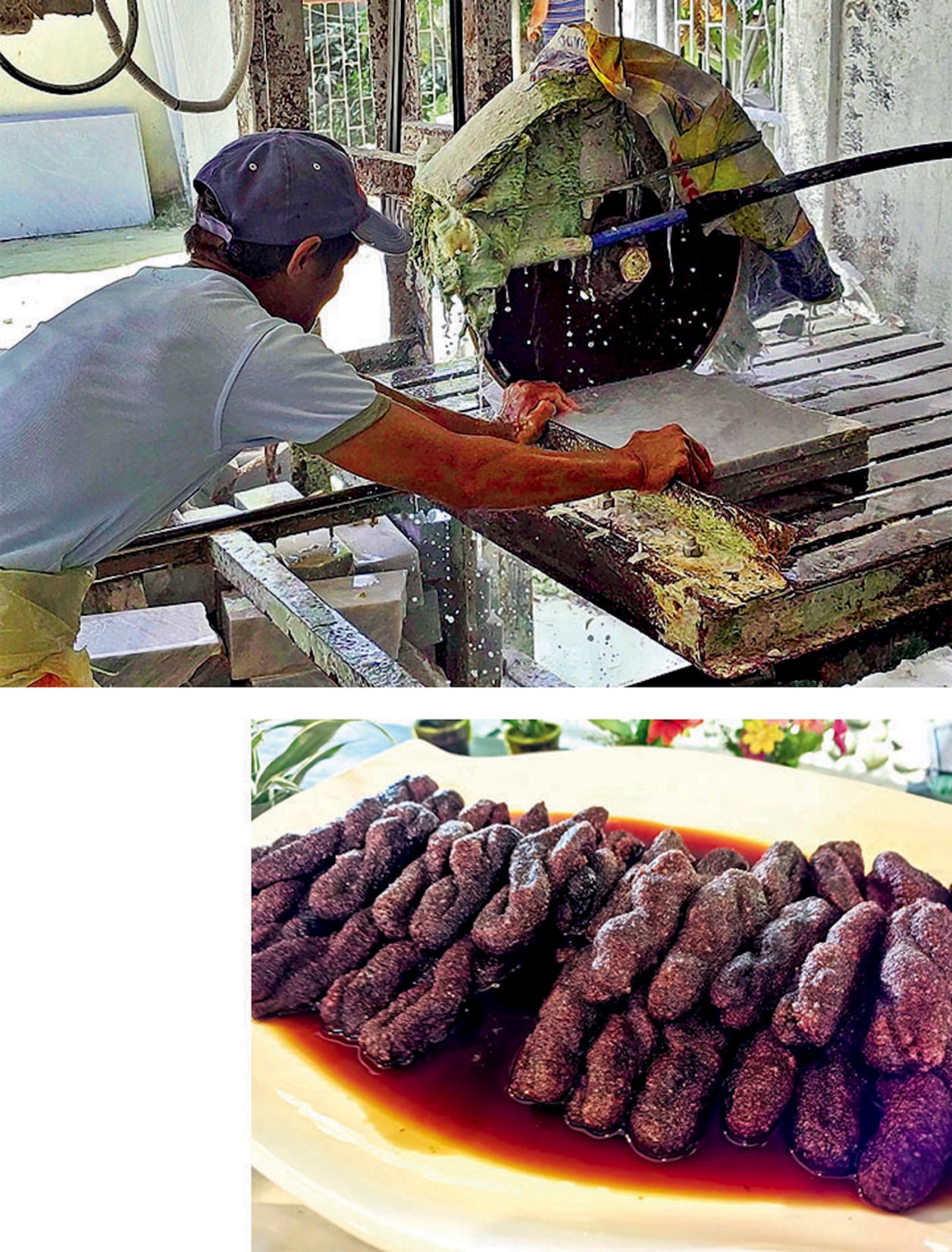
We concluded our journey in Romblon, Romblon by counting marbles, each one unique and varied in shape. In the town’s plaza, adjacent to the marble marker, situates the Marble Shopping Center, a treasure trove of marble creations. Here, one can discover an array of items, from mugs and lamps to vases and sculptures of all sizes, including solemn tombstones.
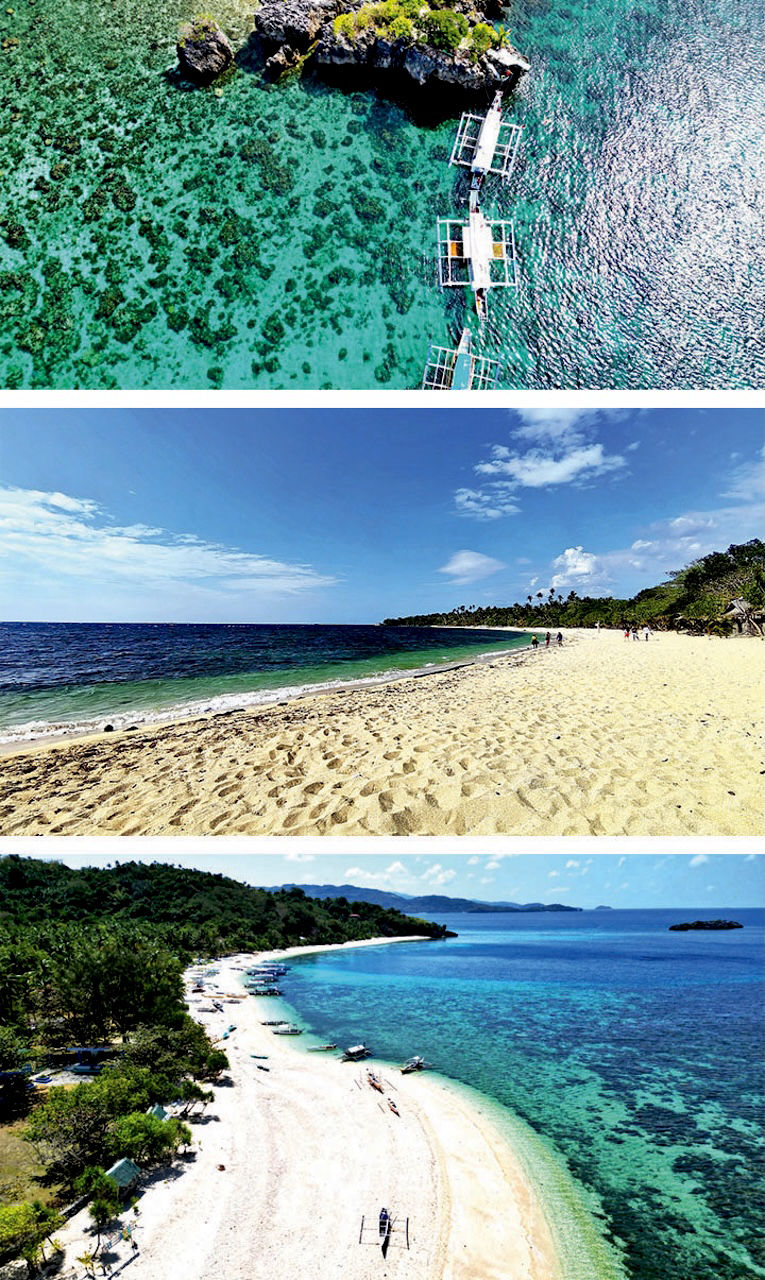
Before flying home, we made one last beach stop, this time at Looc Marine Sanctuary on Tablas Island. Adventurer snorkelers can discover a diverse array of over a hundred underwater species at this hidden gem. Our boat transported us from Binucot Beach to a pair of wooden pontoons situated in the middle of the sanctuary. From there, we were treated to a breathtaking sight of an abundance of fish—all without the need to take a plunge into the water.
Venturing into the off-the-beaten-path of Romblon in a mere week barely scratches the surface of its many wonders and weave of history and culture waiting to be discovered. As I step onto the plane bound for Manila, an unsettling desire grips me; a primal call ringing in my ear coming from the towering Mount Guiting-Guiting, daring me to tackle its treacherous trails and raise my hands while standing on its rugged summit. I guess it’s set in stone. I’m definitely coming back.

Website Building Software