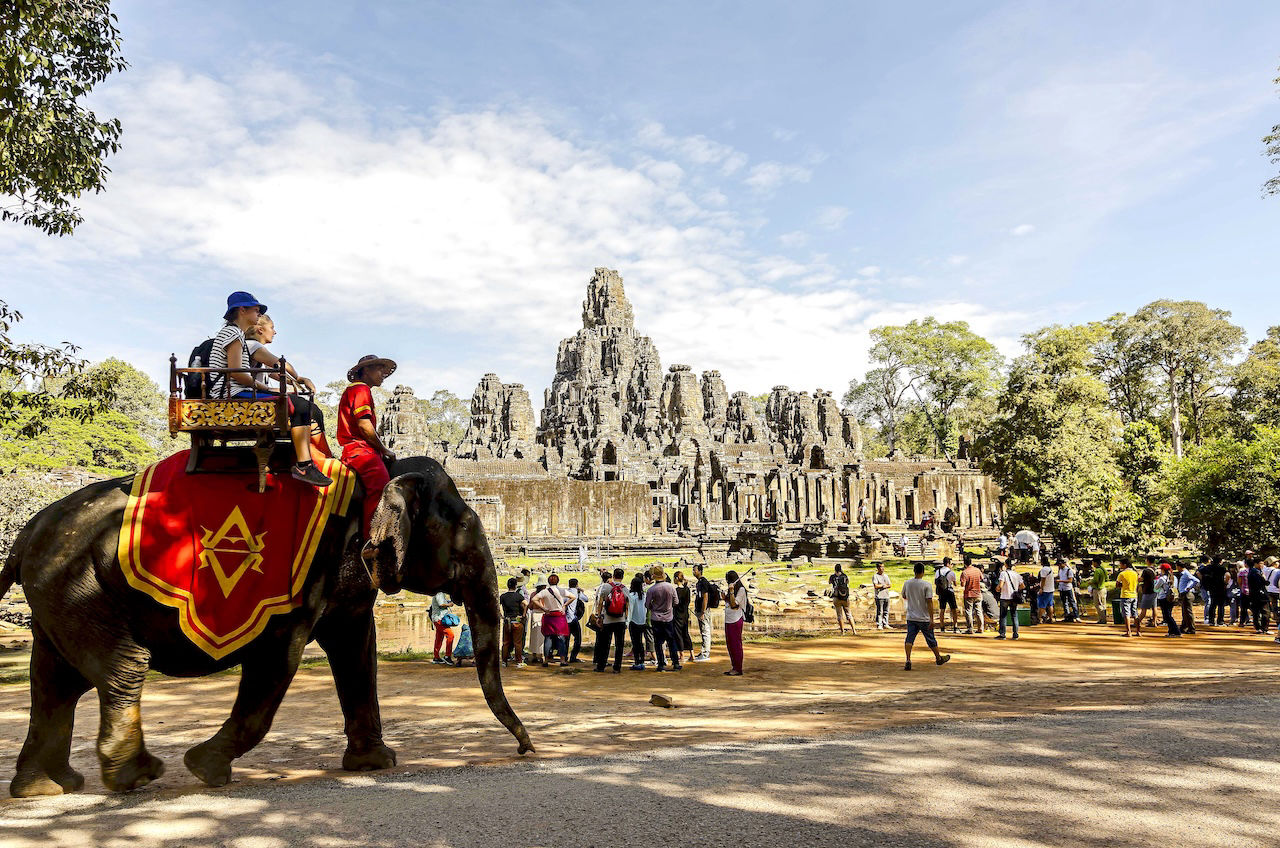
THE FLEETING YET MEANINGFUL JOURNEY TO HONOR THE SPACE WHERE ANCIENT GRANDEUR STANDS RESILIENT AGAINST MODERNITY
A break from the hustle and bustle of urban life often leads to exciting decisions towards fascinating destinations.
“If you are pressed for time, can you hack a three-day itinerary?”
My immediate answer to the question is “yes.”
Prior to making this holiday trip, my travel group and I made a key agreement: to decide on Siem Reap, precisely because a visit to the Angkor Wat Complex alone practically ticks off the major box under “Exploring Cambodia.”
Siem Reap is a rather niche choice for Filipino travelers. There are no direct flights to the heritage-rich city as of 2025, but one can opt to loop it with the more popular neighboring countries of mainland Southeast Asia such as Vietnam, Thailand, and even another gem – Laos. Cambodia is an ideal destination for those who put Southeast Asian culture and heritage high on the priority list.
I flew from the Philippines via Singapore, arriving at the new Siem Reap-Angkor International Airport. Inaugurated in October 2023, it replaced the old Siem Reap International Airport to better accommodate the increasing traffic and post-pandemic return of tourists. Landing mid-afternoon, I relaxed during the hour-long ride from the airport to the hotel located in the heart of the city where I joined the rest of the travel party.
As a tropical creature looking for a way to cool off, I went straight for a dip at the pool. The first day ended on a simple walk around the Angkor Night Market, a short distance from the hotel, and an early night cap at the nearby Pub Street in anticipation of an early wake-up call.
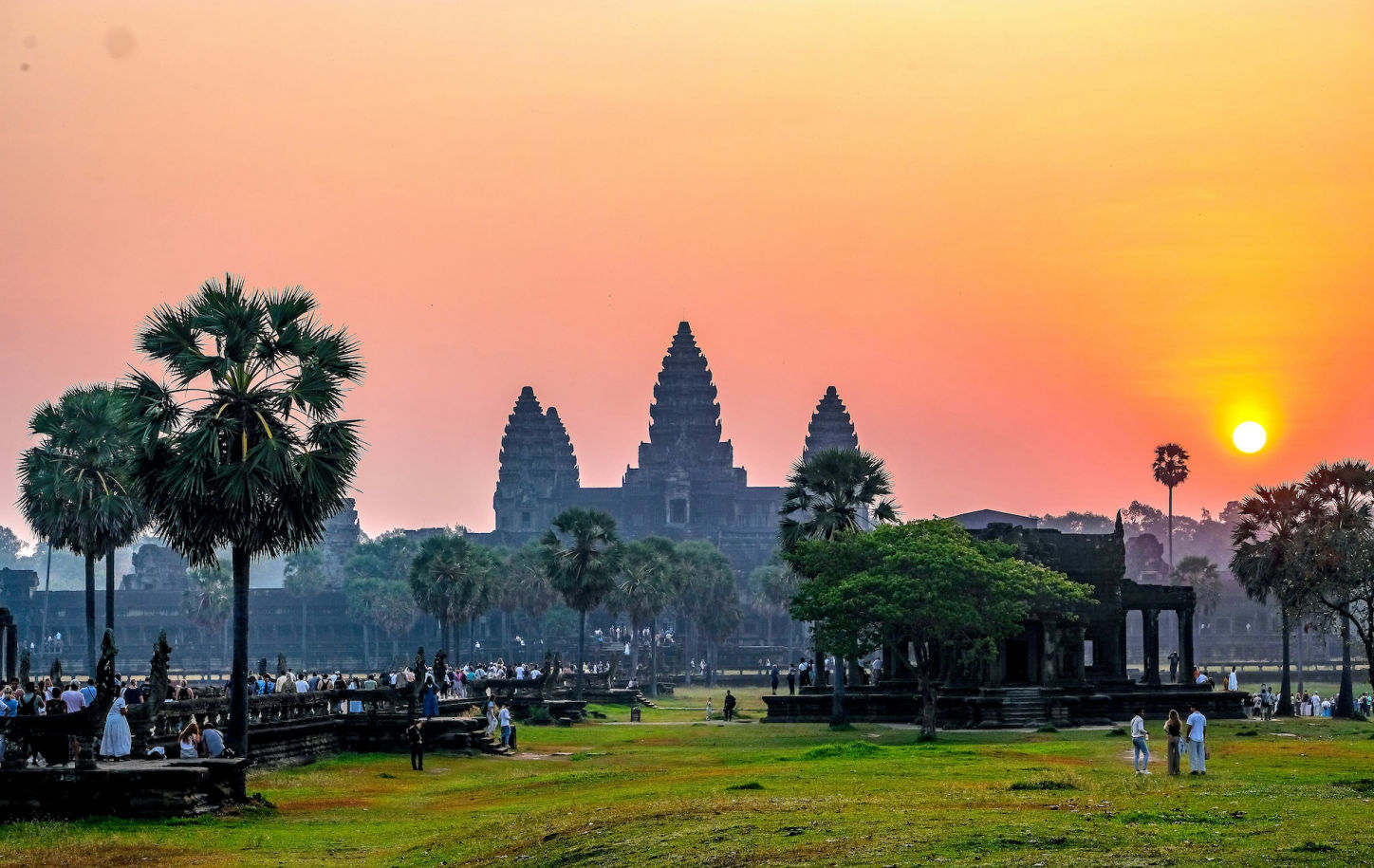
Having arranged a sunrise tour package, the tour bus picked up the group at around 5 in the morning. Angkor Wat was a short ride from the hotel, and the ticket lines were not so long despite every paying adult having had their photos taken for the ID which doubled as a ticket, too. There were three options: a one-day pass, three-day pass, and seven-day pass. We opted for a one-day pass. Armed with water, hats, sunscreen, sunglasses, and comfortable shoes, we were ready to anticipate the rising sun.
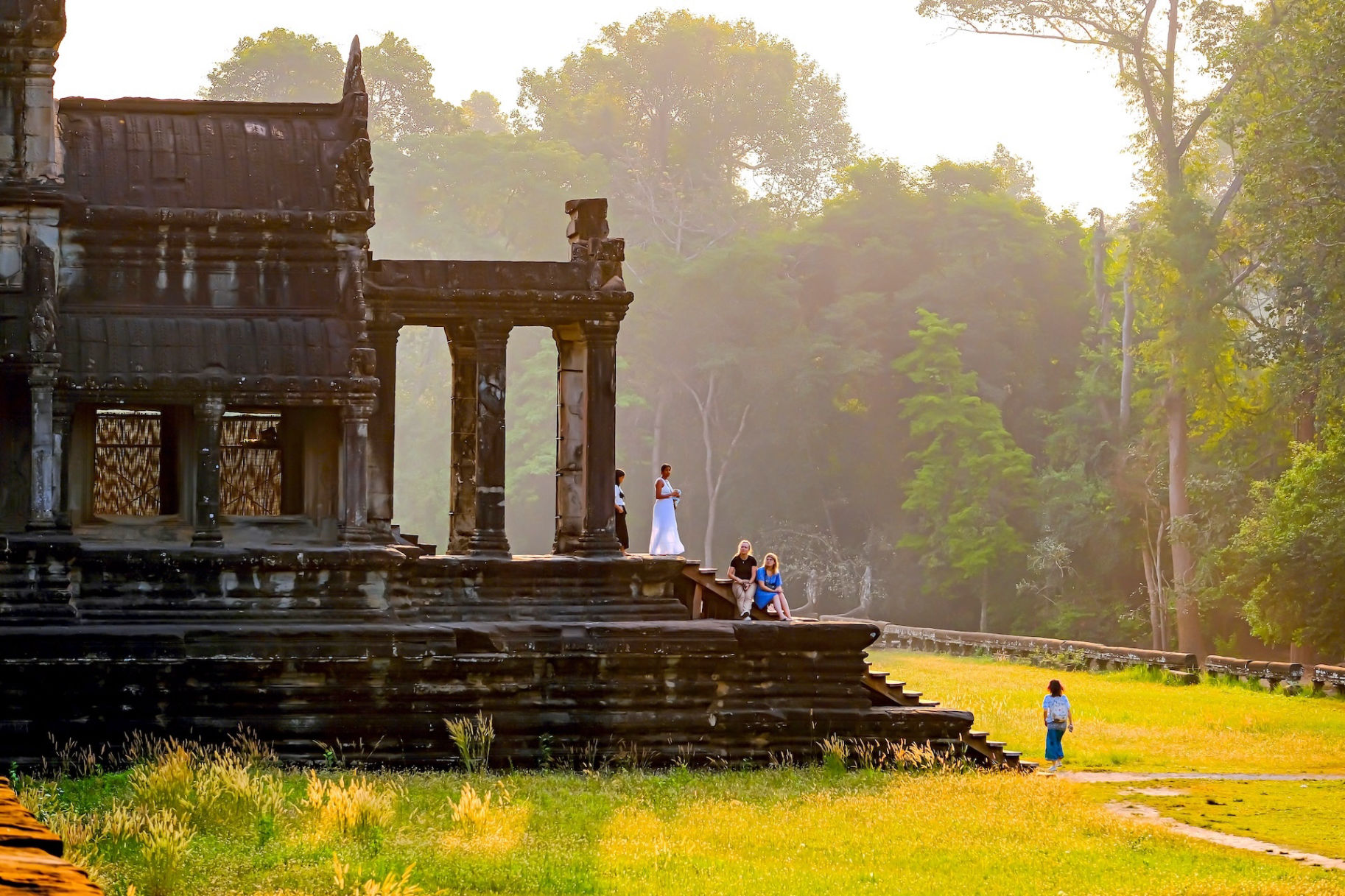
Angkor Wat, as one of the largest religious monuments in the world, is a UNESCO World Heritage Site which stands as a testament to the grandeur of the Khmer Empire. It was built in the early 12th century under the directive of King Suryavarman II in Yaśodharapura or the present-day Angkor. The recognizable features of the Khmer architectural masterpiece are the pyramids, towers, and bas reliefs. Thus, it was a majestic opening salvo to see the sun rise over the silhouette of the spires, with the complex coming alive in golden hues. It is no question that it was a photographer’s paradise.
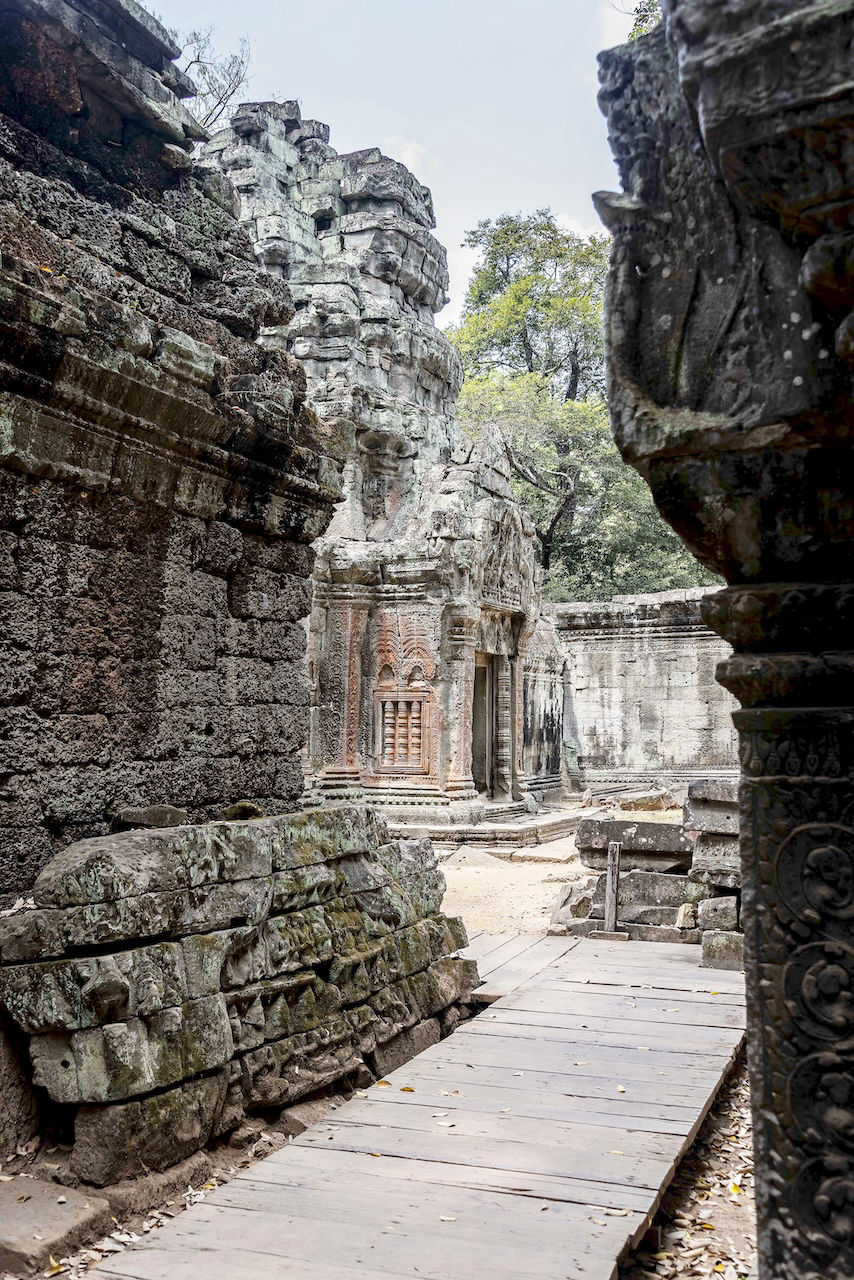
We then slowly made our way inside the complex along with hundreds of other tourists. Though March marks the beginning of summer in Cambodia, travelers chose to brave the heat and humidity and unsurprisingly flock to the site. Everyone was greeted by signs and rules regulating the visit – and warnings about the mischievous monkeys – of which we were on the constant lookout for. There are about 72 major temples within the Angkor Wat Complex, with several minor temple sites across the area. My travel group prioritized three: Angkor Wat, Ta Prohm, and Bayon Temple.
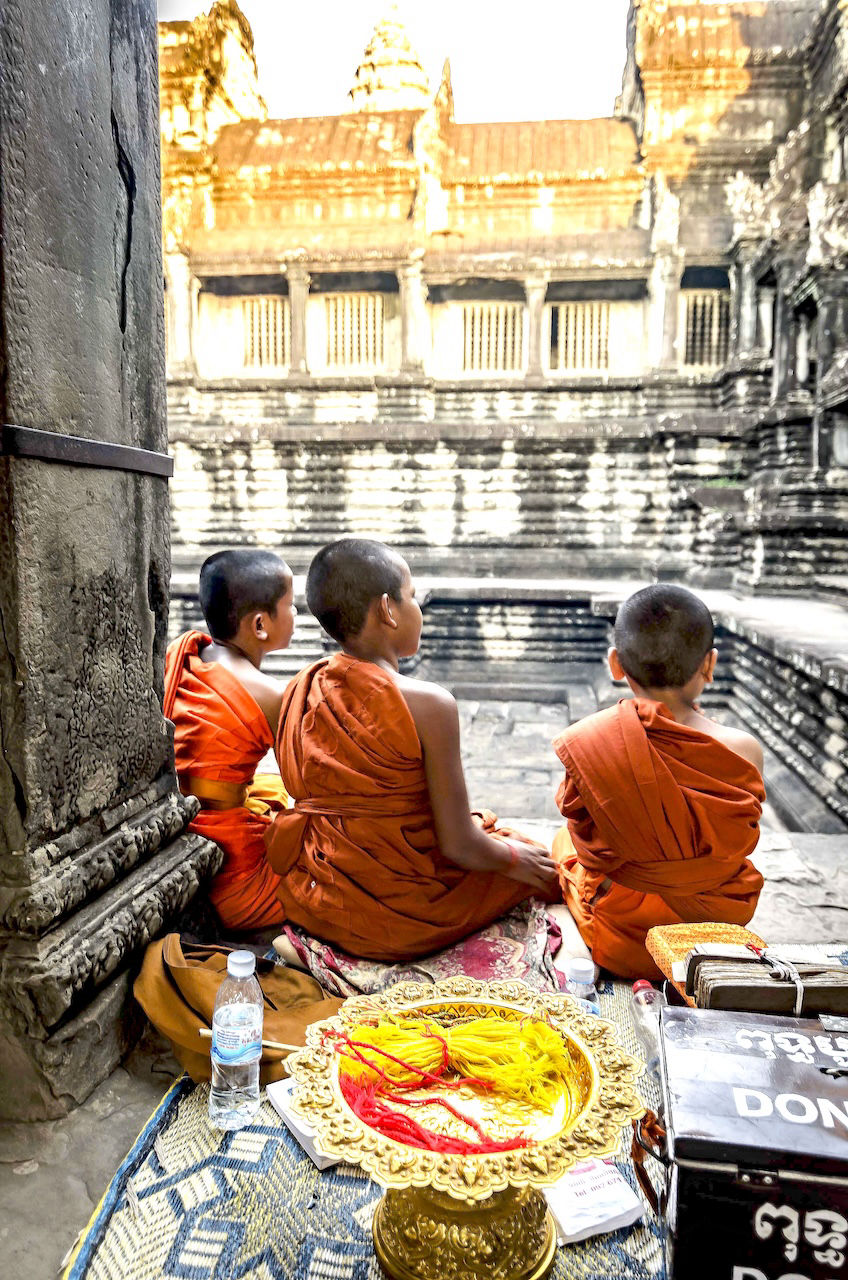
Angkor Wat is the largest and most famous of all Angkor temples. An example of classical Khmer design, it has five central towers reflecting the idea of a “temple mountain” and representing Mount Meru of Hindu cosmology. It is sprawling and expansive while maintaining its spiritual significance. At least three hours are needed to explore this temple alone. Unless you are a traveler with an extensive grasp of Southeast Asian heritage and art history, you get to retain relevant information when the stories are simplified. I said so to my 4-year-old nephew in tow in an attempt to make him understand the intricately carved reliefs depicting Hindu mythology.
One will never run out of nooks to explore and carved narratives to mull over. Nearly drenched in sweat around noontime, the guide then directed us to have lunch at a nearby restaurant where we were able to process the first half of the day.
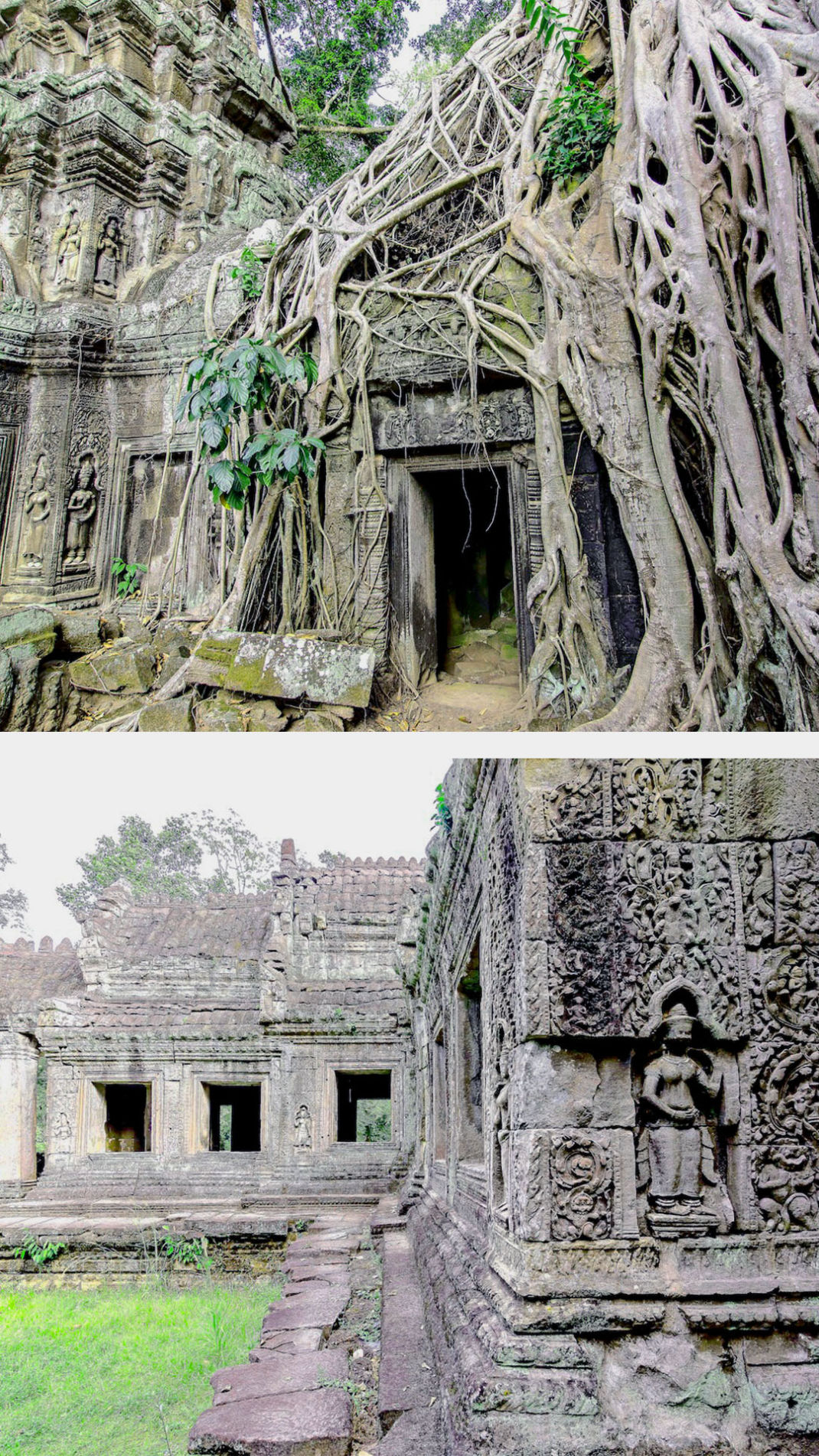
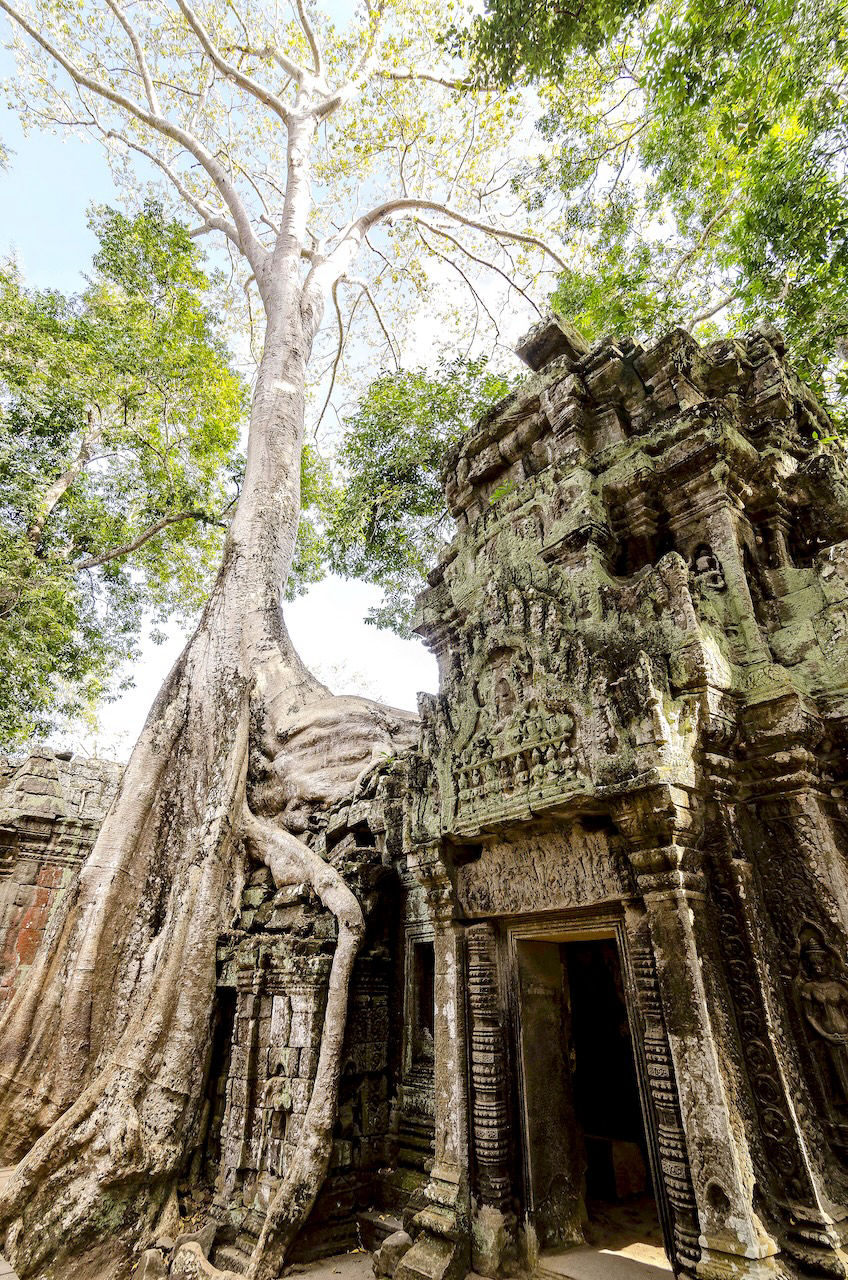
After the break, we headed to the next temple on our list. Ta Prohm is the famous location for Tomb Raider, with all guides expertly navigating the film sites for photo ops with tourists. Our guide admitted Ta Prohm’s surge in popularity was largely due to the movie. Yet even without the boost, Ta Prohm remains awe-inspiring. Massive tree roots intertwine with the stone structures, their intimidating size a foil to the enchanting and mysterious environment. Interestingly, some carvings on the temple feature what appears to be dinosaurs, sparking a friendly debate and curiosity among visitors. It could be attributed to a modern hoax care of Tomb Raider, but regardless of whether or not these shapes are prehistoric rhinoceroses or dinosaurs, they can stand on its own due to their haunting charm.
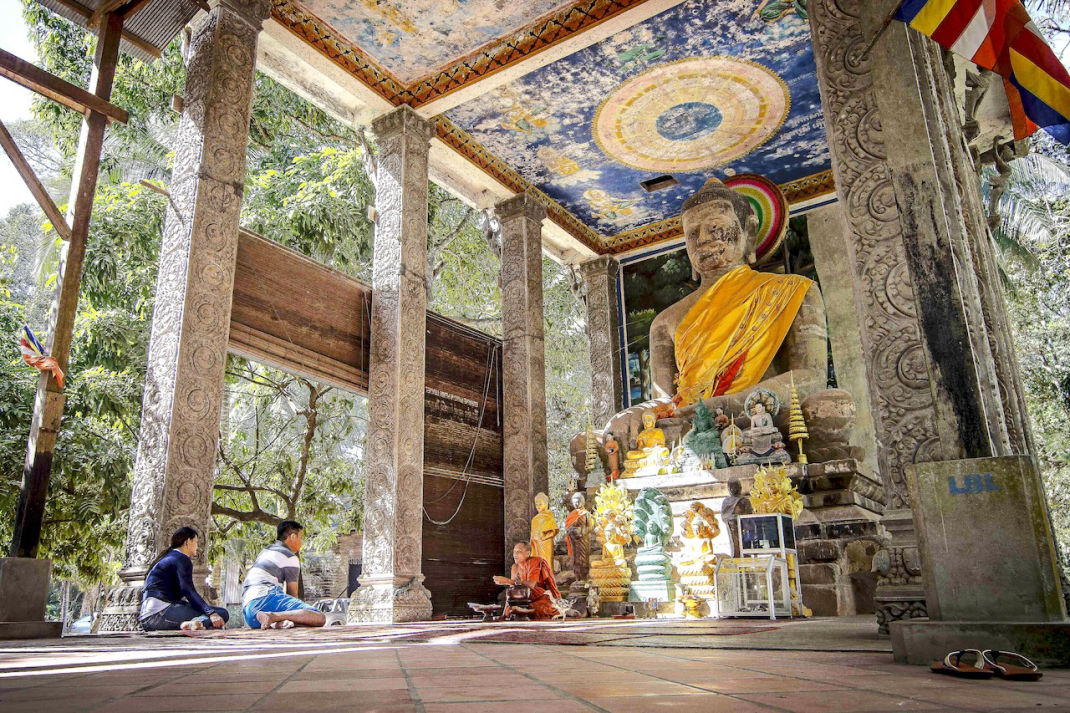
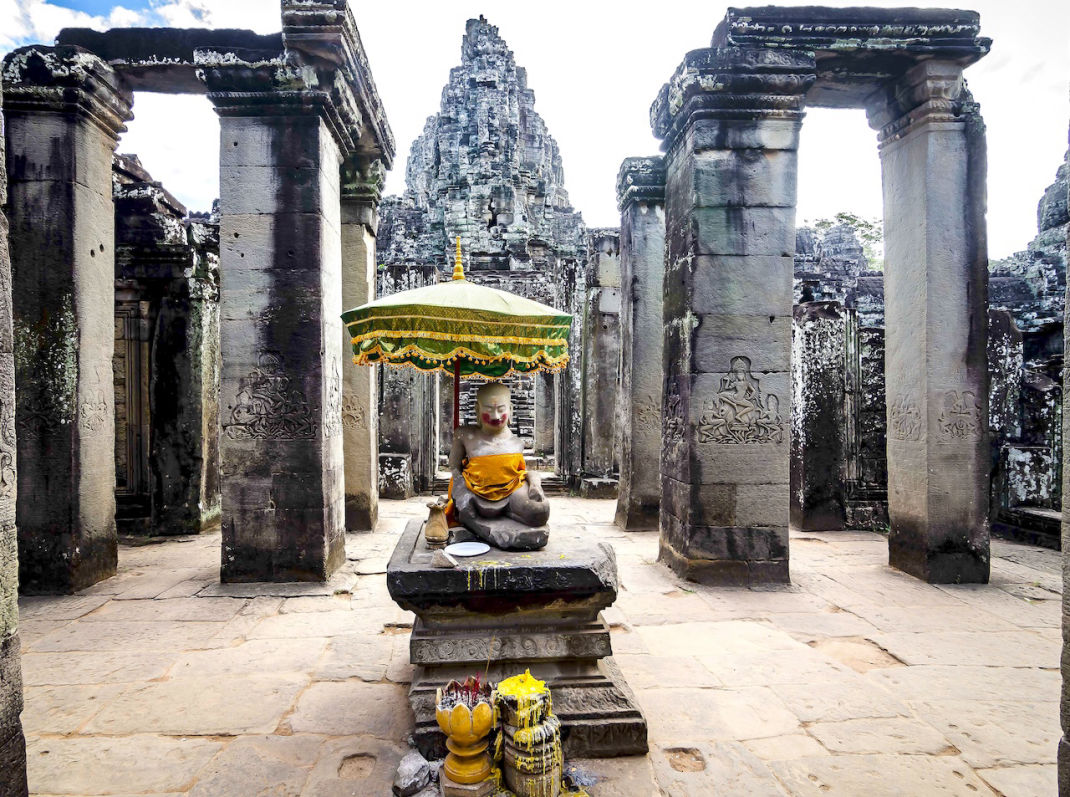
Unlike the impressionable Angkor Wat and the atmospheric Ta Prohm, Bayon Temple looks like a strange group of rubble from the distance. Considered as the last to be built at Angkor, it is only when you enter that you get to appreciate the magic. It is more well known for its numerous serene and smiling stone faces, which are said to symbolize the watchful gaze of Avalokiteshvara, a revered god associated with protection and compassion. There was a religious-political point in the history of Cambodia when the temples transitioned from Hinduism to Buddhism, the guide explained. It is in Bayon where the visages indeed evidently displayed both Hindu and Buddhist elements. Bayon Temple’s exact function remains shrouded in mystery. Like the other enigmatic smiles in art history, Bayon’s inscrutable countenances will give Leonardo da Vinci’s “Mona Lisa” a run for her money.
Late in the afternoon, we made a final quick stop at the Terrace of the Elephants, which is adorned with sculptures of elephants, horses, lions, warriors, and dancers. The structure was used as a viewing platform for King Jayavarman VII to welcome his armies returning from battles. Just north of the Terrace of the Elephants, we viewed the Terrace of the Leper King from a distance. Another of Angkor Wat’s mysteries, it has been theorized to depict either an Angkor king who had leprosy, or Yama, the Hindu god of death, the statue’s discoloration reminiscent of a leper. The original statue is currently held at Phnom Penh’s National Museum.
After more than 10 hours of incomplete temple hopping, which is perfectly acceptable given the vastness of the complex vis-à-vis the limitation of time, we were dropped off at our hotel. It was only understandable to go for either a swim at the pool or a relaxing time for a massage. These options were readily accessible, and with room enough for a leisurely time over at the lively Pub Street to complete the day.
After one full day spent in Angkor Wat, the remaining full day or two can be dedicated to free time exploring the rest of the city – whether in the hotel, in a café, in a spa, or shopping. Angkor Night Market is said to be the first night market in Cambodia located in downtown Siem Reap. Over 200 bamboo huts sell local handicrafts both traditional and contemporary. A couple of blocks away is Pub Street, which offers an array of all things fun and entertaining, catering to all sorts of traveler profiles. The bustling area is filled with restaurants, shopping alleys, live music venues, and neon-lit bars. It is quite the essential stop for night owls.
Cambodian cuisine shares the flavor profile of the Indochinese Peninsula, with extensive use of Southeast Asian herbs and spices: galangal, tamarind, basil, turmeric, and coconut milk. Amok is a must-try Cambodian national dish, which is a fragrant fish curry traditionally cooked by steaming in banana leaves. A notable Cambodian specialty is kampot pepper, a highly regarded spice in variants of black, white, and red. Beef lok lak is a stir-fried dish, getting its savory and distinct flavor from kampot peppercorns. Generally, there are no food restrictions in this predominantly Buddhist community, though vegetarian options are widely available to accommodate different dietary preferences. For the rather adventurous eaters, there is an exotic selection of food, including field insects and other unusual delicacies. I have tried snake, scorpion, and tarantula. Often deep-fried, each type has a distinct taste and texture. Tarantula was rather tender inside despite the outside crunchiness. I chipped my tooth when I bit on the deep-fried water snake, as it was tough as leather. This may not be a culinary tradition, but Cambodians believe that their sources of protein are __________ and therefore beneficial for health.
Beyond its cuisine or its reputation as a tourist destination, Cambodia will continue to extend its charm to an ever-increasing number of sectors. Justified by the country’s years of experiences in planning trips, a decidedly brief itinerary of a trip to Siem Reap is possible and certainly applicable across a wide range of ages, nationalities, quirks, and personal preferences. This is a positive proof of the versatile offerings of the country, and this temporary escape has been a welcome reprieve to me and my travel companions. The journey, however brief, is the necessary space to seamlessly recharge, rediscover, and create memories.

Free AI Website Creator