SOUTHERN BALI:
OF PORTALS & PILGRIMS

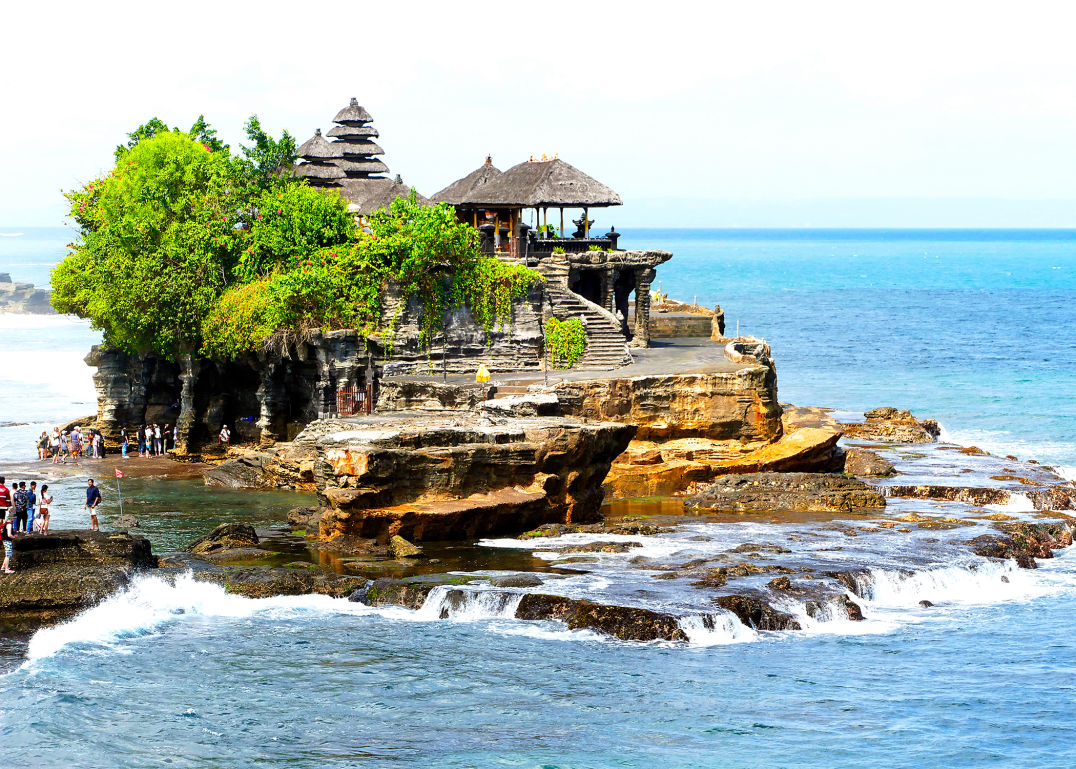
All the way from Denpasar, travelers enter Bali from the south, and aptly pass through the sacred grounds of Tanah Lot

If you’re a traveler coming from a country whose geographic makeup does not differ much from Bali—in my case, I take root from a tropical archipelago as well, studded with beaches, volcanoes, lakes, hills, falls, and mountains—what could you possibly find different or unique in your journey to this Indonesian island? As it turns out, in my case, everything.

That’s because despite my familiarity with the type of Bali’s geographic makeup, the energy that Bali exudes per square inch of its earthy magnificence is something I’ve never seen or felt in any of my travels anywhere. I have never seen nor been to a place where the land’s spirit seriously lives in each of its sons and daughters, thus giving the entire landscape an indescribable air, a distinct sacredness. This is what Bali is, a holy ground. And I sensed and deeply felt this immediately, as soon as I stood before the gates of Tanah Lot. 

Mobirise Website Builder

The Tanah Lot temple complex faces that tempestuous Indian Ocean as it has its gates wide open to travelers from around the world.

A foregrounding upon entering ‘the land in the sea’

Tanah Lot, widely held as a must-see destination for any Bali traveler, is actually a temple complex that includes the Tanah Lot Temple (or Pura Tanah Lot in Balinese) and several other temples within its grounds. The main temple, Pura Tanah Lot, is the world-renowned temple on a small rock island along Bali’s southern coastline where the rest of the complex lies. Tanah Lot encompasses little strips of black sand coves facing the tempestuous Indian Ocean, where waves upon waves constantly roll in. The sea here is anything but calm, and it is said that these mighty waves shaped the rock upon which Pura Tanah Lot stands.

Our guide Artana provided us with all the necessary contexts for understanding this particular part of Bali. He explained that Tanah Lot is intricately tied to the history of Bali, and of spiritual importance to the Balinese, specifically those who practice Bali Hinduism. While the majority of Indonesia is Muslim, a greater part of Balinese Indonesians practice Bali Hinduism as their religion, making Bali even more distinct from the rest of Indonesia. Artana’s religion is Bali Hinduism as well, his 70-year-old father is even a priest, so we were in good hands all throughout our Tanah Lot pilgrimage.
He did not need to give us the entire history of Bali Hinduism, though, because as he explained, there are basically just a few things we needed to specifically know about it in relation to Tanah Lot. One, that the temple was created by the last legendary priest from Java named Nirartha, who united the Balinese during the 16th century by way of establishing a Hinduism that embraces various forms of reverence to numerous nature gods, as well as ancestor worship. Two, that Tanah Lot is a dedication to the sea god and the spirits of the sea. Tanah Lot is therefore a testament to the Balinese reverence to nature and its forces.

I thought perhaps this also explains why the very gates of every temple within the complex somehow frames a natural view in a strangely alluring way. It has something to do with how each intricately carved gate stands, with imposing straight lines facing each other, leaving a distinct space in between that captures a fragment of a view of the land, or the skyline, or a part of the ocean. As it turns out, the gates are intended to signify a split mountain, and each space in between is precisely a space for passing through. As Artana pointed out, the gates are like portals. No wonder that the way the gates reach up to the sky also evokes an otherworldly feeling, and as I stand outside looking in, I can’t help but be drawn towards the strip of beauty teasing me from inside, as if calling me, “Come on in—pass through.”

Closer and closer, cliff after cliff

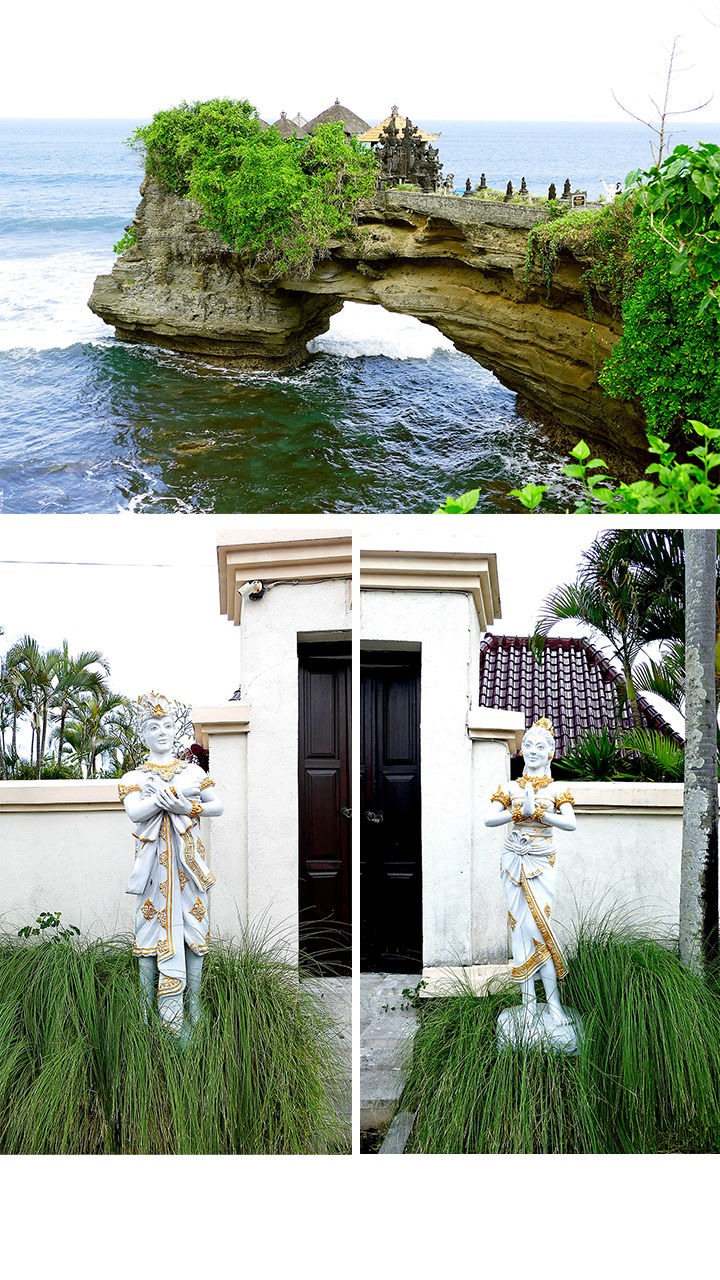
In one of the cliffside views within the grounds of Tanah Lot, I saw a striking sort-of land bridge jutting out into the ocean, at the end of which also stands another temple, Pura Batu Bolong. Like Pura Tanah Lot nearby, it’s an iconic view often seen in most Indonesian postcards, with its characteristic hollow underneath. Appealing as it is, I opted to forego asking if we could go there, because heading to the main Tanah Lot temple, to come as close to it as I possibly could, is my primary goal. Also, I was aware we were operating within a limited timeframe, just right before more tourists start pouring in, because Tanah Lat tends to attract more visitors as the day progresses, mostly those who come there for the sunset. It was still morning and we had some time left before noon strikes. I followed Artana’s lead as we marched off closer to my aim.

Mobirise Website Builder

Top: Pura Batu Bolong; Bottom: Magnificent sculptures of spirits adorn the temple complex. 


Along the way, we passed by other Tanah Lot temples, smaller but nonetheless mystifying. One that also struck me was the Pura Enjung Galuh, as black and as sleek and as artistically carved as all the rest of the temples within the complex. Immediately from behind this temple is another cliffside view, one that actually gives us the best view of Pura Tanah Lot, Artana informed me. We were amid a bunch of travelers who spoke what sounded to me like French and Indian, and they were all awaiting their turn to get to the wooden railings at the very edge of the viewing deck, to get their perfect photo angles. I observed Artana becoming silent at this point, perhaps trying to sense if I wanted to join that pack. But again, I was not interested in the cliffside ocean views, because what I really wanted to do was go nearer to the actual main temple—and as if finally spurred by the view that I just saw, I suddenly felt the desire to enter. This was not part of the day’s plan, but God knows when I can return to Bali and Tanah Lot again.

I came up to Artana and asked him once and for all if I can actually go inside Pura Tanah Lot, the main temple. As if not wanting to break my non-Bali-Hindu heart, he answered by pointing out his hand to the main temple, directing my attention to the playful tide surrounding the temple’s island rock. You will not be able to cross that, he firmly said, but another temple ground, just opposite the main one, is open. It’s there where the priest is now, actually, not on the main temple, Artana explained, and it is also where the people pray instead when the waves and the high tide hinder them from reaching the main pura, such as today. I asked him next if I can go inside that particular temple ground, at the very least, and if I can pray there too, even for a very short while. He nodded and spoke—yes.

I came up to Artana and asked him once and for all if I can actually go inside Pura Tanah Lot, the main temple. As if not wanting to break my non-Bali-Hindu heart, he answered by pointing out his hand to the main temple, directing my attention to the playful tide surrounding the temple’s island rock. You will not be able to cross that, he firmly said, but another temple ground, just opposite the main one, is open. It’s there where the priest is now, actually, not on the main temple, Artana explained, and it is also where the people pray instead when the waves and the high tide hinder them from reaching the main pura, such as today. I asked him next if I can go inside that particular temple ground, at the very least, and if I can pray there too, even for a very short while. He nodded and spoke—yes.

"Tanah Lot, built as a dedication to the sea god and the spirits of the sea, is a testament to the Balinese reverence to nature and its forces."

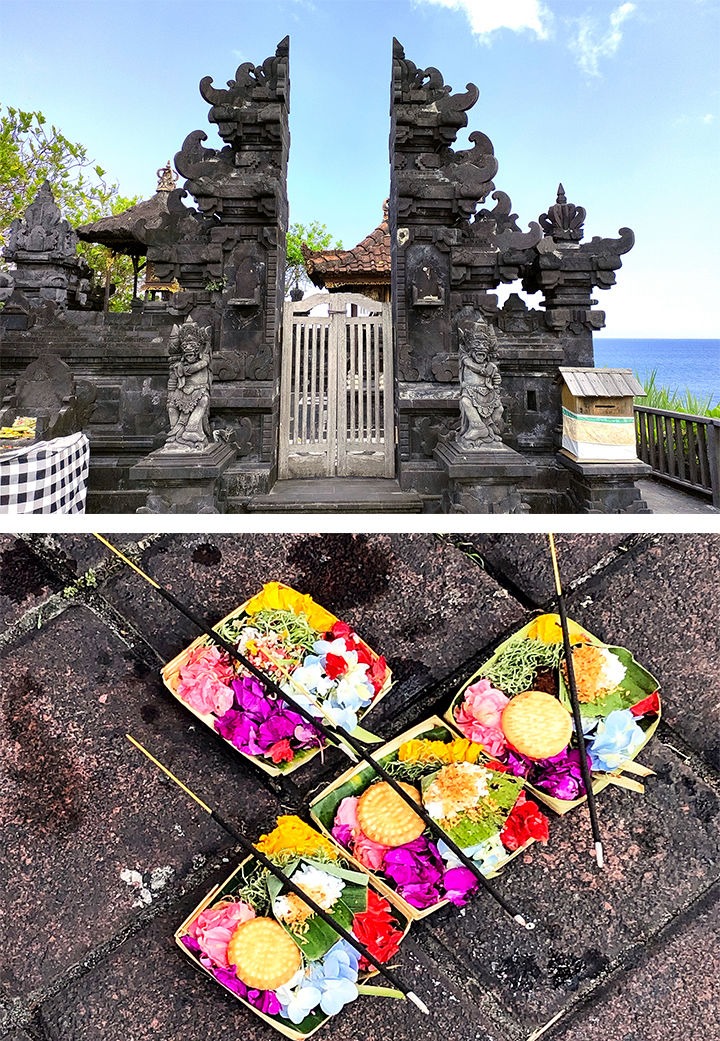
So we continued our march towards that temple ground opposite Pura Tanah Lot, passing by other temples again, such as Pura Jro Kandang, which like all the other temples also bore offerings of incense and canang sari at its carved gates, a portion of which is draped in golden cloth. I already knew what a canang sari is for, because even before we entered the complex, four of these exquisite leaf plate offerings of little flowers and pieces of food already caught my eye, right near the entrance to the first huge gate, laid down on a pavement. Artana explained that they are offered to ask for balance, so that despite the frantic touristy energy of people like me, endlessly passing to and fro and through, harmony can still be maintained. Little did I know I would come back to that exact spot of those four pieces of canang sari at the complex’s entrance, before I could even set foot into the temple grounds. 

Mobirise Website Builder

Top: Entrance to the temple complex; Bottom: Four pieces of canang sari are laid down as offerings

Finally, from within

As we walked, I apologized to Artana, and to our handler Adjie, for taking too much time and for my sudden temple entry request. In our entourage, I was actually the only one who insisted on trying to enter the main temple, despite the tightness of our schedule and obvious restrictions on non-Balinese Hindu. But as I’ve said, I do not know if life would ever grant me a chance again to return, so I better seize this chance now and ask to be brought to the temple. It’s alright, you’re on a mission, Adjie cheerfully assured me, while Artana, contemplative as always, asked me a few preparatory questions to ascertain that I could gain entry – such as ensuring that it is not my time of month, asking this in the most gentlemanly and discreet manner possible, almost like a whisper and with a respectful nod, no woman of any religion could possibly take offense.

Suffice it to say that despite Artana’s careful prepping of me with information and reminders, we all overlooked the simplest thing, which we did not realize immediately. Artana was speaking with the priest inside the temple, while I and Adjie waited outside the narrow temple gate, with me desperately hoping that the priest would be merciful and still let me in, despite me not being a Balinese Hindu. I could make out that Artana was explaining my circumstances, and soon enough I heard the priest asking, in reference to me, “Pilipina?” I saw Artana smiling and nodding as he answered. Then Artana stepped out and told me and Adjie of the priest’s one condition for my entry: I must wear a sarong. I did not have a sarong, except for a piece of cloth that could work, but is locked somewhere in my luggage. Adjie then remembered that he has in our van a drape, just tucked in his paper bag, which I can use. So we marched off, out Tanah Lot and to the parking area, heading to the van where he handed Artana the cloth before parting from us to look for our other companions. At the spot of the four pieces of canang sari by the huge entrance gate, Artana unfurled the cloth, respectfully addressed me again to lift my hands and dangling purse, then wrapped the cloth around my waist. We then took our quick steps back to the temple grounds, as fast as we could without running disrespectfully.

The priest now welcomed me in, and with no other visitor except for Artana and myself, Artana stood, knelt, and sat with me all throughout, speaking slowly but clearly of what I must do, to look at him and to follow his lead. I then let go of my embarrassment and guilt from the hassle I brought upon us. Gradually, I surrendered to the gratitude that overwhelmed me. I felt grateful for the moment, high noon and a perfect time for prayer as Artana later explained, for its intimate solemnity. I felt grateful for my guide, this intelligent and caring Balinese, teaching me how to join my palms in prayer, how to pick up flowers from the canang sari before me to clip them at the tip of my fingers, how to hold my head as the priest sprinkled me with water, and how to drink the water that the priest poured out into our hands. I felt grateful for the compassionate priest pressing rice grains on our foreheads, what Artana calls “God’s eye.”

And I felt grateful for the simple sarong, signifying my reverence and my submission, and my absolute awe of the main temple right across us, endlessly battered by a wild ocean. Pura Tanah Lot, I then realized, has stood strong all these ages amid those mighty waves not in resistance, but instead to receive—it stands exactly where it is as a perpetual act of welcoming tides upon tides of blessings. 

Mobirise Website Builder

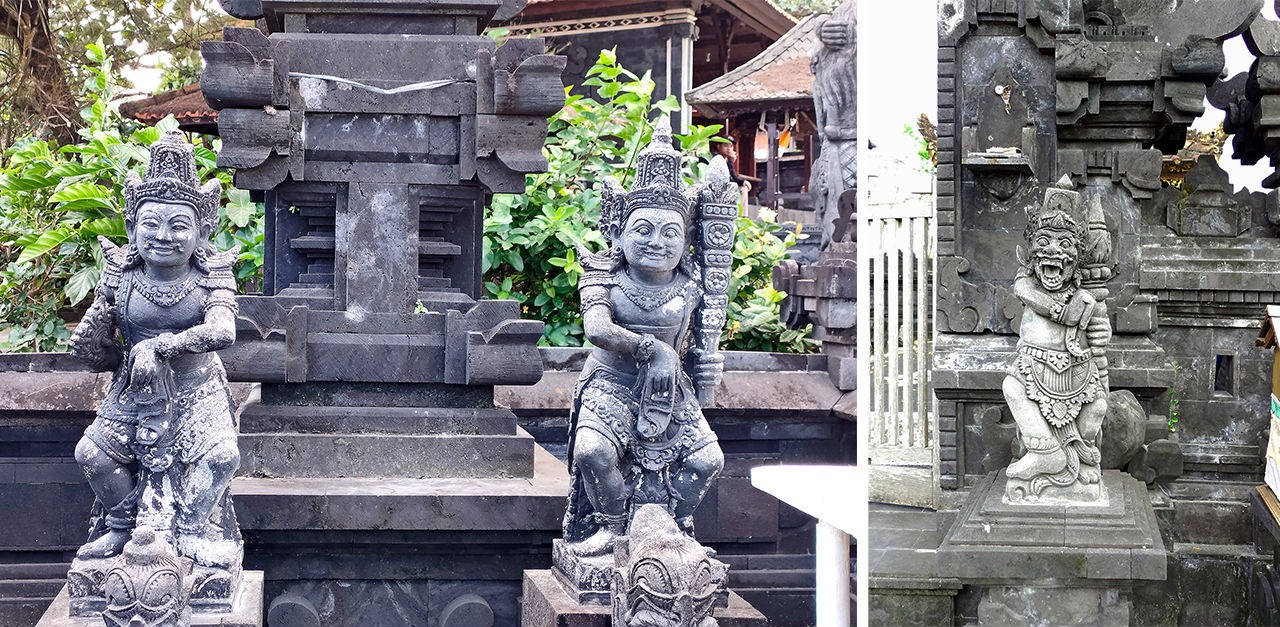
The Balinese are renowned for their art, a fact well-established by the exquisite sculptures adorning the gates of their temples

ANTAGANA RETREAT:HEAL AND BE NOURISHED HERE

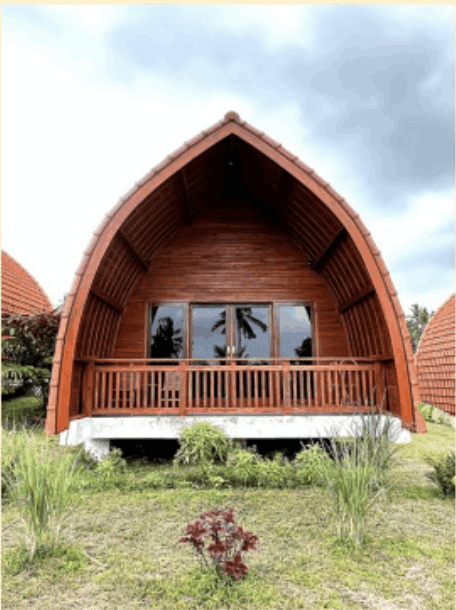
An ideal stopover after visiting Tanah Lot would be a hearty, healthy lunch at Antagana Retreat in Tabanan Regency. This hectare of land bearing 10 teak bungalows and a two-storey restaurant is owned by the warm and welcoming Indah Ratna, who aims to offer Bali travelers a place for self-healing. While she did not first envision the land for business, wanting it initially to be a place where she can accommodate friends, she eventually saw its potential to be a sanctuary for the weary. Thus, Antagana Retreat was born.

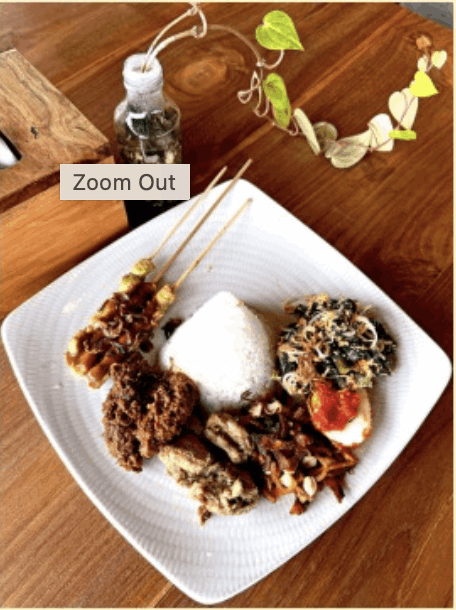
All meals here are prepared using locally-sourced ingredients – if not grown within the property, they’re bought from the villagers’ farms. Thus, guests can expect nutritious, seasonal dishes on the menu. For instance, lunch can open with a mild yet flavorful chicken soup, made with generous chicken chunks, soft potatoes, and crunchy carrots, in a smooth warm broth. A generously plated main course follows, bearing six traditional dishes in one go for each guest: ayam bakar, beef rendang, chicken stew, fried string potatoes with peanuts, spice-coated boiled egg, and lawar kacang. All this, of course, comes with a heaping mound of hot white rice at the center.

Dessert is crispy banana fritters, served with an assortment of homegrown teas – tamarind-turmeric, jahe or ginger, and red tea from rosela blooms. Fresh coconut juice straight out of the husk can be served too upon request, such as when this writer randomly asked if the coconut trees are also Ratna’s, and next thing we knew, the coconuts were already at the table.
But the star of the retreat would have to be the bungalows, all designed by Ratna and overlooking a lush view of Tabanan’s farm lands. Choose from intimate units ideal for honeymooners, or take the bungalow with a loft and three beds, perfect for families. 

Mobirise Website Builder

Subscribe to us

Exclusive offers in your inbox

HTML Website Builder