If You Ever Find Yourself in Versailles
In this little commune in France, a palace and estate exude majesty, emanating centuries of French history and royalty. Abandon the city and tread with eyes open in the sprawling landscapes of Versailles.
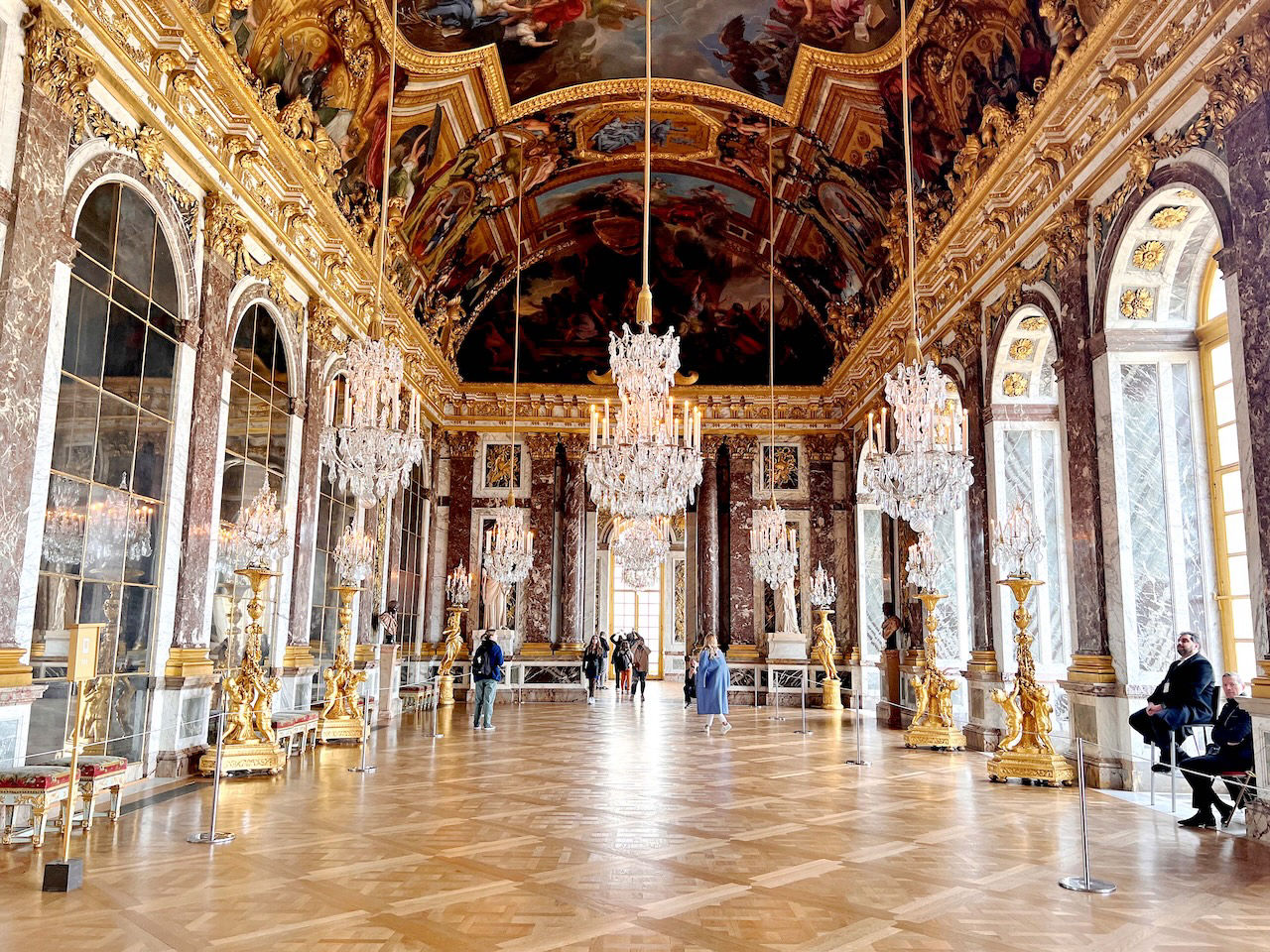
In this little commune in France, a palace and estate exude majesty, emanating centuries of French history and royalty. Abandon the city and tread with eyes open in the sprawling landscapes of Versailles.
If you ever find yourself in the most romantic city in the world on a morning so early in the third month of such turbulent times, depart from it. The air is putrid and the sidewalks are littered with heaps of garbage spilling over the major roads.
You look at the clock on the bedside table of your 3-star hotel: it is fifteen minutes before sick o’clock. Outside, a sense of abandonment envelops the alleys in between opulent beige apartments, the sunlight shining off its gleaming whirls on their walls.
A few days ago, you were mulling: you would have purchased a piece of croissant and a cup of hot chocolate for takeaway to the Louvre, whispered a litany to the men of Renaissance there, clicked on the camera shutter in front of the Mona Lisa, and wasted time at the curbside near the glass pyramid.
Yet here you are now, a good hour later, rushing to the Gare de Paris-Montparnasse, where your stomach is churning from hunger. You see that all of the retail stores lining the station are still closed. You enter the station and stand in front of an empty railway as you wait for the train that will take you to one of France’s most famous suburbs.
You, along with many other visitors to the City of Light, carry the weight of a city in revolt. The country has been brewing in violence over the few weeks, churned by a long battle over pension reform as well as deadly heatwaves and nationwide rioting. This trip to the French commune will be a much-needed respite of sorts, you tell yourself.
Versailles is another world where you’re not.
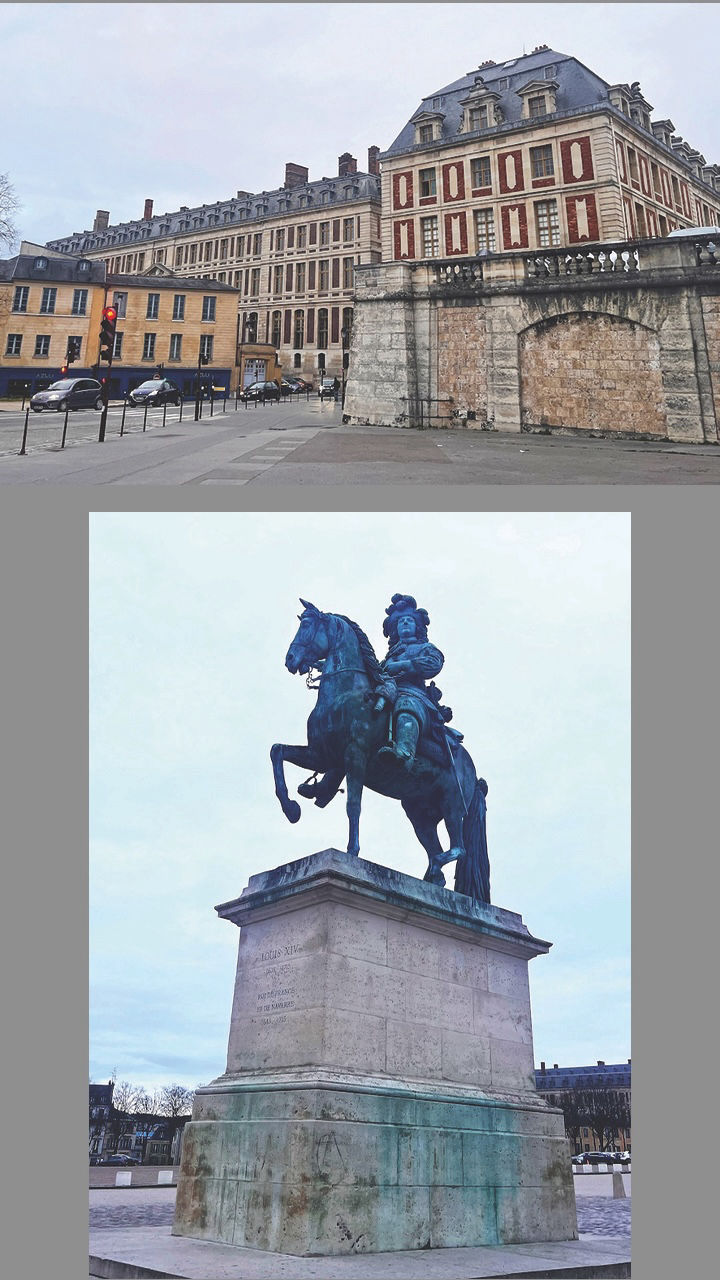
The equestrian statue of Louis XIV.
Versailles, the commune situated in the Île-de-France region near Paris, is a vibrant and historically rich destination just on the outskirts of the French capital. Established in the 17th century, the place has evolved into a lively urban center that holds a historical significance, tracing the lives of the French monarchy.
Thirty minutes later, you pass by the French countryside. After another twenty minutes, you arrive at the Versailles Chantiers station, where the buzz of the crowd seems to have subsided. Take the exit to the Rive Gauche Avenue, where you will see Renault and Peugeot cars tailing one another.
If you ever find yourself famished in Versailles and wanting a break from the French flair that tartines, confiture, and café au lait have to offer, worry not. Make no mistake about it: the first thing you will see coming from the station along the Rive Gauche is a McDonald’s.
Pause for a while. Then walk towards the intersection of Rive Gauche Avenue and Avenue de Paris and take a left. Take a moment to feel the hush around you, starting from the array of trees that line the avenue and lead to the equestrian statue of Louis XIV.
At the heart of Versailles is its well-preserved Old Town, a maze of narrow cobblestone streets and quaint squares lined with quaint cafes, boutiques, and local markets. You learn of the Saint-Louis Cathedral, an architectural gem, that dominates the skyline and adds a touch of antiquity to the low-rise cityscape. You watch the stream of people walking the sidewalks and imagine a glimpse into the daily life of Versailles residents, with its local markets, bakeries, and centuries-old architecture.
Remember that this is what you left the city for. The energy of a small commune and the allure of the nearby woods. The destination you have come for awaits behind the statue. Come and abandon yourself in the name of all things grand.
If you ever find yourself lost and without a map in Versailles, follow where the trees lead to and where the people go. You will likely arrive at the same destination, one that has served as one of the most iconic places in Europe.
Remember the fact that Versailles Palace never assumed the defensive function characteristic of a medieval fortress. Instead, during the Renaissance period, the term “chateau” began to denote the rural setting of an extravagant residence.
Here now, pass through the golden gates. The iconic Palace of Versailles, located just outside Paris, welcomes you into a world of opulence and extravagance. You will see the allure of a bygone era, where French monarchs once held court, all from the heart of a regal masterpiece.
Come see the grandeur set at the Royal Antechamber, where visitors are immediately immersed in the sumptuous world of Louis XIV, the Sun King. Gilded walls adorned with intricate tapestries, chandeliers dripping with crystal, and a magnificent marble fireplace ask for your attention. You make space for yourself in the wide corridors of the palace and the resplendence of the surroundings, each painting, furniture, sculpture, and furniture meticulously placed to reflect the monarch’s authority.
If you ever find yourself wanting breathing space, find and step into the famed Hall of Mirrors. The hall is a dazzling display of hundreds of mirrors lining the seventeen arches opposite seventeen windows, creating an illusion of infinite space. Sunlight dances on the gilded moldings, casting reflections that shimmer and multiply, encapsulating the Baroque period.
Count your steps if you can. Calculate your movements and imagine yourself steeping in grace. You might just find yourself inside the State Apartments. The King’s Bedchamber feels like the setting for a royal masquerade ball just before the Revolution.
And in the Queen’s Bedchamber, you will see pastel hues and delicate lace create an atmosphere of ethereal femininity. Sharpen your sense of smell for a while. You might just catch the whiff of lavender and rose petals in the air, as if the royal phantoms have left behind fragrant imprints for you to follow.
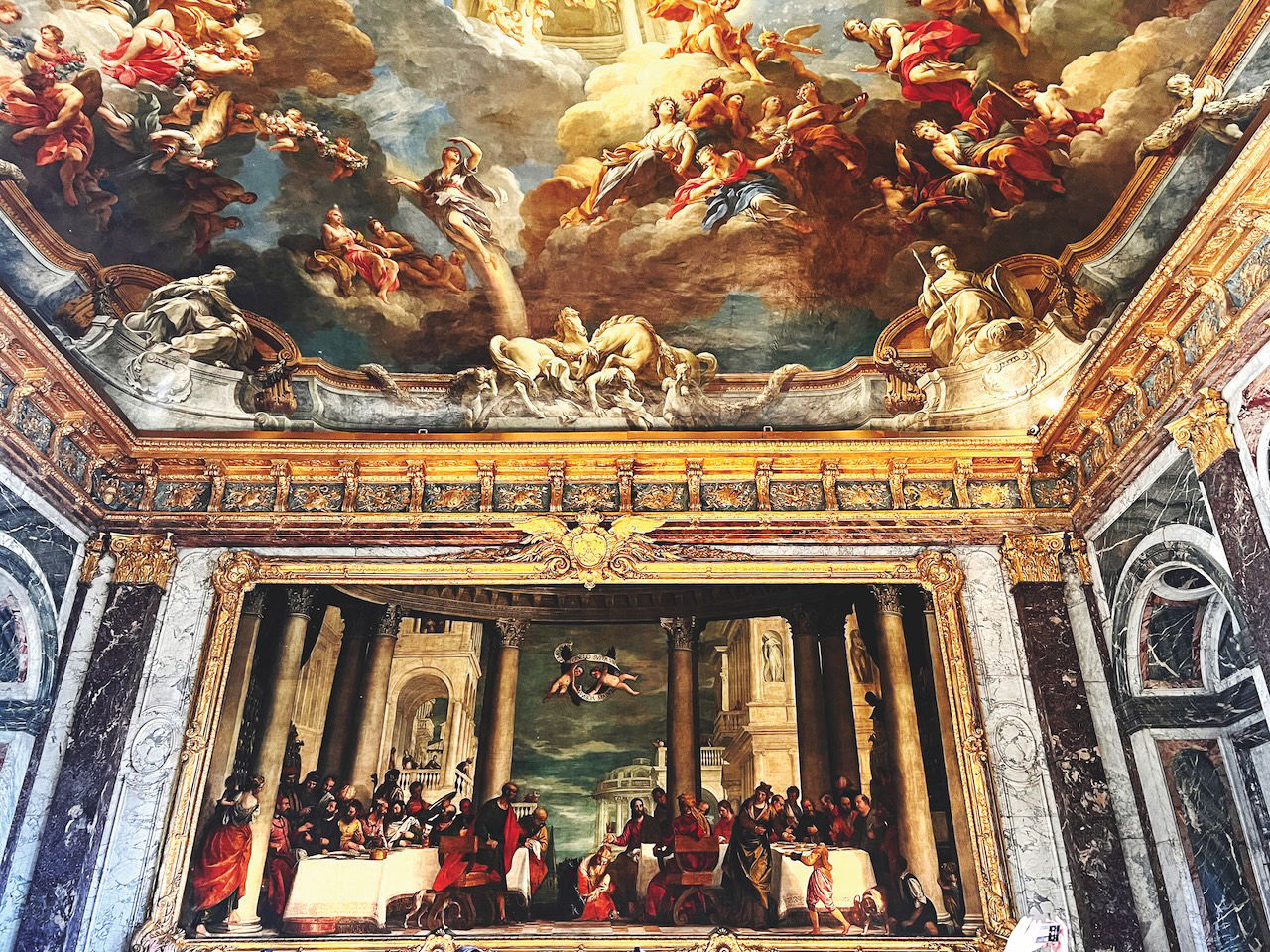
Experience the grandeur of the Royal Antechamber, where visitors are instantly immersed in the opulent world of Louis XIV, the Sun King.
The EstateIf you ever find yourself wanting some breathing space, take a step outside of the Palace and embrace the solitude of open spaces. There is a world beyond the palace walls.
The meticulously landscaped Gardens of Versailles should sprawl before you like a living work of art. The geometrically arranged flowerbeds, grand fountains, and sculpted greenery showcase the meticulous planning of André Le Nôtre.
Notice the sensation of crushed gravel beneath your feet as the spaces take you to geometrically arranged flower beds and perfectly aligned rows of towering trees. The gardens, carefully planned and executed, captivate the senses with their visual splendor and the sweet fragrance of blooming flowers if you are visiting in the spring and summer.
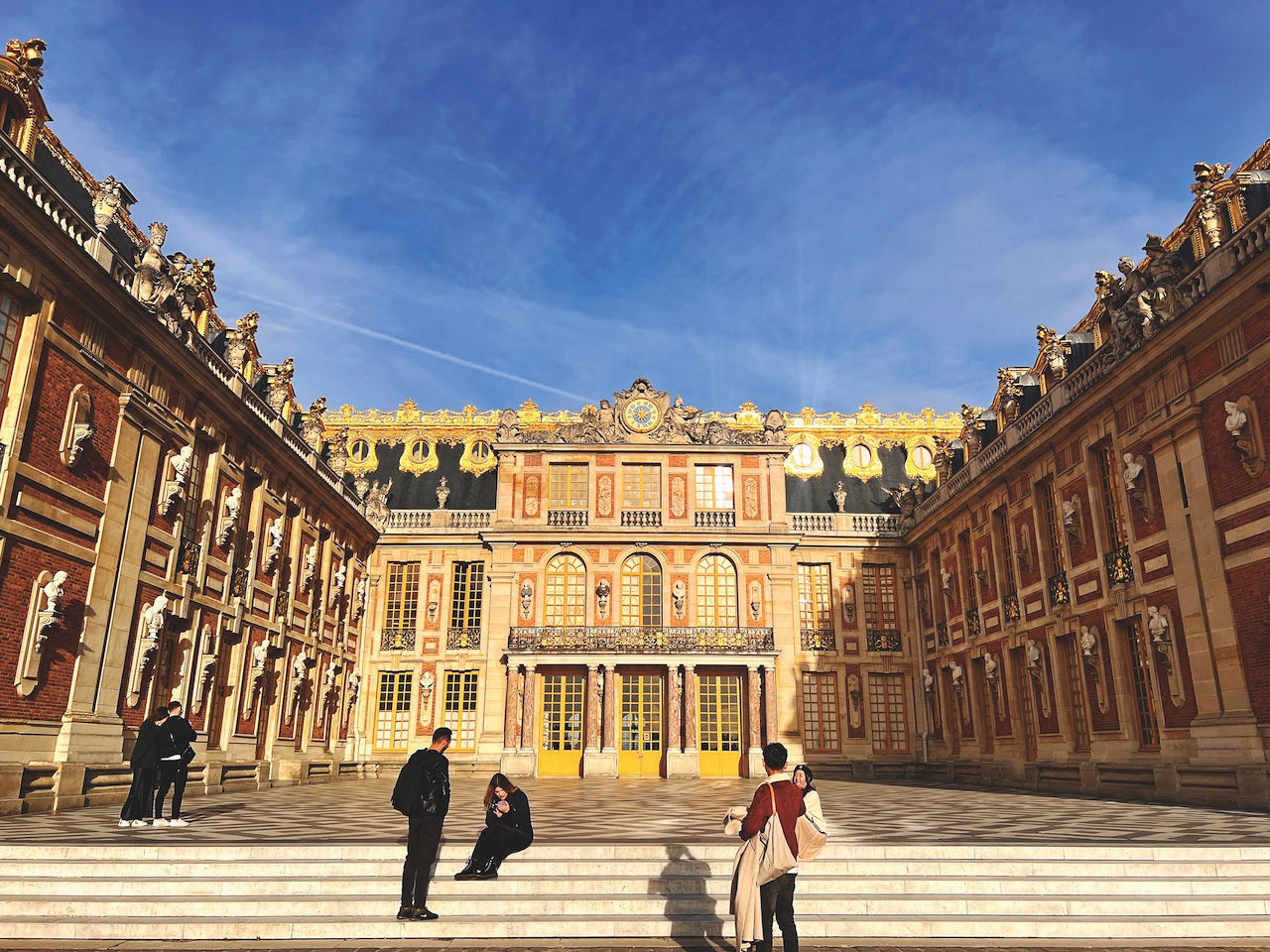
Château de Versailles
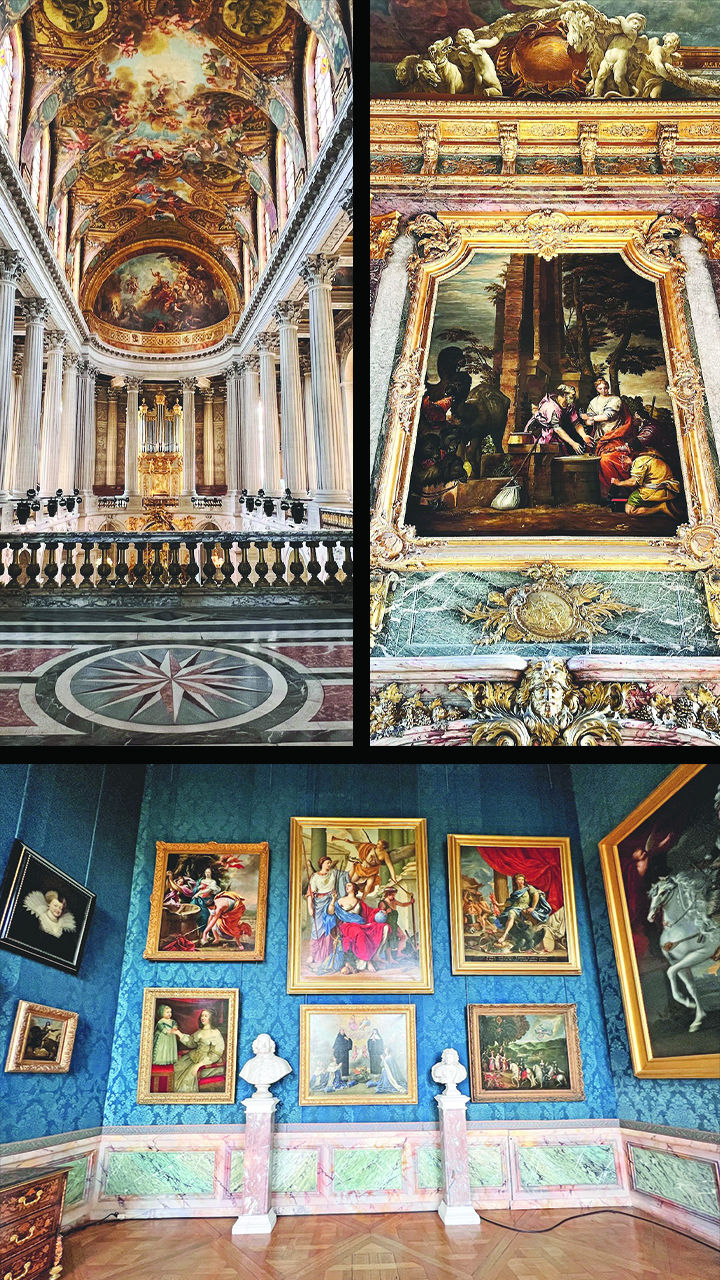
upper right photo: From the upper vestibule of the chapel, visitors can glimpse the sublime beauty of Versailles’ Royal Chapel, a magnificent jewel of sacred architecture. Left and bottom photo: A striking marble fireplace captures your attention, while the palace’s grand corridors display paintings, sculptures, and furniture, each carefully arranged to showcase the monarch’s power.
The Grand Canal, a majestic waterway stretching languidly through the estate, reflects the sky above and the surrounding environs like an enormous mirror. If you can, take a leisurely boat ride, immersing yourself in the tranquility of the estate. You might catch a bevy of swans gracefully gliding across the water.
Elsewhere at the estate, the Trianon Palaces and Marie Antoinette’s Estate are gems waiting to be found. The Petit Trianon, an intimate château nestled amidst serene gardens, unveils a more personal side of the monarchy. The estate is primarily linked to the famed queen, who frequently sought solace at the Petit Trianon. In this haven you find, she is said to have orchestrated the creation of splendid landscaped gardens, with a focal point being a hamlet of cottages constructed in the fashionable rustic style of the time.
The Queen’s Hamlet, a retreat designed to mimic a rustic village, provides a stark contrast to the grandiosity of the palace. Strolling through the charming cottages, one can almost imagine the Queen herself enjoying moments, perhaps during rosier days when she still had her head intact.
Perhaps the sun begins its descent as you decide to call it a day at the estate. Take a look back at the palace and think of the time when you had left the big city earlier.
What do you remember when the commune begins to do a curtain call and you are left in territories of long-gone court musicians and phantom members of the French royalty?
Now, return to the place where the courtyard welcomes you back. For one more time, consider the sheer scale of the estate and the palace, a testament to the grand vision of the French monarchs who sought to perpetuate their reign through architectural splendor.
You hear your fellow visitors speaking in languages you know not. The occasional sounds of French phrases from the locals are heard by you at the golden gates that you exit.
If you ever find yourself in one of the country’s most famous suburbs on an afternoon so cold in the third month of quieter times, choose to stay there a little longer.
Remember to tell your story to someone. Chances are they will listen to your bits and pieces with wonder in their eyes before asking how you managed to work it all out: from navigating the revolts of the people in the capital to finding some silence in a place where the kings and queens lived.
And then you realize that half the time, you are still working every little thing out. But, at the same time, you tell yourself you are enjoying the ride. You are taking it one step at a time. You know it will work out once you find yourself and know where you really, really are.

AI Website Generator