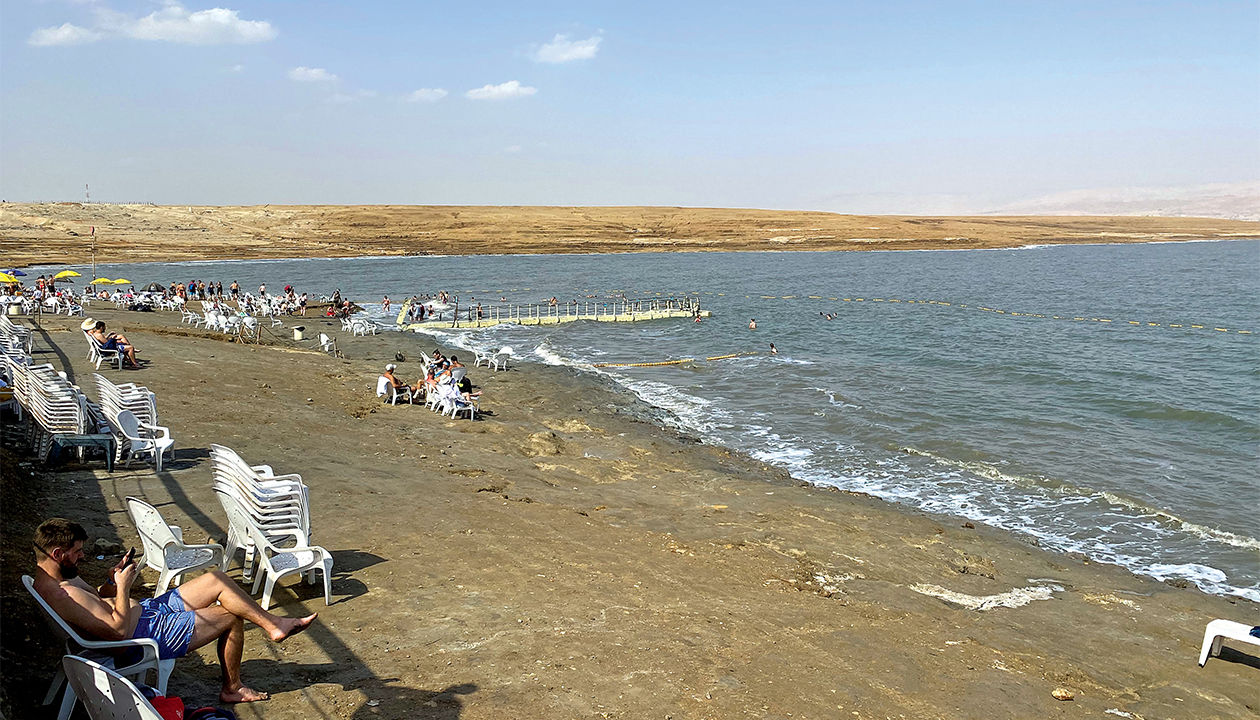
In Arabic, this body of water in the middle of the Judaean Desert is called in the rather unnerving name of Bahr Al-Mayyit, or the “Sea of Death.” In Hebrew, its name is Yam HaMelah or “Salt Sea.” Both are correct because it is the saltiest body of water on the planet so no life form can live in it—this is the lake the rest of the world calls the Dead Sea.
From the ancient mountain fortress of Masada, the Dead Sea is a magnificent sight to behold. From the cliffs of Highway 90, its pale blue waters shimmering in the sun seem like an irresistible temptation amid the barren and arid Judaean Desert. Like a mirage, one imagines an oasis appearing in the sand, waiting to be tasted, waiting to quench the thirst, a shelter from the desert sun.
But nothing could be farther from the truth. Its water isn’t fit for consumption as it has a higher degree of salinity than the ocean (approximately 332 parts per thousand, or 30% more). Indeed, the Dead Sea is a titanic salt reserve. In some parts, salt deposits can be seen rising from the waters like crystal cones. In others, gigantic sinkholes have eaten the earth to create moonlike craters along the deserted shores.
Since time immemorial, people have been utilizing the Dead Sea for various purposes. The asphalt from its waters has been used in Egyptian mummification, and potash from its bottom found application as fertilizer. Today, Dead Sea Salt is marketed as a premium health product to treat various skin conditions, such as psoriasis; and the autoimmune disease rheumatoid arthritis. It is also touted as a great skin care aid because of the salt’s high concentrations of magnesium, sodium, potassium, bromide, and calcium, among other minerals.
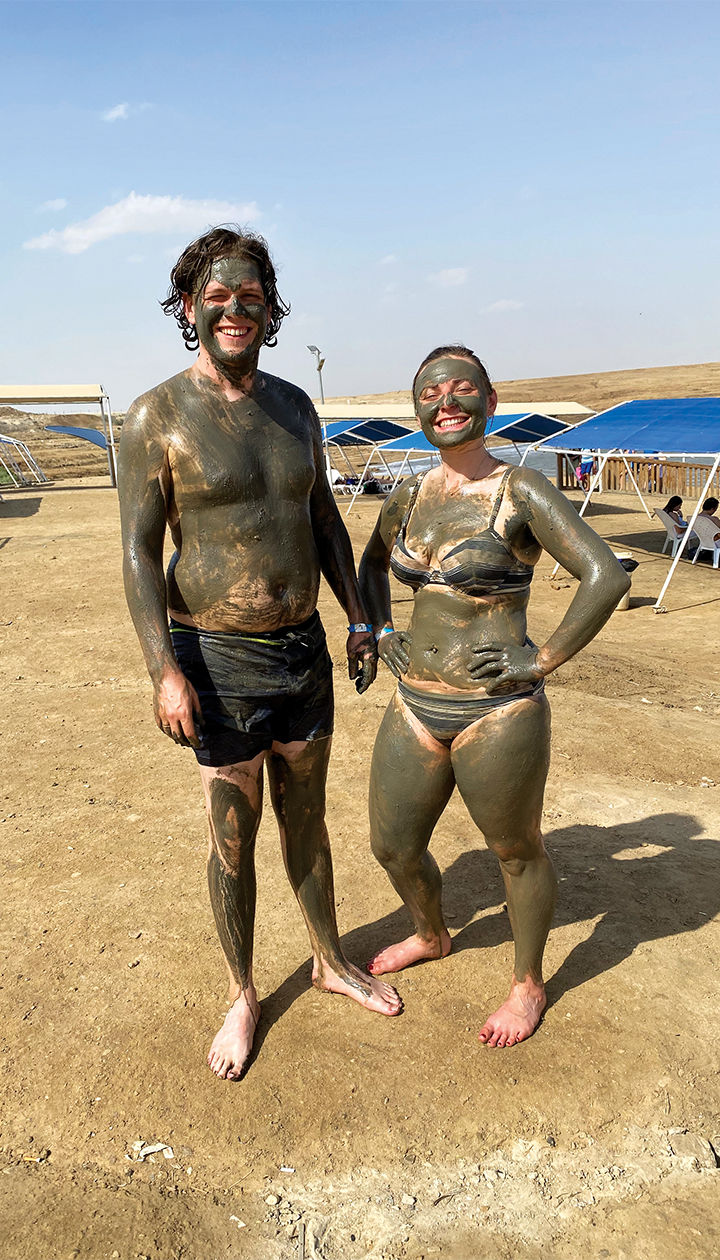
The mud from the Dead Sea purportedly also possesses therapeutic abilities, but for this many tourists opt to get it from the source. So off we went to Kalia Beach. Located at the northern part of the Dead Sea, Kalia Beach has been a favorite destination for those in search of healing and relaxation. At the entrance are shops selling refreshments and souvenirs and, of course, multicolored Dead Sea Salts that glisten like sugar candies.
Above the beach, the elevated boardwalk is hemmed by trees and ornamental shrubs, and provides a 360o view of the Dead Sea sparkling under the sun. Across the waters, the mountains of Jordan rise like behemoths lolling in the heat. On the beach is a natural mud area where tourists, hoping to get the optimum benefits of Dead Sea mud, cover themselves in the sticky, black goo. Then, they run to the open-air shower before hitting the salty waters to float on their backs for hours.
A bit of caveat though: Those with heart conditions and/or hypertension are advised not to swim as the extreme salinity could have adverse effects on the blood pressure. Also, swimmers are advised to only float on their backs and not to do laps as one does on a regular beach.
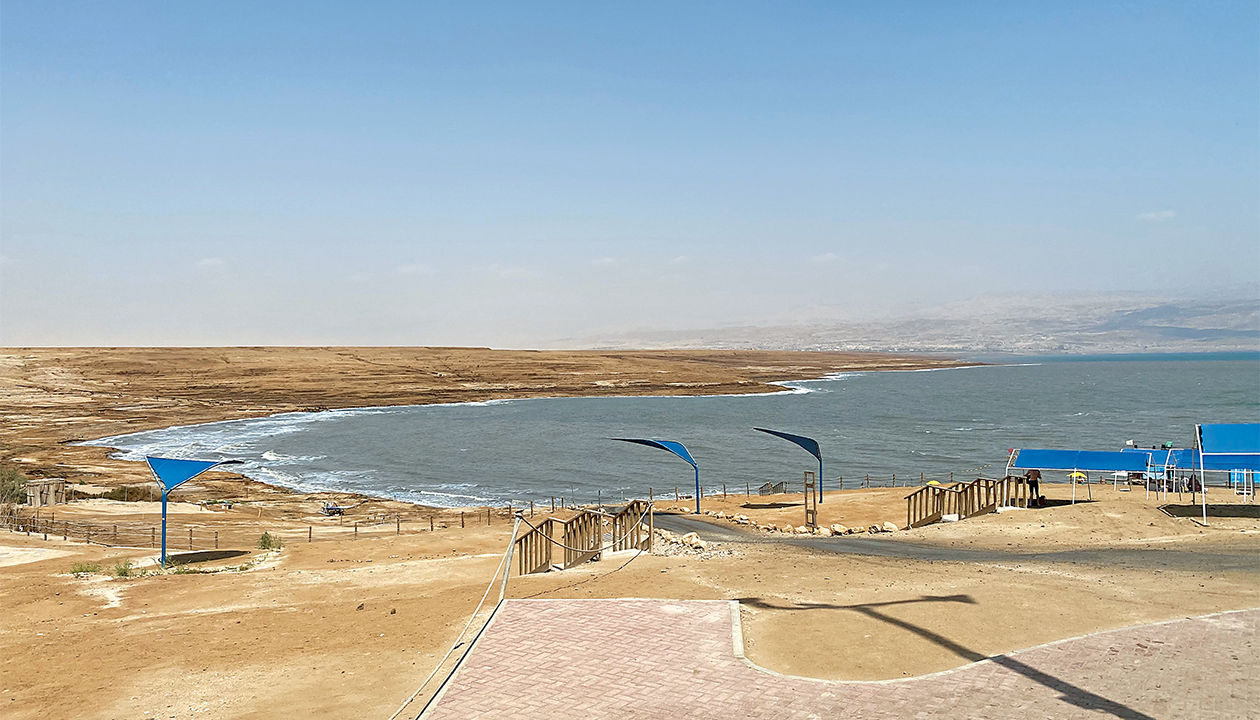
For those who want to stay longer, Kalia Beach offers a camping area where visitors can pitch their own tents, or stay in the bigger, equipped tents for a day of glamping. If you’re the type who just wishes to sit and lounge, the beach chairs and umbrellas along the shore provide hours of lazing under the sun.
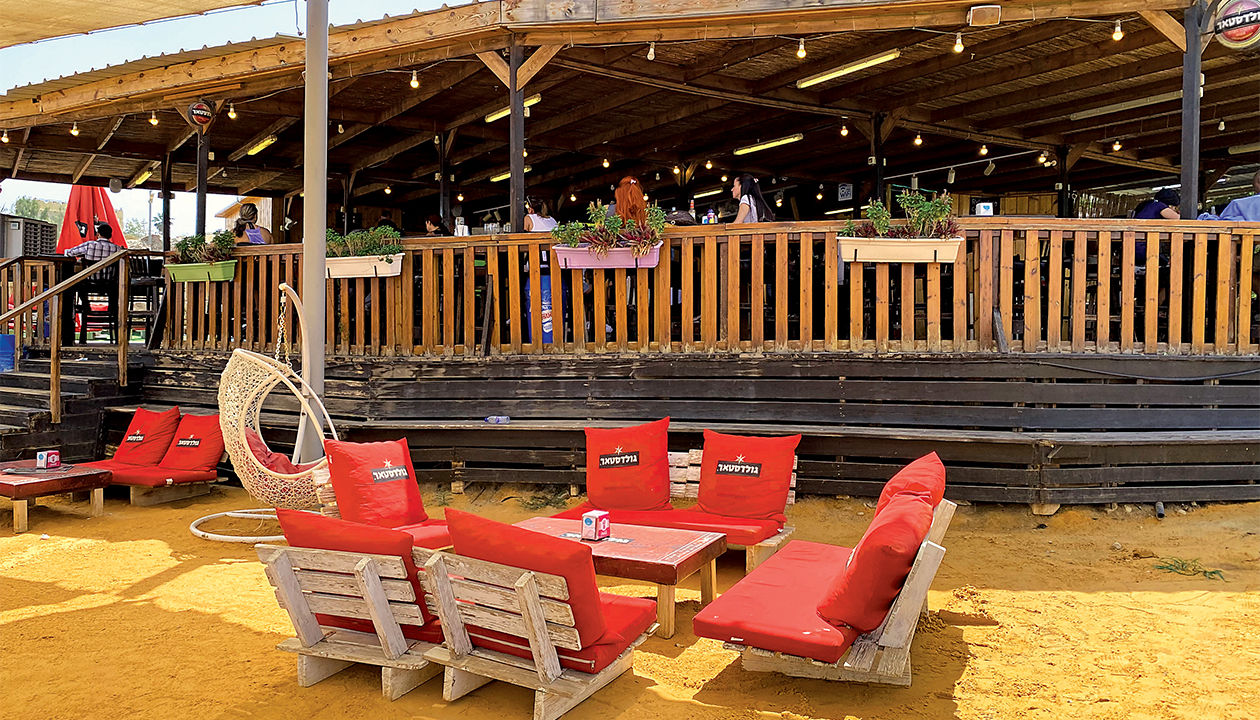
And there’s a hip bar and restaurant called—what else?—but the Lowest Bar in the World. Although it serves a host of easy bites like sandwiches and pasta, we settled for a Pizza Margherita, a can of soda, and a bottle of wine. Those in a more festive mood can party for hours as the restaurant also serves beer, a host of other alcoholic beverages, fruit juices, and endless dance music.
By late afternoon, we bade this oasis goodbye to hit the road and cross the desert to the comforts of Tel Aviv. But in the meantime, I will try to grapple with the fact that I’ve been to the lowest elevation on the planet in a resort full of people dancing the afternoon away. The Dead Sea is very much alive and kicking.
No Code Website Builder