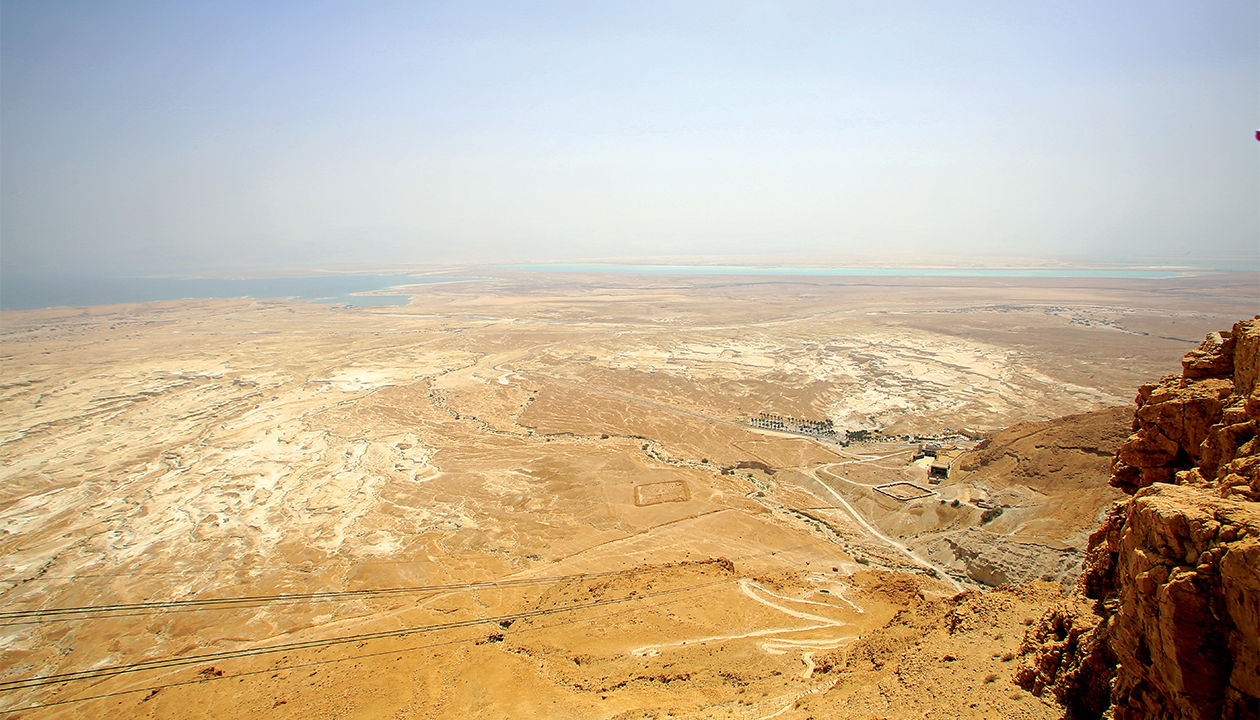
The vast Judaean Desert spreads below to the distant shores of the Dead Sea.
The vast Judaean Desert spreads below to the distant shores of the Dead Sea.
It must have been an awe-inspiring sight to behold at the height of King Herod The Great’s reign—a sprawling complex built in the classical style of the early Roman Empire with its towering pillars reaching to the sky. In its time, Masada, or “strong foundation” in Hebrew, was a wonder of architectural technology.
Perched on the summit of a craggy mountain plateau that rises in the middle of the scorching Judaean Desert, Masada is referred to as a “hanging palace” as its three semi-circular terraces hug the steep mountain slope precariously. Within are Roman Imperial buildings of opulent architectural design built on the northern face of the mountain to offer a stunning view of the sprawling desert valley below, the steep canyons, and the blue waters of the Dead Sea in the distance.
In those days, the Masada was accessible only through a winding “snake path” that zigzags torturously across the steep slope. Now, standing on the precipice that was formerly the uppermost terrace, I can only gaze at the mute ruins and imagine how glorious it must have looked during the zenith of King Herod’s reign. Archeological excavations and first-person accounts by 1st-century historian Flavius Josephus attest to Masada’s former magnificence and exquisiteness. “The fittings of the interior—apartments, colonnades, and baths—were of manifold variety and sumptuous…” he wrote.
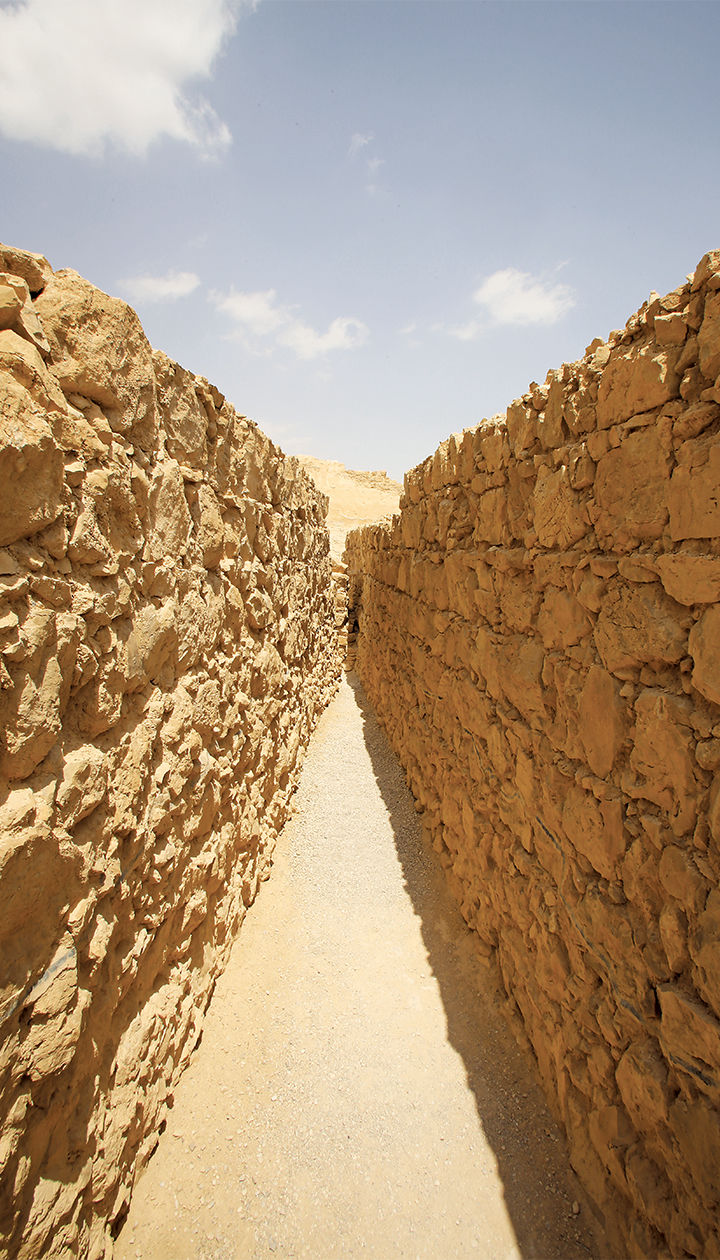
One striking feature of the Masada that still stands today are the rows of 29 storerooms. Although their roofs have long perished, the walls still stand to give visitors a glimpse of their sizes.
“After the fall of Jerusalem in 70 AD, the last remaining Jewish zealots escaped to Masada to flee the Romans who wanted to purge Israel of all Jews. The zealots, numbering to 960, including many women and children, found a rich supply of food inside these storerooms. There were preserved meats and fruits inside the jars the mouths of which were shielded with melted wax to protect the contents from decay,” informed Gabriela Landau, the official guide on our Israeli tour.
Herod, too, built a water cistern that collected the run-off from rains in the surrounding mountains and highlands. It is said that water from a single day’s rain can supply the needs of a thousand people for two to three years. “The water was then collected in jars attached to the backs of donkeys. These were brought to a well inside the palace to be used for drinking and for the bathhouse and pools that were for the exclusive use of Herod,” Landau adds.
This water system transformed the barren and parched mountain top into a lush and sumptuous retreat that befits the lavish lifestyle of a capricious ruler. The water system was particularly sophisticated, collecting run-off water from a single day’s rain to sustain life for a thousand people over a period of two to three years. This achievement allowed the transformation of the barren and parched hilltop into a lush, extravagant hideaway.
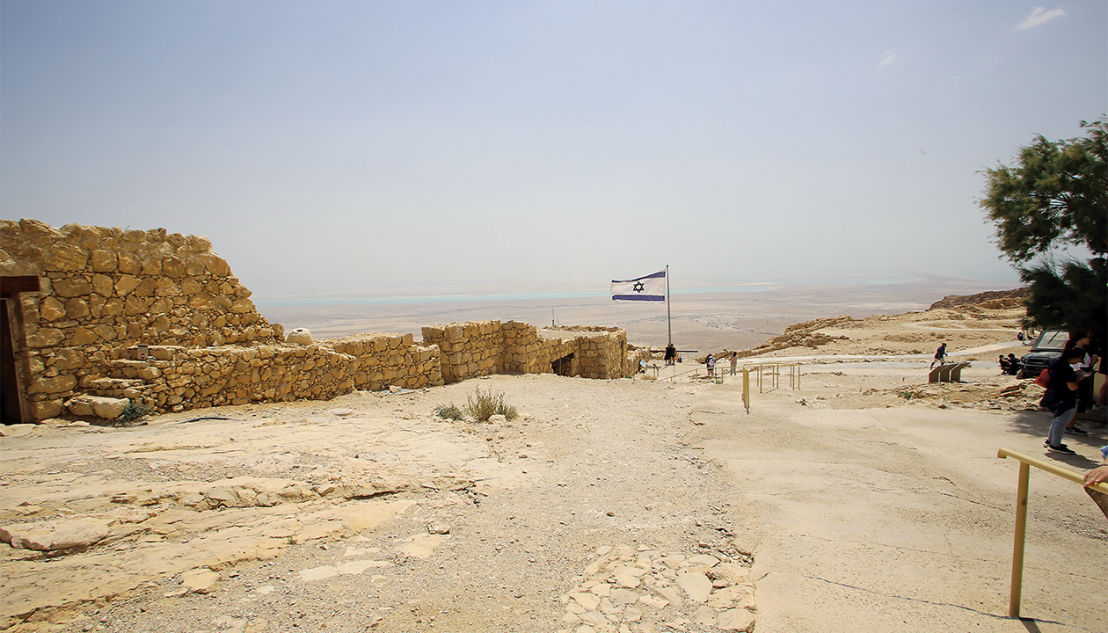
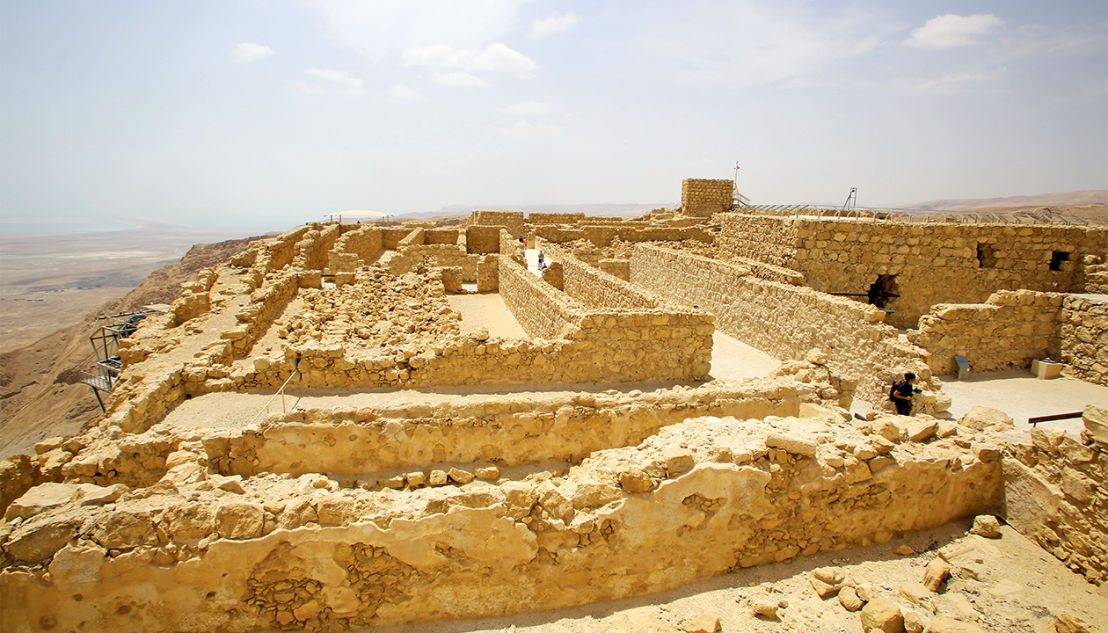
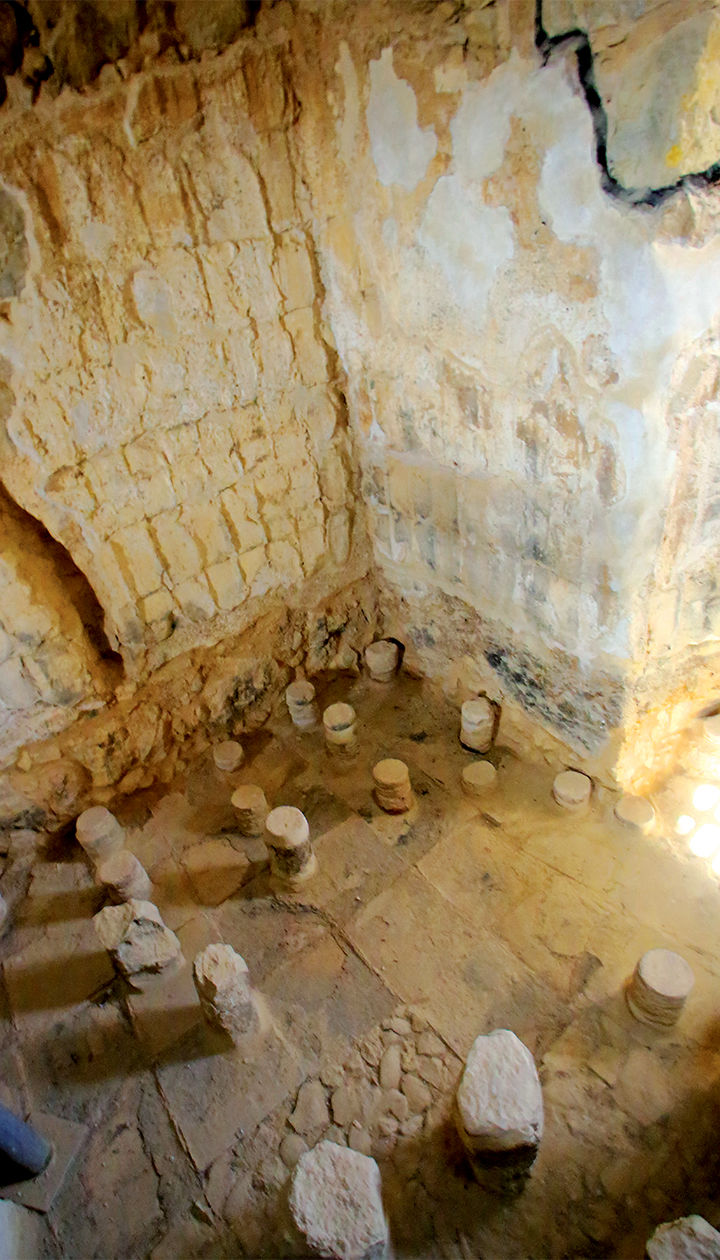
To this day, the Roman bathhouses still stand and part of the fresco-adorned walls can still be seen through the remaining colored mosaic tiles. Short clay columns allowed for an open space beneath the floor where hot air from the furnace would be pumped in to circulate the heat.
“Thus, the zealots had plenty to eat and drink,” remarks Landau. The food and water sustained the Jews for three years, much to the puzzlement of the Roman soldiers who stationed themselves below the cliffs, and who waited for thirst and hunger to prompt the surrender of the dissenters. “When the supply ran out, the Jews, who refused to die in the hands of the Roman soldiers, drew lots to choose one who would kill the whole group. When the Romans were finally able to break through, they found the corpses in the different rooms of the palace. That is why the Masada holds a special significance in the hearts of the Jewish people. It symbolizes the depth of their faith and the strength of their resistance to give in to the enemy.”
Today, tourists from all over the world—Jewish or not—flock to this isolated fortress in the sky to marvel at the skill of the early builders and architects. But more importantly, perhaps, they make the trek to relive a people’s fight for freedom against subjugation and tyranny. I feel that the indomitable spirit of those Jewish zealots lives on in every rock to tell the heroic history of this rampart throughout the ages.

No Code Website Builder