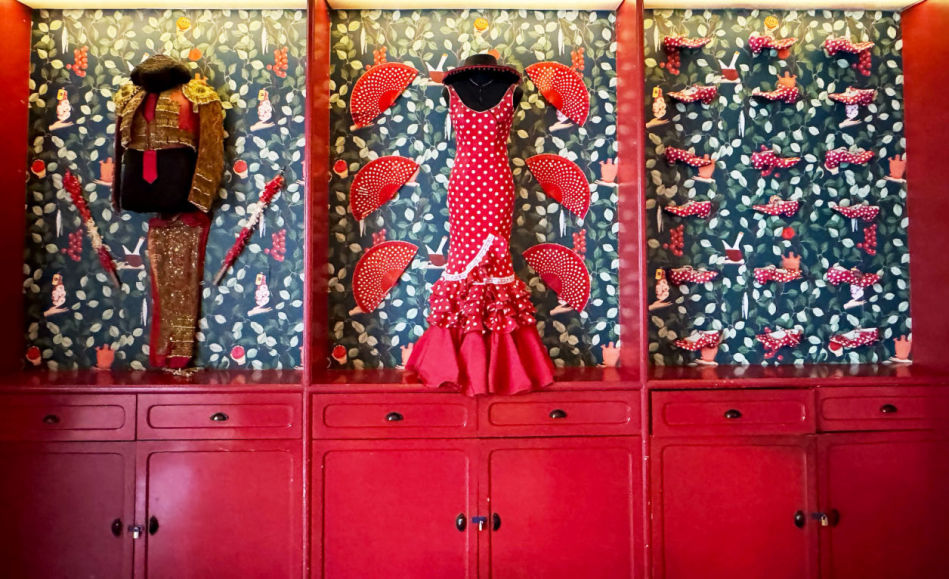
A firty Spanish dress and accessories
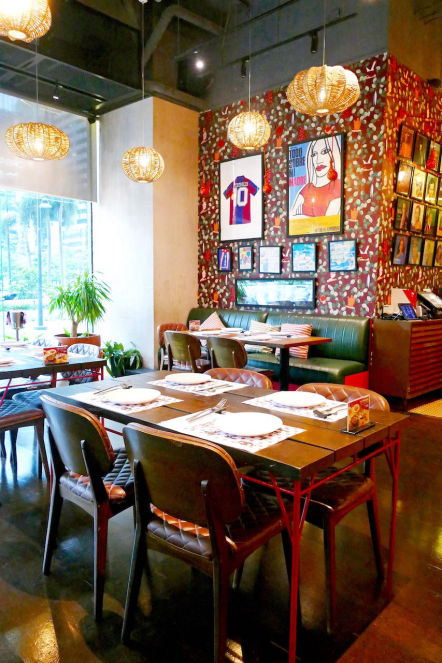
A dinning table setup
Behind the understated facade of BGC Corporate Center’s ground floor,
where 30th Street meets 11th Avenue, lies a culinary enigma wrapped in crimson shadows.
The entrance reveals little of what awaits within: no grand gestures or theatrical announcements, just the quiet confidence of an establishment that understands the power of subtlety. The name is inspired by Spanish flamenco guitarist José Fernández Torres, also known as Tomatito, yet this establishment transcends mere homage to become something far more intriguing.
The dining room itself tells a story of calculated restraint. Red-tinged lighting bathes the space without overwhelming, creating pockets of intimacy that encourage conversation while maintaining clear sightlines to the open kitchen. Tables are positioned with deliberate spacing, allowing servers to move with practiced efficiency while diners can observe the choreographed dance of preparation unfolding behind the pass.
Tomatito was originally based in Shanghai under the El Willy Fun F&B Group, headed by chef Willy Trullas Moreno. The journey from Shanghai’s bustling culinary landscape to Manila’s corporate heart represents more than geographical migration. When it opened in Manila, it signaled the arrival of a concept that challenges conventional understanding of Spanish dining. A sexy tapas bar inspired by the ’80s beautifully blends contemporary elements in its food and design. Yet the reality proves far more layered.
A firty Spanish dress and accessories
A dinning table setup
The menu structure provides clues to the restaurant’s methodology. Rather than overwhelming diners with extensive options, the selection focuses on precise execution of carefully chosen dishes. Each item represents hours of refinement, testing how Spanish traditions might adapt to local palates while maintaining the authenticity of technique. The wine list, curated to complement rather than compete with the food, features selections from lesser-known Spanish regions alongside more familiar ones.
The first revelation arrives without fanfare: the Salmon TNT. What appears as a straightforward tartine conceals an intricate choreography of flavors. The smoked salmon, treated with careful precision, carries flavors of oak and brine. When honey enters the equation, its sweetness transforms, creating bridges between the salmon’s salinity and something unexpected lurking underneath. The truffle component emerges last, as a revelation, its earthy intensity erupting in bursts that redefine Spanish appetizers.
The presentation itself deserves examination. Plated with architectural precision, each element maintains a distinct visual identity while contributing to the composition’s overall balance. The tartine base provides structural integrity without overwhelming the delicate salmon.
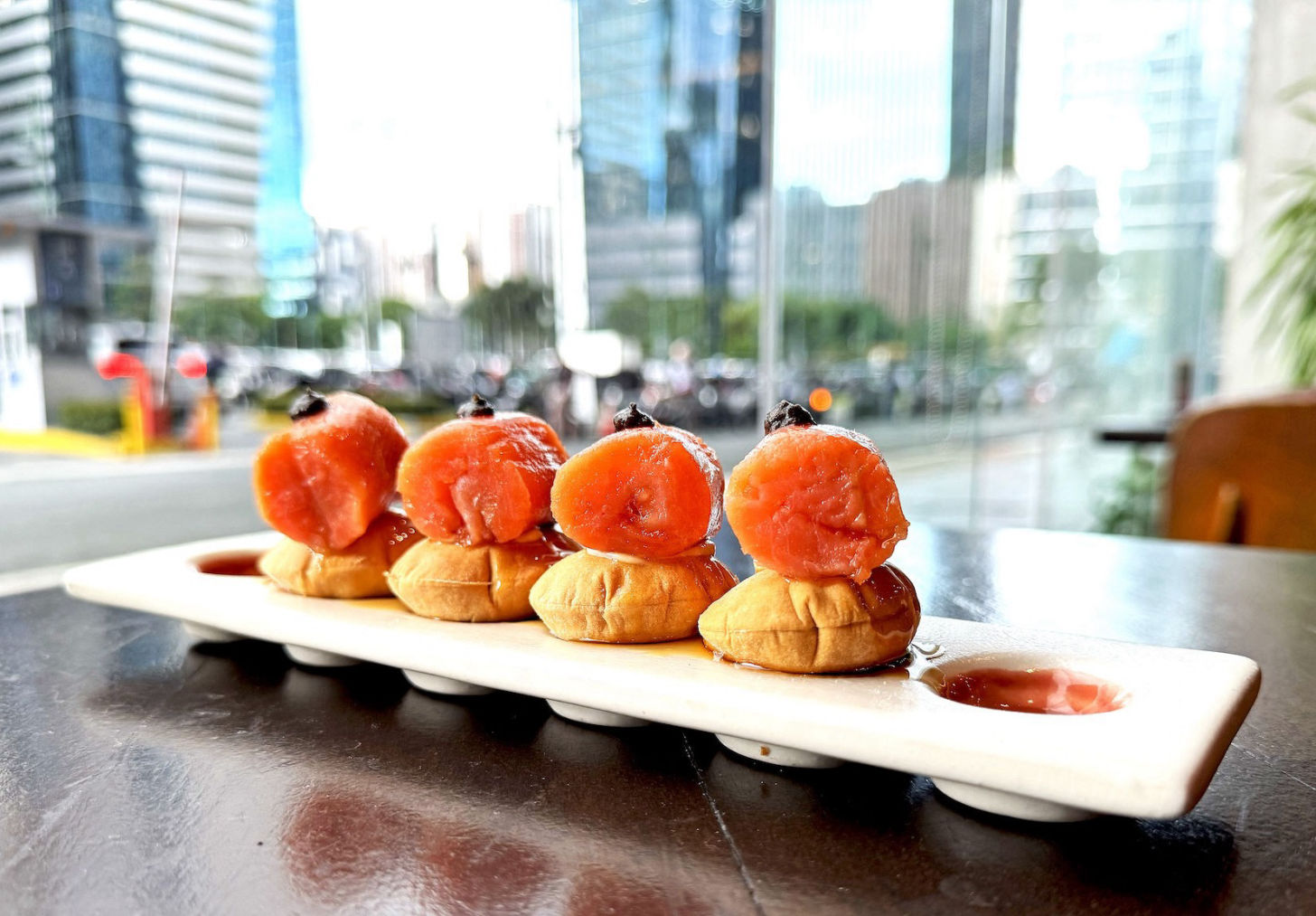
Refreshing salmon tartine
The mystery deepens with the Filete Air Baguette, a dish whose name hints at culinary alchemy. The steak seems to dissolve on contact with tongue and palate, releasing concentrated flavors that speak to techniques refined beyond traditional Spanish preparations. The Manchego cheese provides more than textural contrast. Each bite unfolds like a carefully orchestrated sequence, textures shifting from solid to liquid.
But it is the Gambas al Ajillo that truly begins to decode Tomatito’s philosophical approach. This seemingly straightforward preparation of shrimp in olive oil, garlic and white wine reveals depths that suggest techniques learned far from Andalusian shores. The garlic, rather than dominating, provides a foundation for complexity. The white wine’s acidity cuts through the richness while adding layers of fruit and mineral that transform each mouthful into an exploration.
The Cazuela de Chorizos presents the evening’s most audacious statement. Mixed chorizo varieties converge in red wine and garlic, creating a landscape of textures and heat levels that speak to an understanding of Spanish regional variations. The sweet chorizo releases paprika-tinged oils that mingle with the sharper, more aggressive notes of the spiced variety. Wine reduction concentrates these flavors while adding tannic structure that elevates the entire composition beyond comfort food. Each piece bursts with different intensities, some releasing immediate heat that builds gradually, others offering smoky sweetness that lingers.
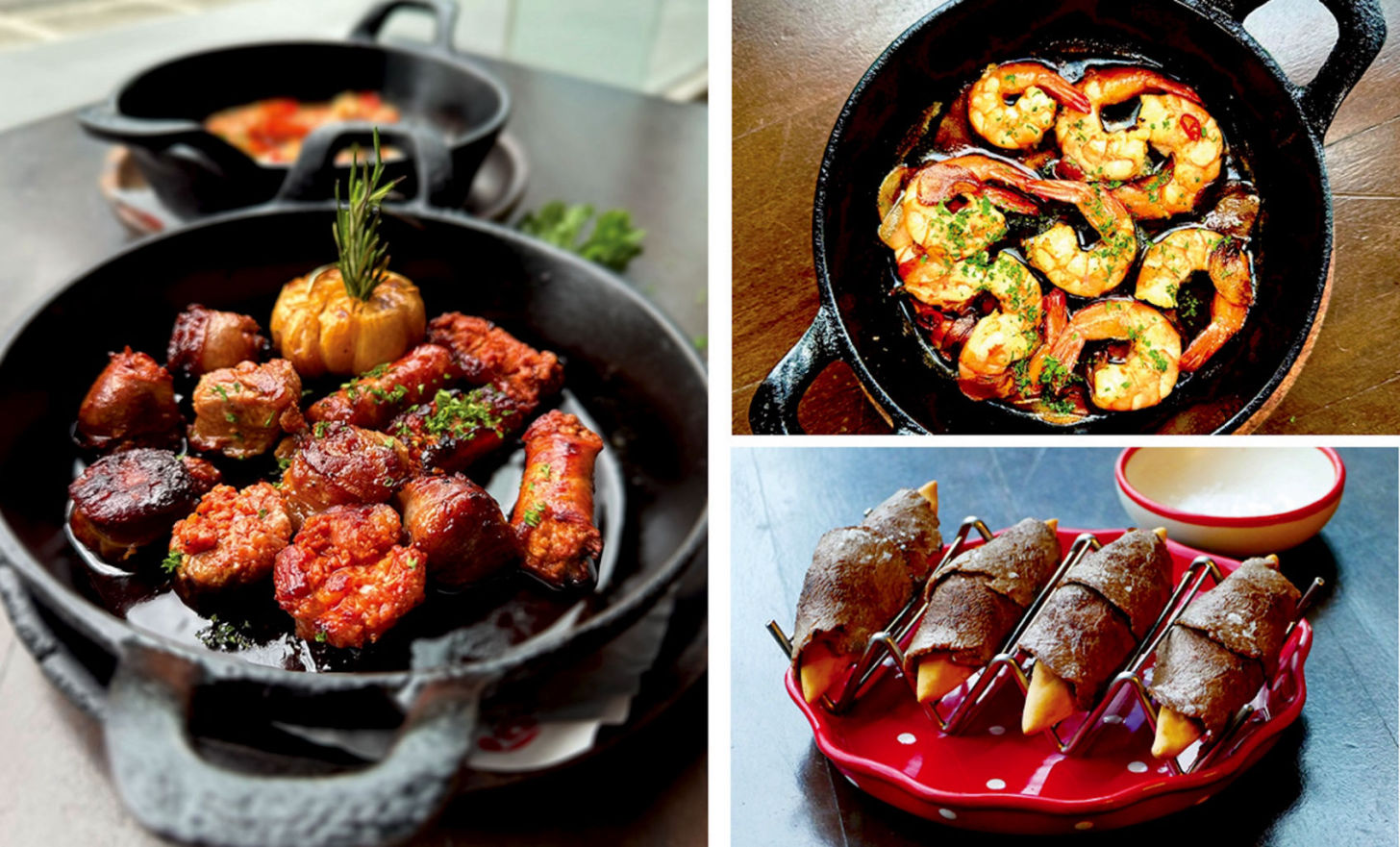
Clockwise from left: A heady mix in Cazuela de Chorizos, a hearty Gambas, and a tasty steaks in the filete Air Baguette.
The Carpaccio de Solomillo arrives as perhaps the evening’s most provocative puzzle. Paper-thin beef, sliced to translucency, provides the canvas for an unlikely assembly of feta cheese, truffle sour cream, and jalapeño. The beef’s mineral intensity, enhanced by careful aging, creates the backdrop for what follows. Feta’s sharp saltiness explodes against the tongue’s receptors, while truffle sour cream adds earthy richness that expands in the mouth. Together, they achieve harmony of Mediterranean meeting Spanish tradition in ways that suggest broader culinary philosophy at work.
The Paella Valenciana emerges not as a spectacle but as a statement of restraint. Traditional Spanish rice with chicken and rosemary is prepared without theatrical flourishes that often characterize restaurant interpretations. Each grain maintains a distinct texture while absorbing the complex stock that forms the dish’s foundation. The chicken, cooked precisely to retain moisture while developing proper color, releases savory juices that distribute throughout the rice. Rosemary’s piney intensity provides an aromatic counterpoint.
Yet even here, subtleties emerge that suggest deeper knowledge. The rice, a bomba variety, maintains the ideal texture. It is creamy without being mushy, individual grains discernible yet cohesive. The sofrito base, that crucial foundation of tomato, onion and garlic, has been cooked to proper concentration, providing umami depth that transforms simple ingredients into something substantial. The dish achieves balance with no single element dominating, each component contributing to a greater whole that speaks to mastery of fundamental techniques.
The paella pan itself, seasoned through countless preparations, contributes to the dish’s character. The slight caramelization that develops at the bottom, the coveted socarrat, provides textural contrast and concentrated flavor that elevates the entire composition. This is not an accident but an intention, the result of precise heat control and timing that speaks to a deep understanding of the dish’s requirements.
The final revelation arrives as Manchego Cheesecake, accompanied by vanilla ice cream. The cheese’s sharp tang, intensified through careful preparation, creates unexpected harmony with the dessert’s sweetness. Rather than simply substituting cream cheese with Manchego, the preparation enhances the cheese’s inherent characteristics, its slight granularity providing textural interest, its complex flavor profile adding savory notes that elevate rather than complicate. Vanilla ice cream serves not as an afterthought but as a temperature and textural foil, its coldness causing other flavors to bloom more intensely as the palate adjusts.
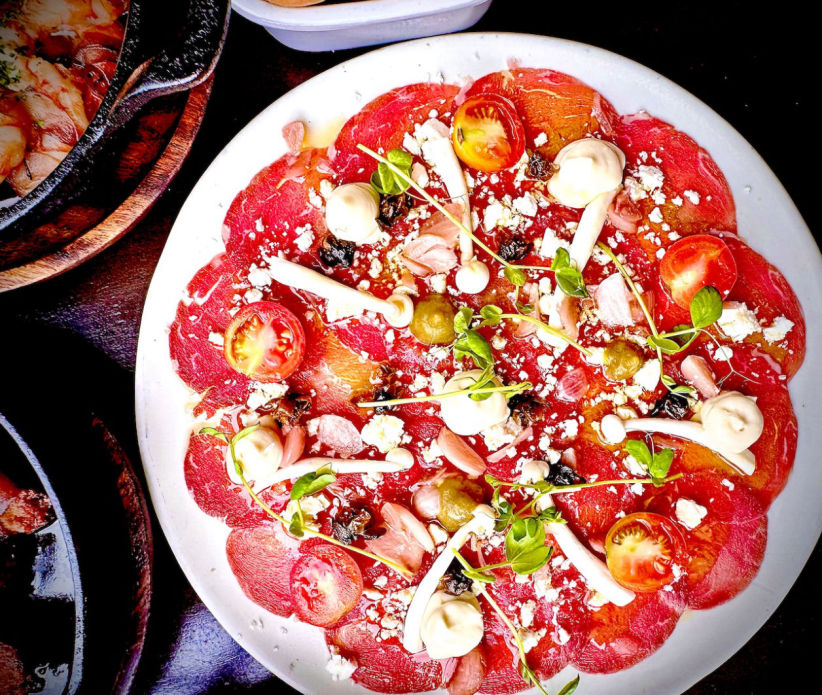
Delicious Carpaccio de Solomillo
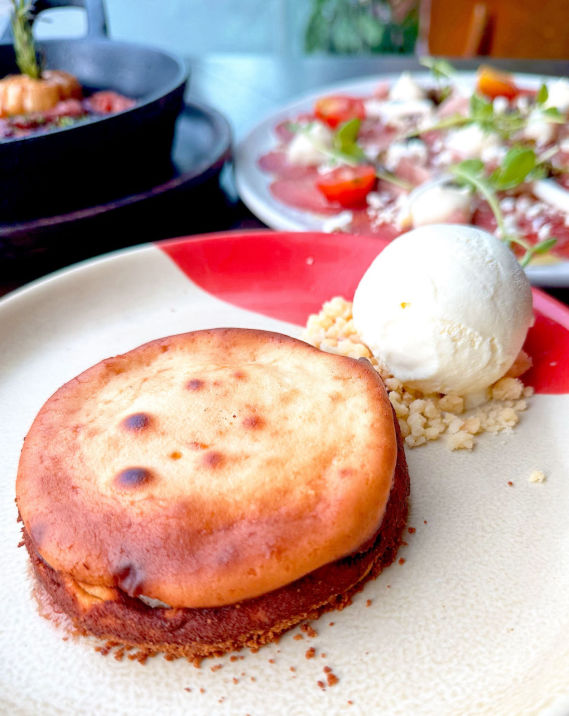
Manchego cheesecake with vanilla icecream.
Chef Willy Trullas Moreno managed that feat in Shanghai, taking his sexy Spanish restaurant, El Willy, to the forefront of food in a city already steeped in rich culinary traditions. The success that brought international recognition in Shanghai has translated to Manila, not through mere replication but through an understanding of context. Chef Moreno has kept the concept of “sexy tapas” very much alive in the Shanghai, Manila, and Saigon branches.
The kitchen staff, trained in the restaurant’s specific methodologies, demonstrates consistency across service periods. Each dish emerges with the same attention to detail, whether ordered at lunch or during the dinner rush. This reliability suggests systems and training that go beyond individual talent to encompass institutional knowledge.
Servers demonstrate knowledge of ingredients and preparation methods without pretension, able to guide diners through the menu while respecting individual preferences. The pacing of courses allows proper appreciation of each dish without rushing, though the restaurant can accommodate varying time constraints when needed.
The concept is a mix of Spanish popular culture, the ’80s bar, and a seductive red theme, yet the execution avoids pastiche in favor of an atmosphere that enhances rather than distracts from the culinary experience. The lighting casts everything in warm hues that seem to intensify flavors, while design elements create intimacy without claustrophobia. Music selection follows similar principles, with Spanish influences present but not overwhelming.
What emerges from this evening of discovery is not merely another Spanish restaurant transplanted to Manila’s competitive dining landscape. Instead, Tomatito represents something more ambitious: a careful study in how tradition travels, adapts and evolves while maintaining essential character. Each dish arrives as both homage and innovation, carrying Spanish DNA while acknowledging the global journey that brought these techniques to this corner of Bonifacio Global City.
“Bistronomia is a dynamic Filipino restaurant group committed to offering delightful products coupled with an honest and unforgettable dining experience,” reads the parent company’s mission statement, yet Tomatito achieves something beyond corporate objectives. The achievement lies not in transportation to Spain but in the creation of something new while honoring what preceded it.
The mysteries unravel slowly here, one carefully constructed bite at a time, revealing layers of tradition and transformation that speak to Spanish cuisine’s continuing evolution in global contexts. Each burst of flavor tells a story of techniques perfected in kitchens in Madrid, refined in Shanghai’s competitive landscape, and now adapted to Manila’s discerning palate. The textures unlock memories of traditional preparation while pointing toward future possibilities, creating dining experiences that honor the past while embracing present realities.
Tomatito is located at G/F, BGC Corporate Center, 11th Avenue corner 30th Street, Bonifacio Global City, Taguig. Reservations recommended and can be made through bistronomia.ph/reservation.
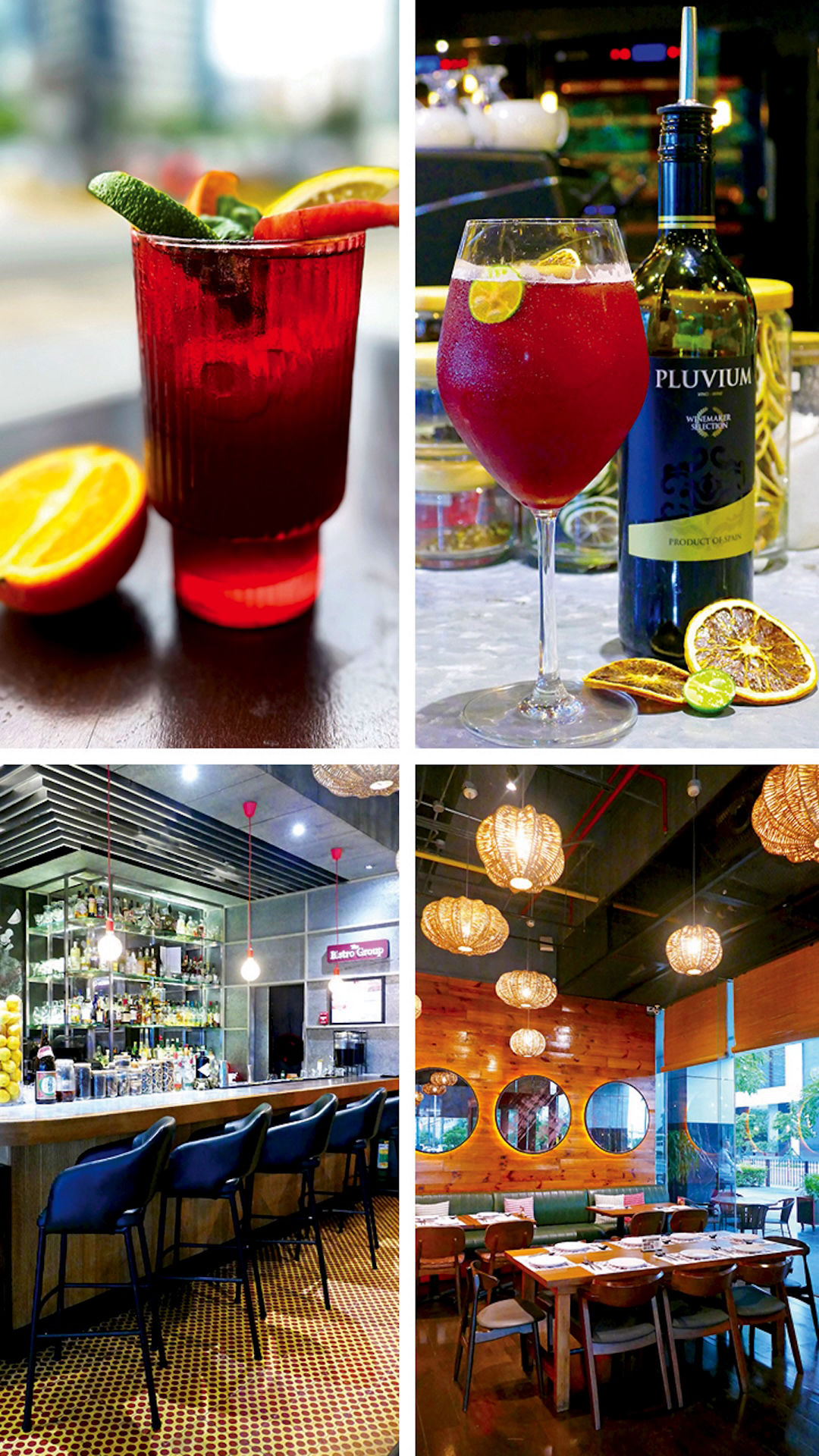
Clockwise from top left: A fruity juice drink and a refreshing sangria, the bar and a view of the restaurants interior.

Best AI Website Maker