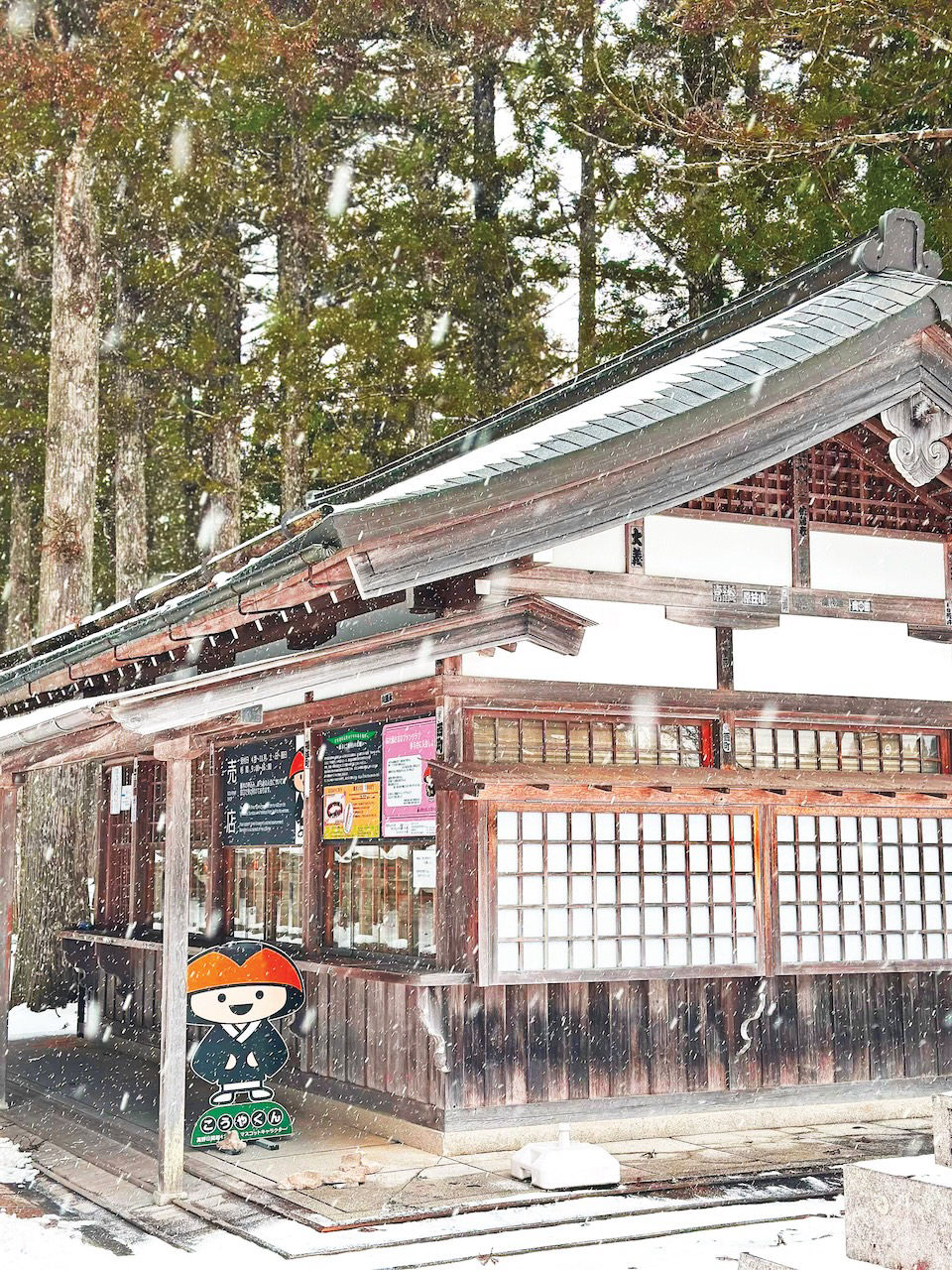
A journey of mindful practice can lead to rediscovering inner peace. Earlier this year, I traveled to Wakayama and Mie Prefectures, intentionally seeking out places that invite stillness. I ended up being led deep into the spiritual heart of Japanese culture, journeying through three sacred sites that symbolize eternity and purity. This is more than just a journey; it is a soulful journey and a mindful practice.
The journey from Wakayama City to this sacred mountain is a ritual in itself. Boarding the Nankai Electric Railway, the scenery shifts from urban bustle to deep, mystical forests. Upon reaching Gokurakubashi Station, we transferred to the famous Koyasan Cable Car, ascending vertically in just five minutes. As the cable car breaks through the mist or glides through falling snow, the breathtaking sensation of entering the “Sacred Realm of the Sky” sets the perfect stage for the journey.
We were incredibly fortunate to encounter snow on the day of our visit. A blanket of white covered the ancient cedars of Okunoin and the stone dragons of the Banryutei garden at Kongobu-ji. The sharp contrast between the dark wooden architecture and the pristine snow perfectly embodies the Japanese aesthetic of wabi-sabi—finding beauty in impermanence and stillness. The snowflakes seemed to absorb all noise, leaving Koyasan even quieter than usual.
Standing at the eastern edge of Odori Park since 1956, the Sapporo TV Tower is one of the city’s most enduring landmarks. By day, its steel frame rises gracefully against the blue sky, perfect for photos and snapshots. But the true magic begins after sunset, when you ascend to its observation deck.
During Christmas and New Year, the city below glitters with festive illumination, as if a galaxy of stars has descended onto the streets. It’s no wonder Sapporo’s night views are ranked among Japan’s New Three Most Beautiful Nightscapes. From the glass-walled observatory, the city lights stretch like glowing ribbons across the horizon—a breathtaking panorama infused with holiday romance.
Note that tickets are required: adults: ¥1,000 / elementary and junior high school students: ¥500 / infants: free
If Okunoin is the silent destination, then Kongobu-ji is the heart of the sacred mountain. It is the headquarters of the Koyasan Shingon sect and a core space for Japanese Buddhist aesthetics.
(Karesansui) garden in Japan. In winter, snow covers the white sand and granite, representing emptiness and stillness.
A site of profound history, where the exquisite screen paintings contrast with a heavy atmosphere, reflecting the tug-of-war between power, religion, life, and honor.
At the end of the wooden corridor, there is a space for travelers to rest with hot tea on tatami mats. It’s a perfect spot to pause before bringing home a blessed amulet (omamori) filled with the mountain’s energy.
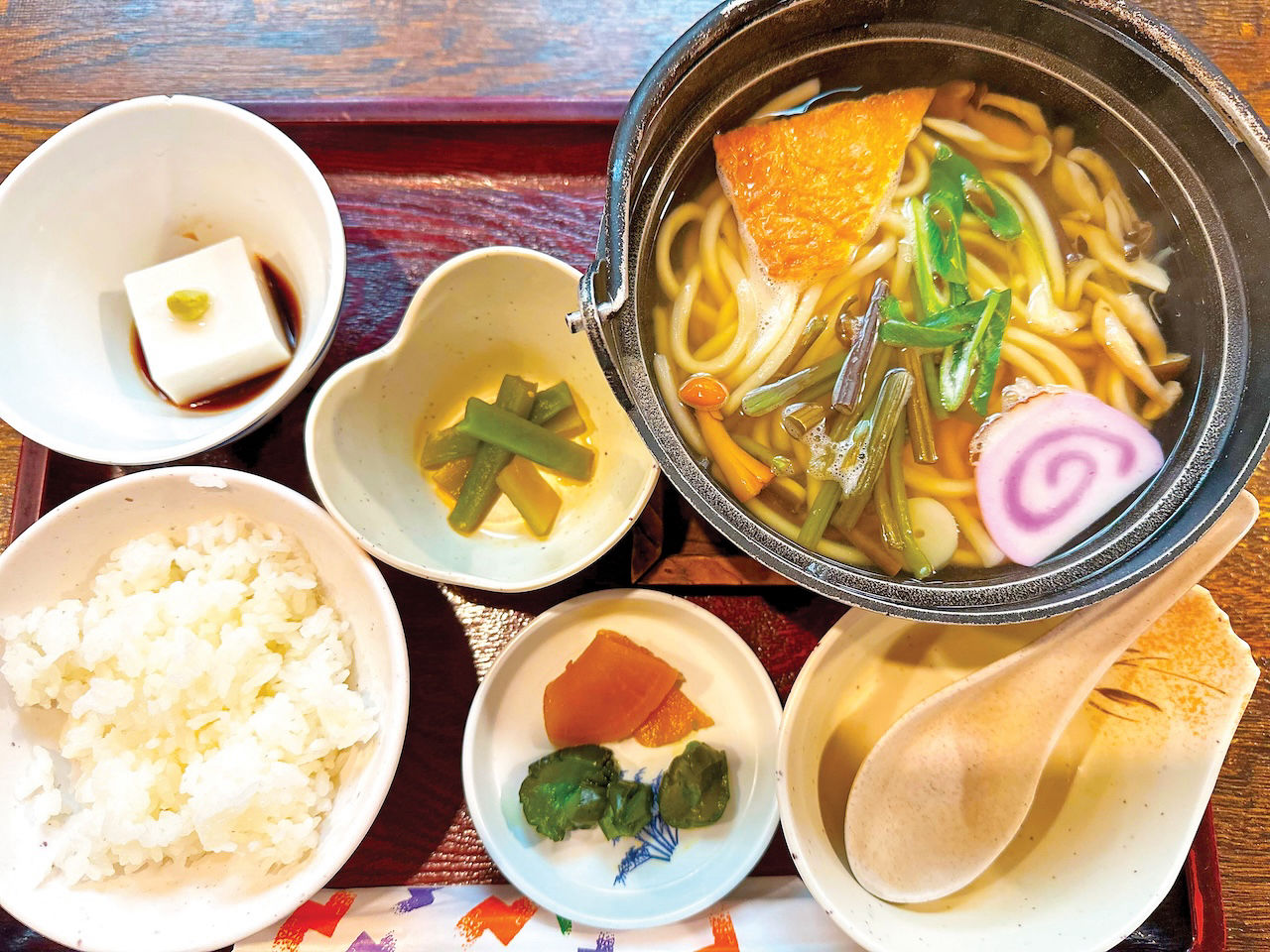
In sub-zero temperatures, a steaming bowl of Koya Udon offers the most direct comfort for the body and soul. Unlike typical udon, it often features the local specialty, Koya Tofu (freeze-dried tofu). This tofu soaks up the light yet flavorful kombu dashi; with one bite, the hot broth bursts forth, making the outside cold feel worlds away.
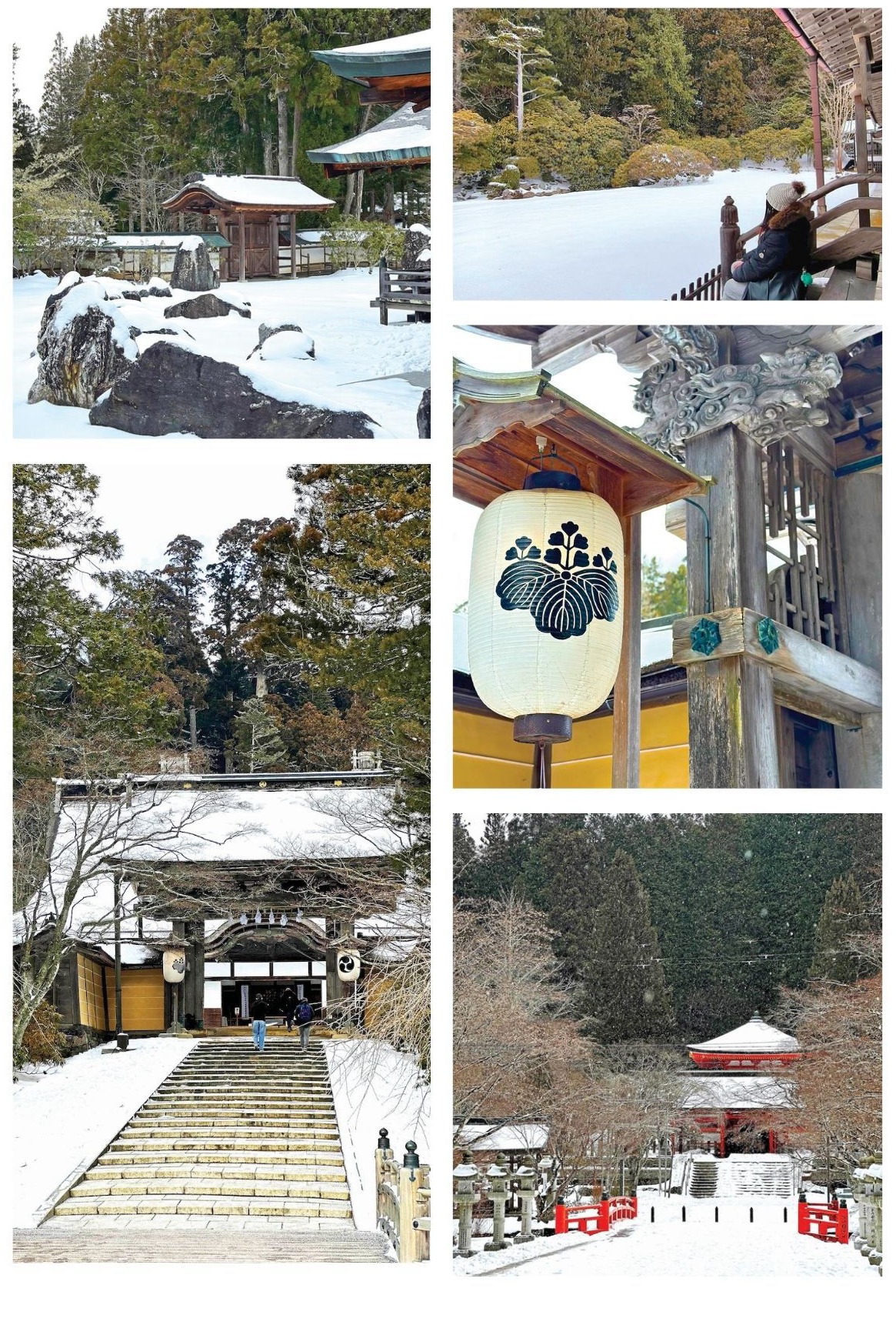
Seeing the snowy landscape brings the travelers to a contemplative state.
Traveling south from Wakayama City along the azure coastline of the Kii Peninsula, we arrived at Nachi-Katsuura, a port town filled with the scent of the sea and the steam of hot springs. This is our sanctuary to wash away worldly dust and the gateway to the soul’s original home.
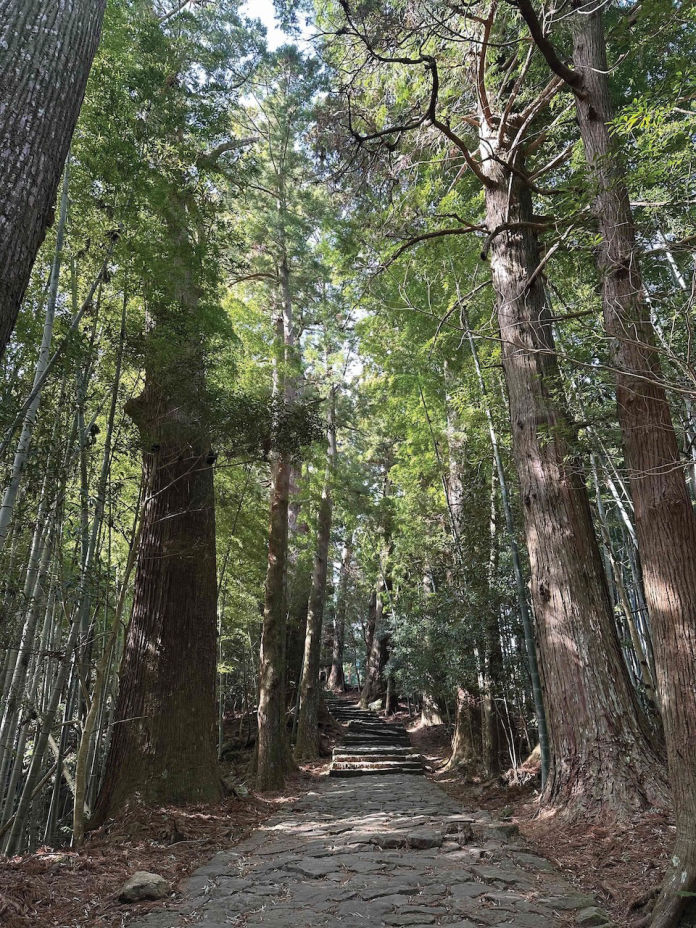
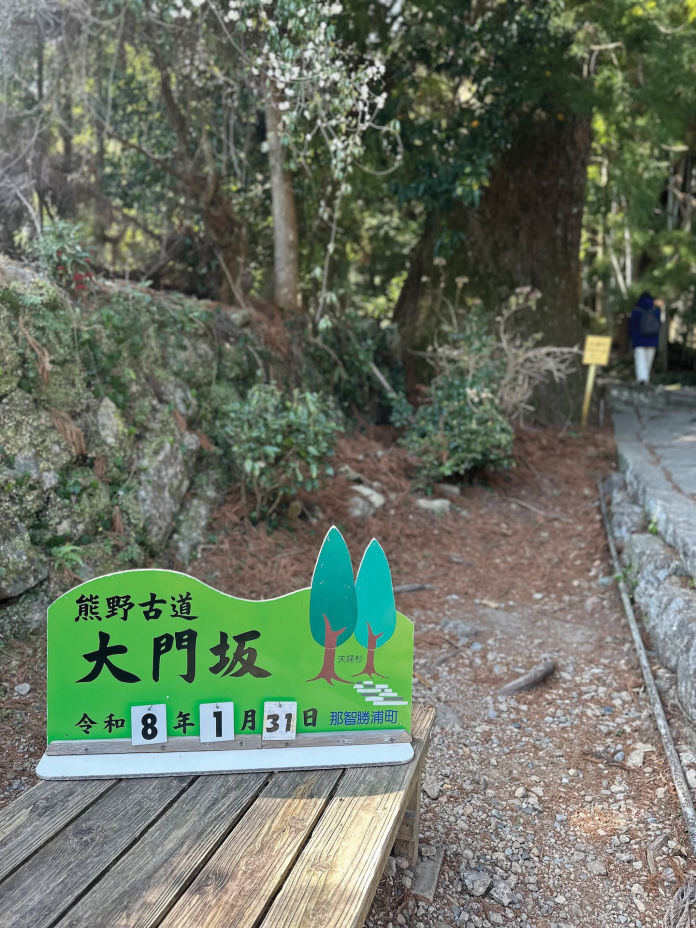
The moment you step onto Daimon-zaka, time stands still. This stone-paved path is lined with massive, centuries-old sugi (Japanese cedar) trees. Known as the entrance to the sacred realm, this forest vibrates with a high, steady frequency, making it the ultimate “power spot” for travelers to feel the earth’s energy. The Husband and Wife Cedars (meoto-sugi) at the entrance act as a natural archway, filtering out the noise of the outside world.
As the crossroads of the thousand-year-old pilgrimage routes, Kumano Hongu Taisha is revered as the “place where the soul awakens.” For travelers seeking wellness, the crisp mountain air and the healing aura of the ancient shrine provide a profound process of self-restoration.
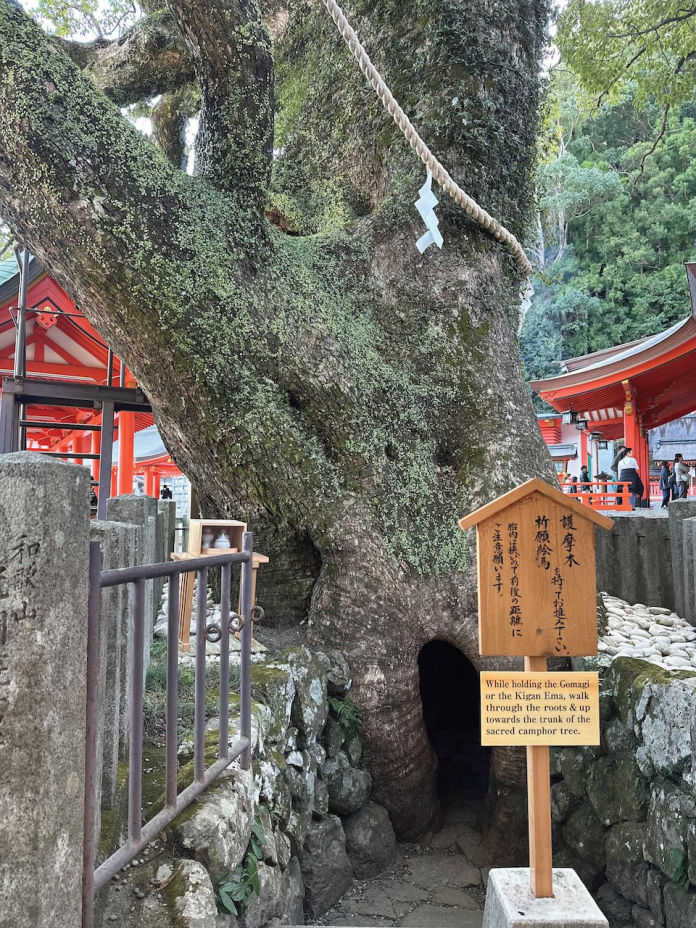
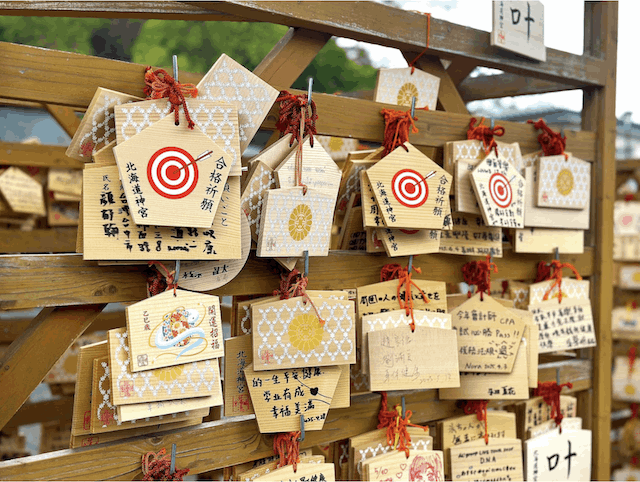
At Kumano Nachi Taisha, the Gomagi Prayer and the Sacred Tree Hollow are the two most ritualistic activities that connect deeply with divine energy.
Watching them burn in the sacred fire allows one’s distractions to be incinerated as the smoke carries prayers toward the sky.
We crawled through a narrow natural hollow at its base—the womb. This process symbolizes death and rebirth—returning to the mother’s womb and emerging renewed. Being so close to the wood and earth is an incredible earthing experience. Crawling through the tree hollow requires a small fee (approx. 300 yen). It is a narrow fit, so wear comfortable clothing and avoid heavy or restrictive coats.
For the “Mind-Body Baptism” Walking Route, start at Daimon-zaka. Disembark here and walk through the ancient forest of thousand-year-old cedars (approx. 30–40 mins). This is your time for energy replenishment as you connect with the earth.
A journey across Japan becomes even more spiritual.
Emerge from the forest to find the striking, vermilion architecture of the shrine. For the Seiganto-ji & Nachi Falls, continue to the adjacent Seiganto-ji Temple for a view of Nachi Falls—the tallest waterfall in Japan. The mist and negative ions from the falls serve as a natural healing field.
Take the bus back to Nachi-Katsuura Station from the Nachi-no-Taki-mae stop, saving your energy by avoiding the steep downhill walk. Departure: JR Nachi-Katsuura Station Transportation: Take the Kumano Gobo Nankai Bus (Route toward Nachi-san). Travel Time: Approximately 20 minutes to the Daimon-zaka bus stop.
Recommendation: Aim for a bus before 9:00 AM to avoid the crowds. Entering the forest in the cool, early morning air is when the spiritual energy feels most pure and potent.
While staying in Nachi-Katsuura, we recommend the renowned Hotel Urashima. Soaking in the famous bokido (a natural hot spring inside a sea cave) while watching the Pacific waves is the perfect way to deeply integrate the day’s forest energy into a state of total relaxation.
The ultimate keepsake for this pilgrimage is the nachi-guro lucky cat. Unlike typical ceramic lucky cats, these are carved from nachi-guro stone, a rare black slate unique to the Kumano region. In Japanese tradition, the black lucky cat is believed to ward off evil and protect one’s peace. Its smooth, obsidian-like glow anchors the serene energy of the mountains into a tangible guardian for your home.
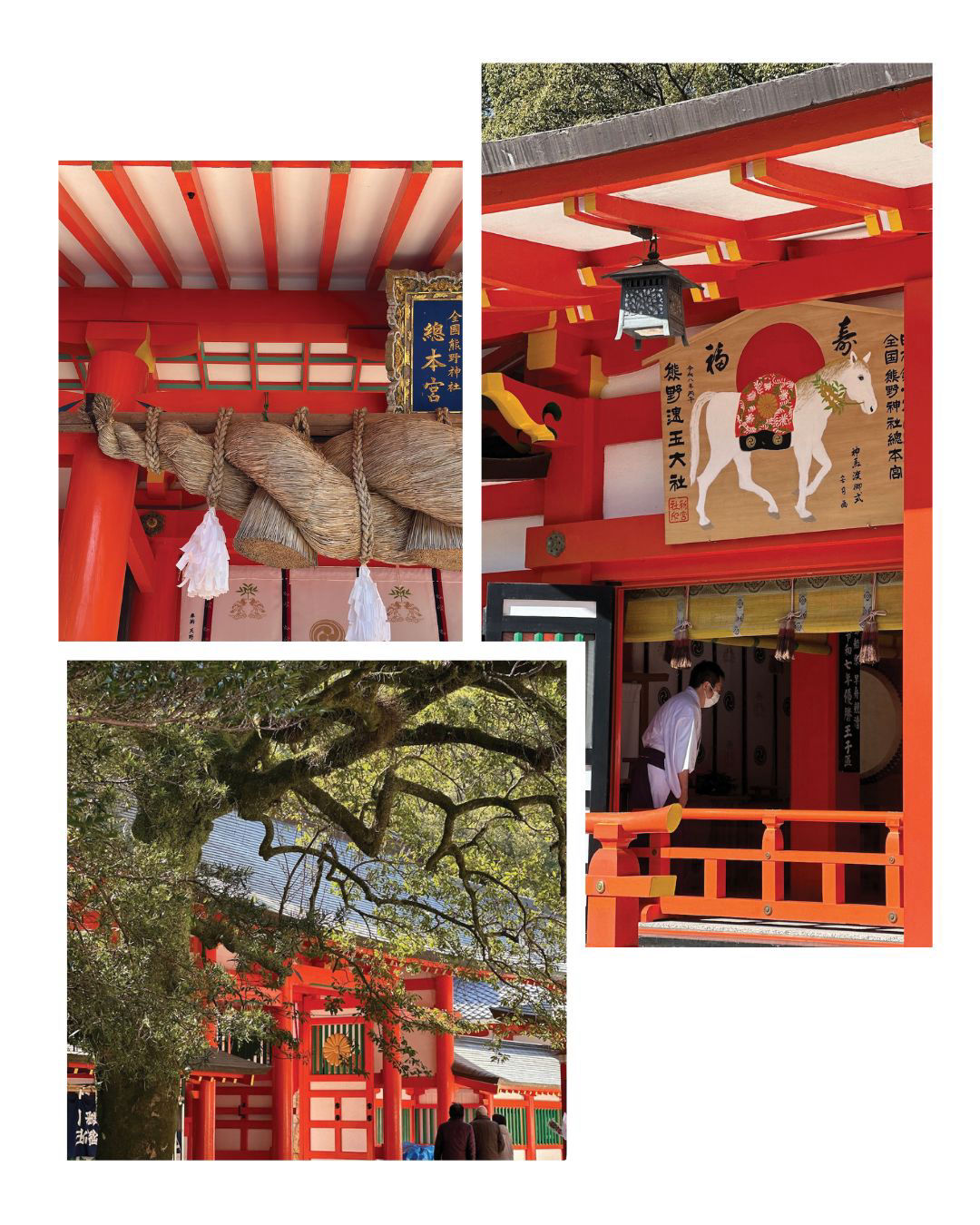
Among the three grand shrines of Kumano, Kumano Hayatama Taisha offers a completely different visual impact. On our second day, we took a bus specifically to visit this sacred site. Unlike the deep, mystical emerald hues of Daimon-zaka, the pavilions here are adorned in a vibrant, brilliant vermilion.
Whether under the soft winter sun or against a backdrop of fresh snow, this color radiates a powerful life force, symbolizing a passion for life and spiritual purification. It is undoubtedly the most vivid photography spot of the entire journey. The striking red railings, the massive shimenawa (sacred rice-straw ropes), and the deep blue sky weave together into a scene of perfect balance and harmony. For the traveler, this splash of red is more than just a visual feast; it is like a warm flame, illuminating the soul and dispelling the shadows within.
If Kumano is the secret realm where the soul awakens, then Ise Grand Shrine is the ultimate destination of the Japanese spirit.
Leaving behind the warm springs of Nachi-Katsuura and the mystical aura of the Kumano Kodo, we journeyed northward along the winding coastline of the Kii Peninsula. Onboard the Limited Express Nanki, we spent three hours in quiet contemplation as the landscapes shifted. Upon arriving in Ise City, the air itself seemed to carry an extra layer of solemnity and purity, preparing us to enter the sacred halls that have stood for two thousand years.
Ise Grand Shrine is considered the spiritual home of the Japanese people. We took the Limited Express Nanki from Katsuura, a three-hour scenic journey along the coast that serves as the perfect contemplative transition before entering the grandest of shrines.
Following tradition, we visited the Geku first. It enshrines the deity of food, clothing, and shelter. Walking through the towering groves, one is struck by the Shinmei-zukuri architectural style—the pinnacle of minimalist beauty.
A legendary Wagyu beef specialist. Their minchi-katsu (minced meat cutlets) are a must-try crispy delicacy. For a sit-down meal, their gyudon (beef bowl) highlights the marbled Ise beef with a rich secret sauce.
Crossing the Uji Bridge over the Isuzu River symbolizes leaving the profane world and entering the divine. The sound of footsteps on the gravel (tamajari) and the wind in the trees bring absolute inner silence.
Adjacent to the Naiku, this area recreates an Edo-period streetscape. It is a joyful place to experience traditional Japanese culture.
A hidden gem near the Geku. We savored a bowl of zenzai—a classic red bean soup with toasted mochi. The crispy, golden mochi served with a side of salted kombu to balance the sweetness is a divine comfort in a bowl.
Looking back on this spiritual path across Wakayama and Mie—from the silver snow of Koyasan to the emerald forests of Kumano and the ultimate purity of Ise—this was not just a geographic move, but a realignment of my inner landscape. This soulful journey does not end when we return to our front doors. Rather, it is about carrying the stillness and awareness gained at these sacred sites back into our daily lives. When we face the complexities of the world again, we need only close our eyes to feel the breeze of the Daimon-zaka cedars and the crystal-clear clarity of the Isuzu River.

HTML Website Maker