BUDAPEST
A Sight for Superlatives
Europe at its finest and grandest – this may just be the phrase that can capture the experience of writer Willy Marbella and photographer Gabriel Dela Cruz in the beautiful capital of Hungary.
WORDS BY WILLY MARBELLA
IMAGES BY GABRIEL DELA CRUZ
PUBLISHED AUGUST 3, 2021
Oh yes, I had my 50+ birthday celebration in what’s known as the “best café in the world,” the New York Café of Budapest! Indeed, it’s generally considered to be number one, but that’s getting ahead of my story.
Budapest’s long history started even before the first Common Era. It’s cited as one of the most beautiful cities in Europe, ranked as “the world’s second best city” by Condé Nast Traveler, and has been hailed as “Europe’s 7th most idyllic place to live” by Forbes.” So, who’s afraid of Budapest?
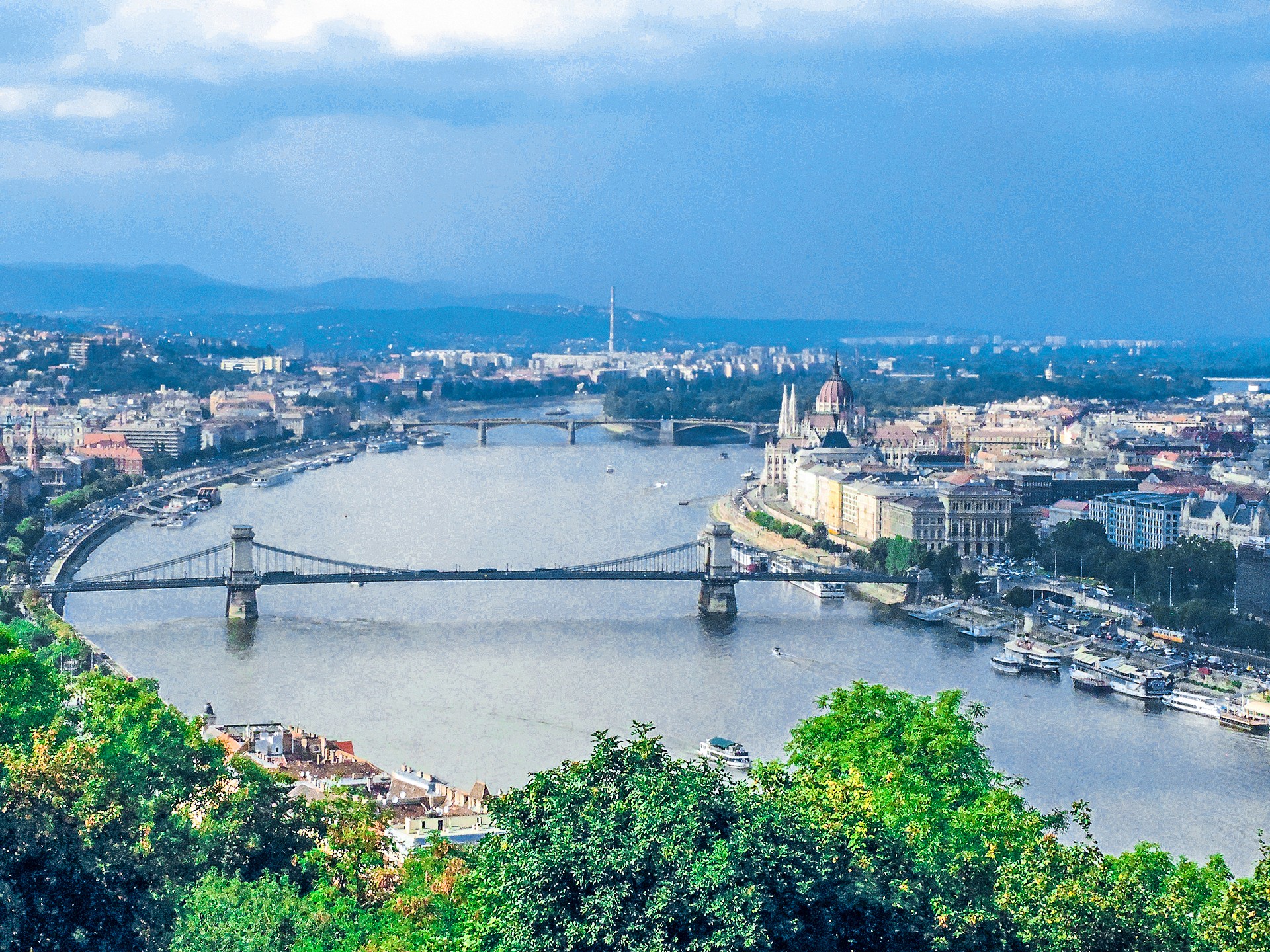
But just like Edward Albee’s play of a distressed couple, Budapest is actually composed of two cities, Buda and Pest, separated by the Danube River. From the Celts, to the Ottomans, to the Hapsburgs, tumultuous is a mild word to describe this city’s history and legacy. Still it has managed to figuratively waltz to Johann Strauss II “Blue Danube”.
PEST, THE HEART OF THE CITY
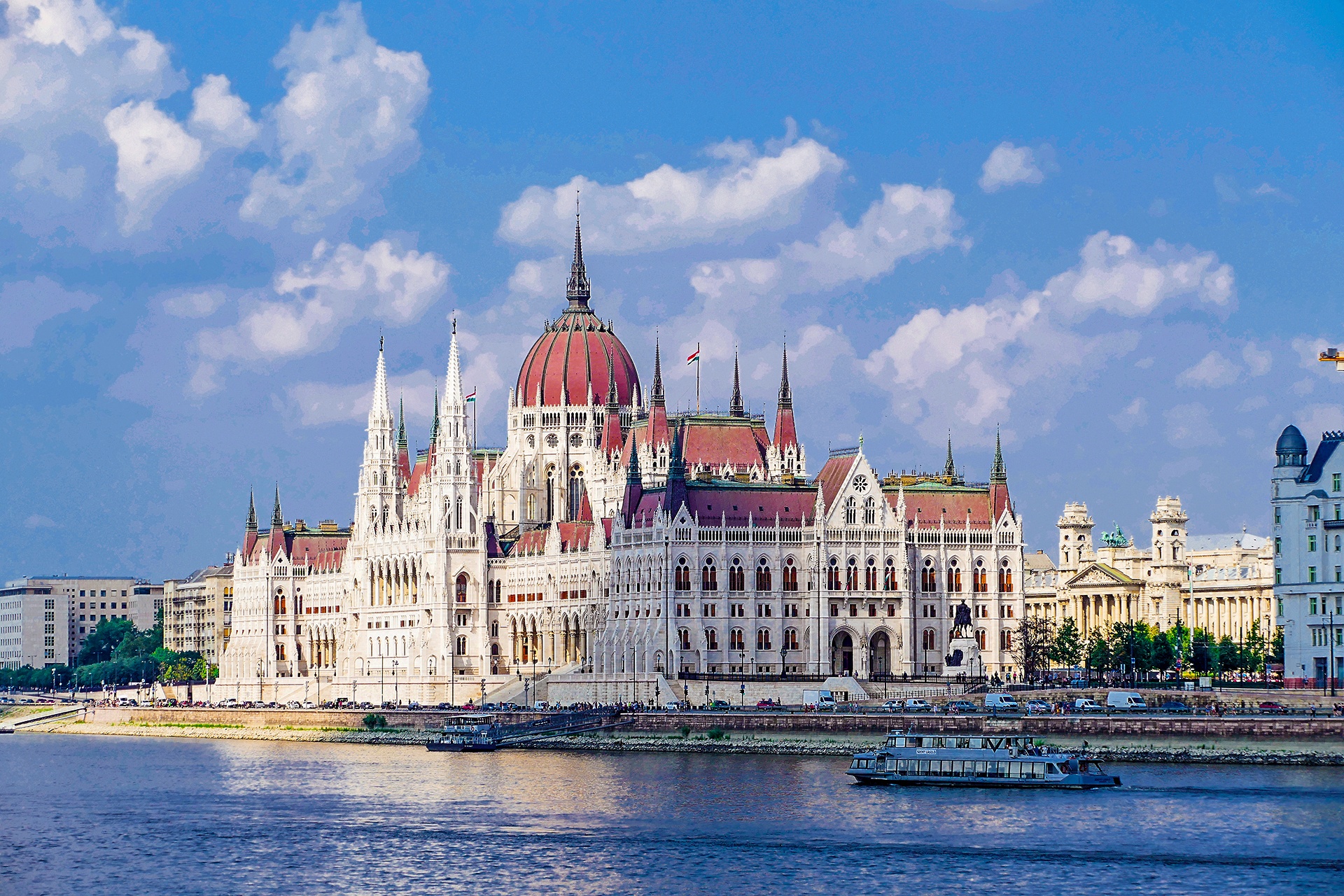
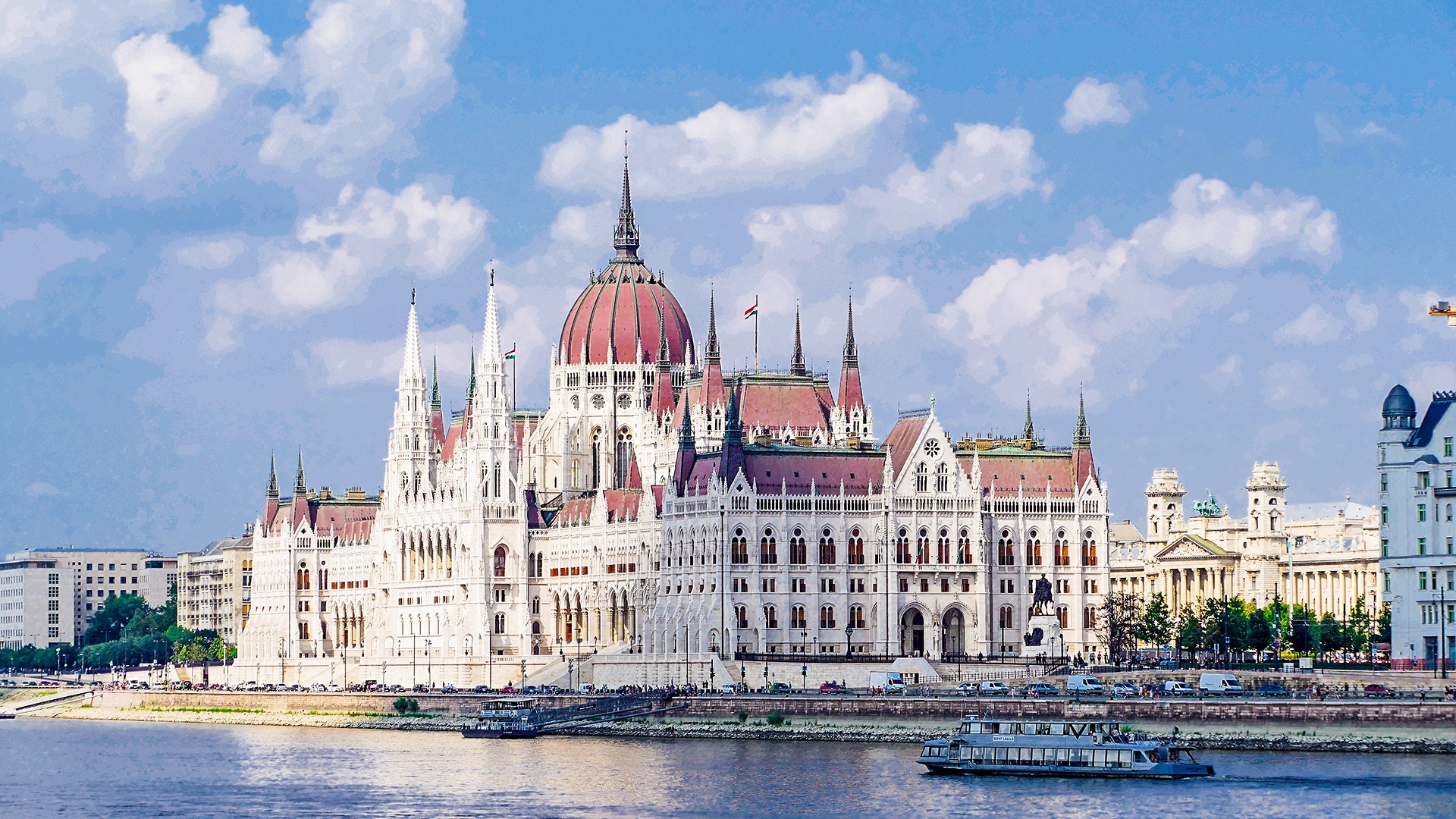
Pest can be considered the beating heart of Budapest. This is where one enters the city. The train station starts and ends here, the airport is here, and the hotels and commercial hub can be found here. Considered one of the most beautiful buildings in Europe, the Parliament here is at its riverbanks. Done in the Gothic revival style, it is perfectly symmetrical with a center dome that anchors the whole structure. It was built in the 1880s to show the sovereignty of the country that was united seven years earlier. A statue of Gyula Andrassy, the first Prime Minister of the “Dual Monarchy of the Austria-Hungary Empire,” stands proudly at the building’s left side, facing the Danube river. In his memory, they named one of the major boulevard, Andrassy Avenue where the most elegant buildings of Budapest are located. From the Danube, you can see the majestic spires of the Parliament, looking like spears held up by soldiers waiting to defend their king.
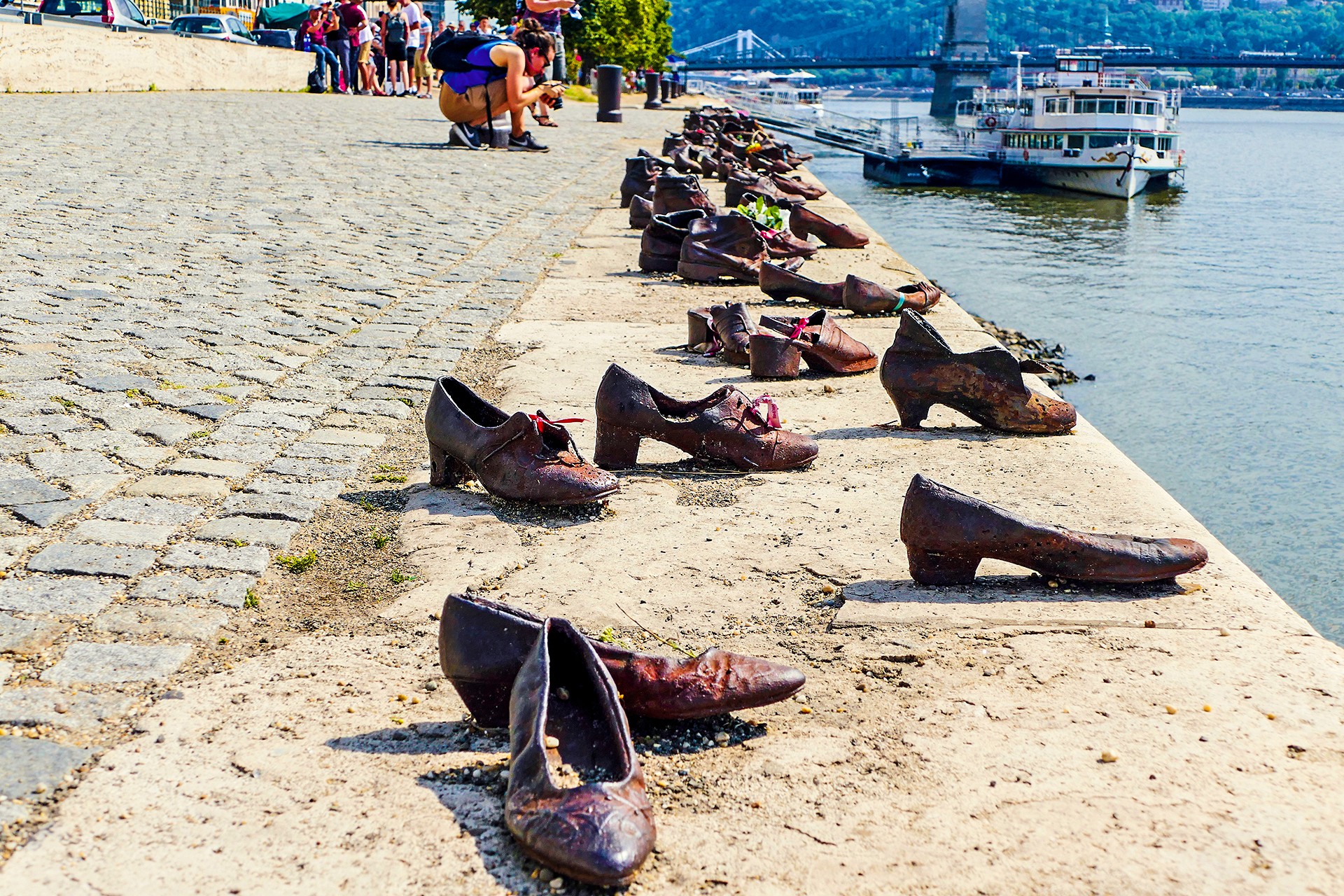
A few meters away from the Parliament is a most curious installation of bronze shoes permanently attached to the river banks of the Danube. Conceived by film director Can Togay, and executed by artist Gyula Pauer, it is a poignant memoriam for the Jews who were asked to remove their shoes then shot by the Nazis along the banks, for them to fall straight into the river.
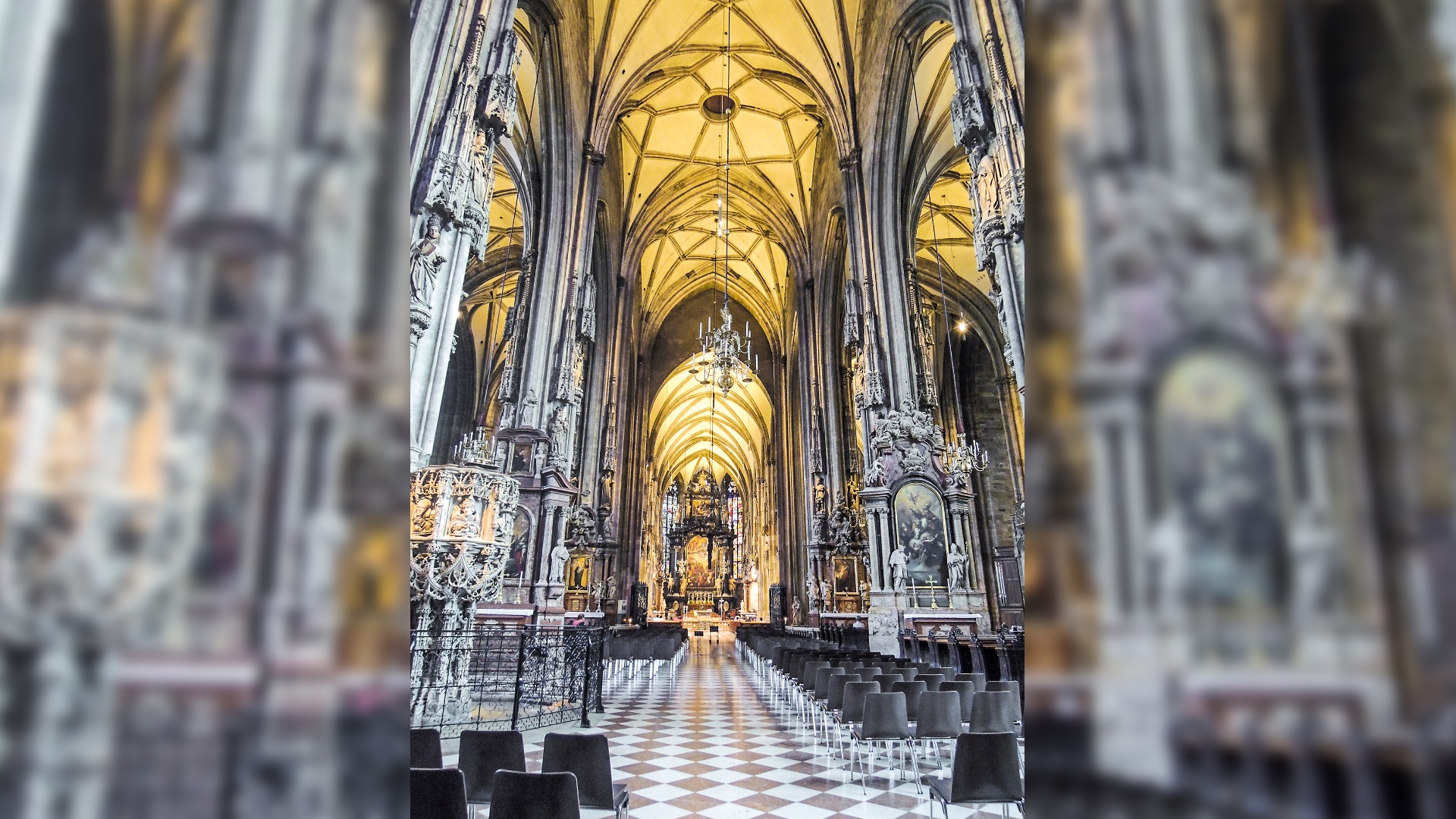
A few blocks to the back of the Parliament is the majestic St. Stephen Basilica. This is the standard by which all buildings in Budapest are measured; that means no building can be taller than this basilica. This is why the parliament building is exactly the same height as this structure. Named after St. Stephen, the first King of Hungary, it is said to house his incorruptible right hand inside a reliquary. Neo-classic in style, it has Romanesque double pillars inside with a more horizontal orientation than a vertical one, which stands for the more common way. Its center dome has iconic Bible figures with God at the center and a string of cherubs surrounding Him. What I find curious is an art deco-inspired statue of St. Rita, patron saint of abused victims holding a crown of thorns. Of course, as a former worker in the art world, I was more drawn to its rendition, which totally contrasted with the entire church despite its spiritual significance. Be that as it may, it was still a statue to behold.
Outside the Basilica, the square was just as beautiful to explore. Using marble of different colors such as old rose, periwinkle and oatmeal, combined with textured cobble stones, circular patterns reminiscent of the Vetruvian scroll dominate the entire area. I felt like walking on a bespoke carpet inside a palace. Around this square are restaurants, gelato stands and places of interest that will keep you pausing here and there.
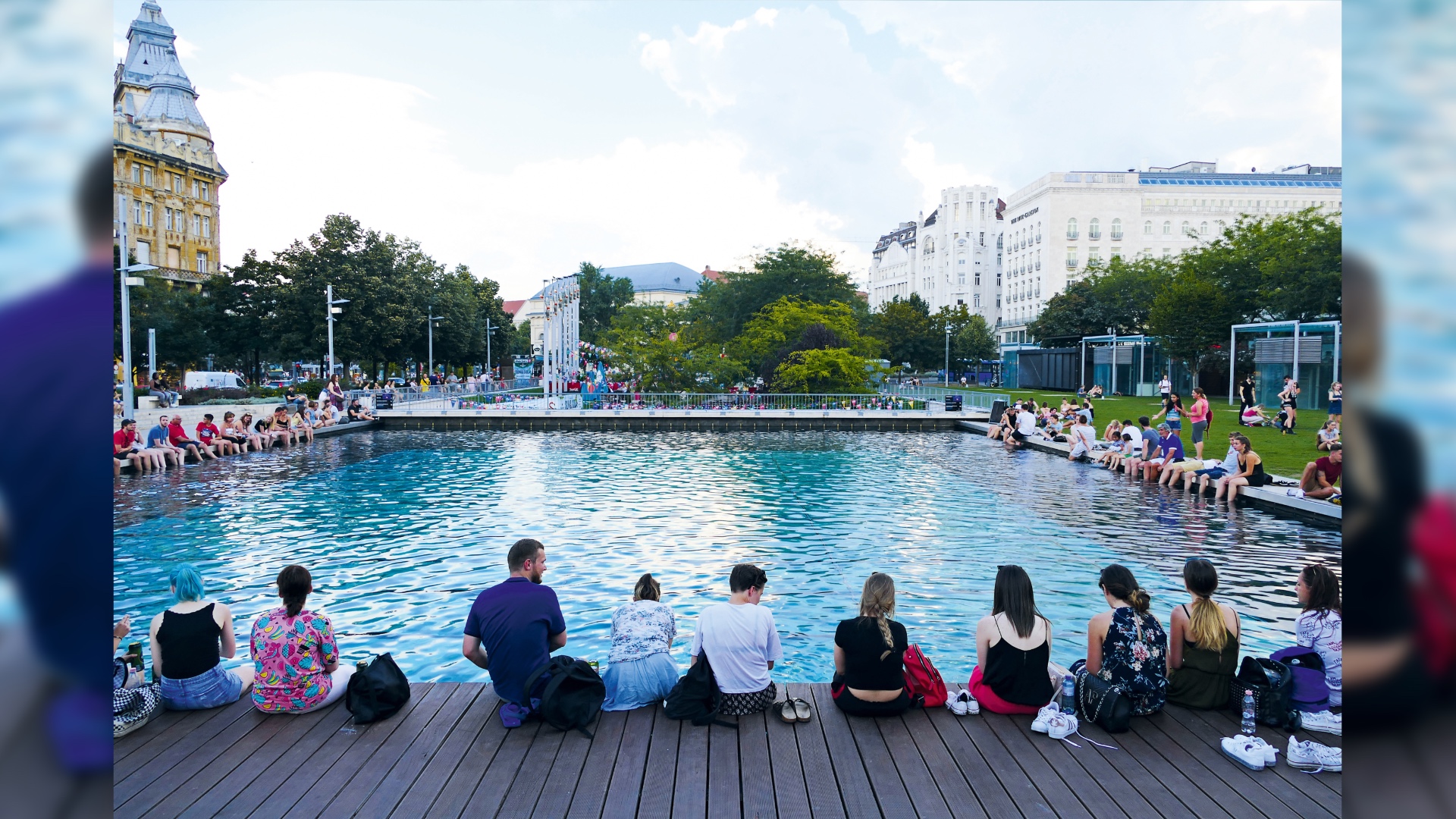
Then there is Elizabeth Square, just a stone’s throw away from St. Stephen’s Basilica. It’s an open promenade with a big water “pond” and an underground eating area. It was full the time we walked by with three teenagers walking inside the “pond,” with their pants folded up as they held their shoes. Everyone was trying to escape the summer heat by catching the cool breeze the open area brings. There was also music pouring out of the basement food court. I can imagine how empty the place will be once the cold season sets in.
From Elizabeth Square (or as the locals call it, Erzsebt Square) one can walk up to Andrassy Avenue and end up at the Heroes Square. Andrassy Avenue is their own version of Manhattan’s Fifth Avenue where the most elegant buildings of the city are located. This is where the State Opera House, the House of Terror, the Museum of Fine Arts and the Franz Liszt Museum can be found. Since I was once a music student and dreamt of playing Liszt on the piano, knowing that these places are within reach via this avenue gave me a high.
Even with just a drive-by and the multiple construction taking place, the Heroes Square still communicate a sense of grandiosity. At the center of the square is a column that towers above all else. On it is the figure of the Archangel Gabriel holding the Hungarian holy crown on one hand and the double cross on the other, an obvious reference to religion and royalty.
BUDA, THE OLD CAPITAL
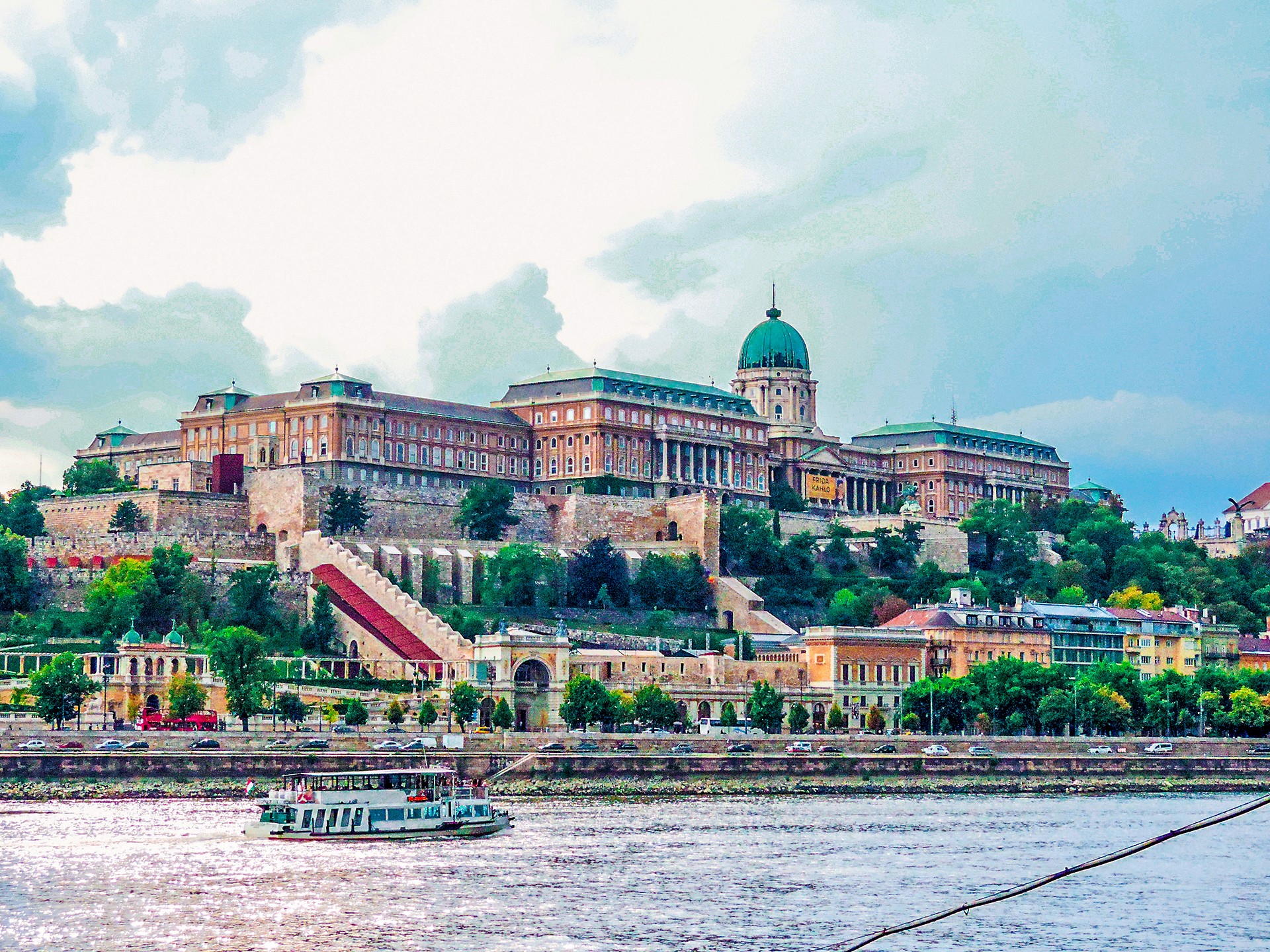
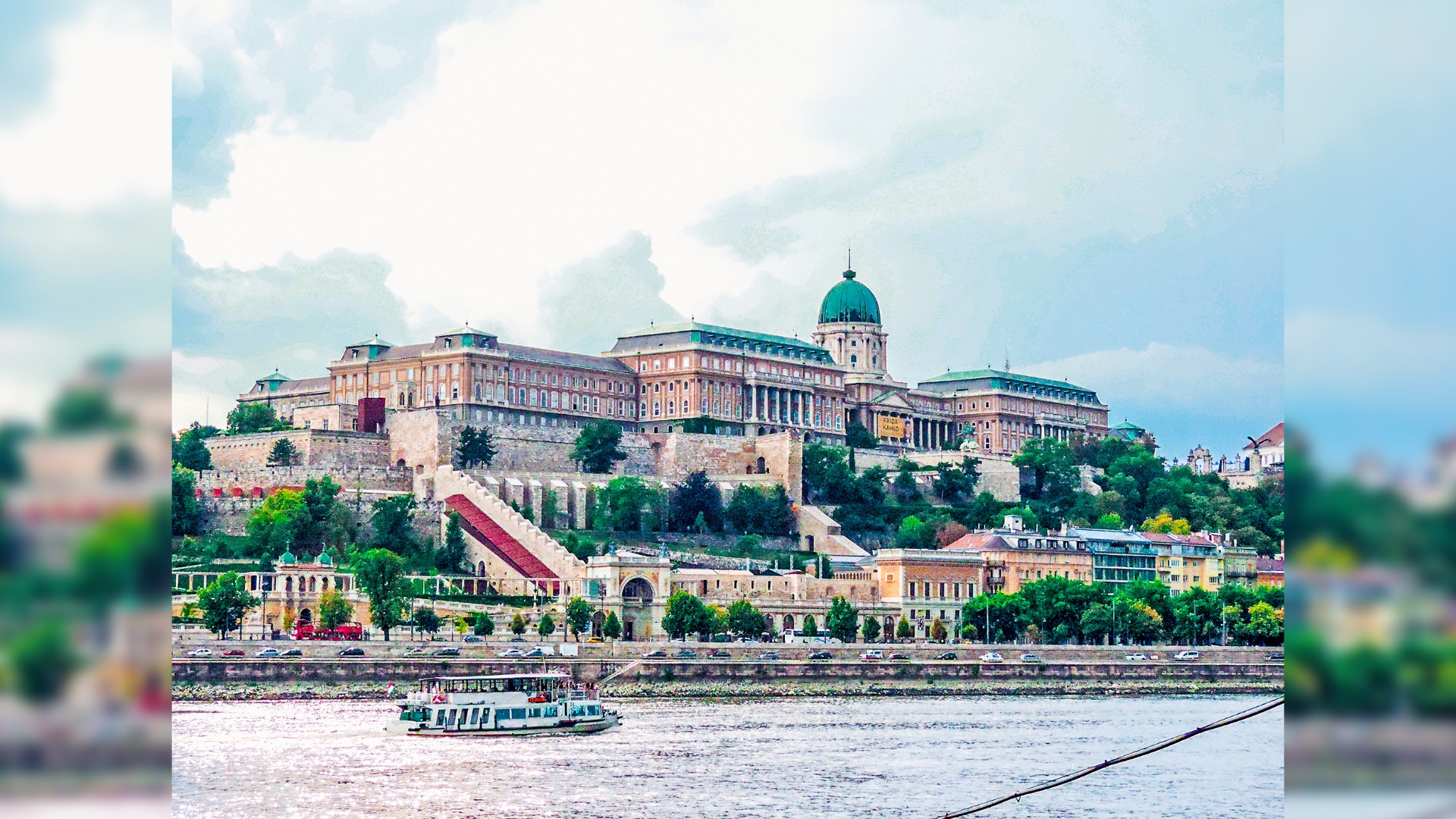
To get to Buda, one has to cross a historic bridge, the Chain Bridge. At night, when the sun starts to set, the bridge suddenly turns into a string of pearls as it is lit up. From end to end, it crosses the Danube, like a line of fireflies connecting the twin cities. At the heart of the Buda side is a complex called Castle District. On one side is the Matthias Church and Fisherman’s Bastion, while on the other are the Royal Palace or Buda Castle and Castle Garden. All of these look out to the Danube.
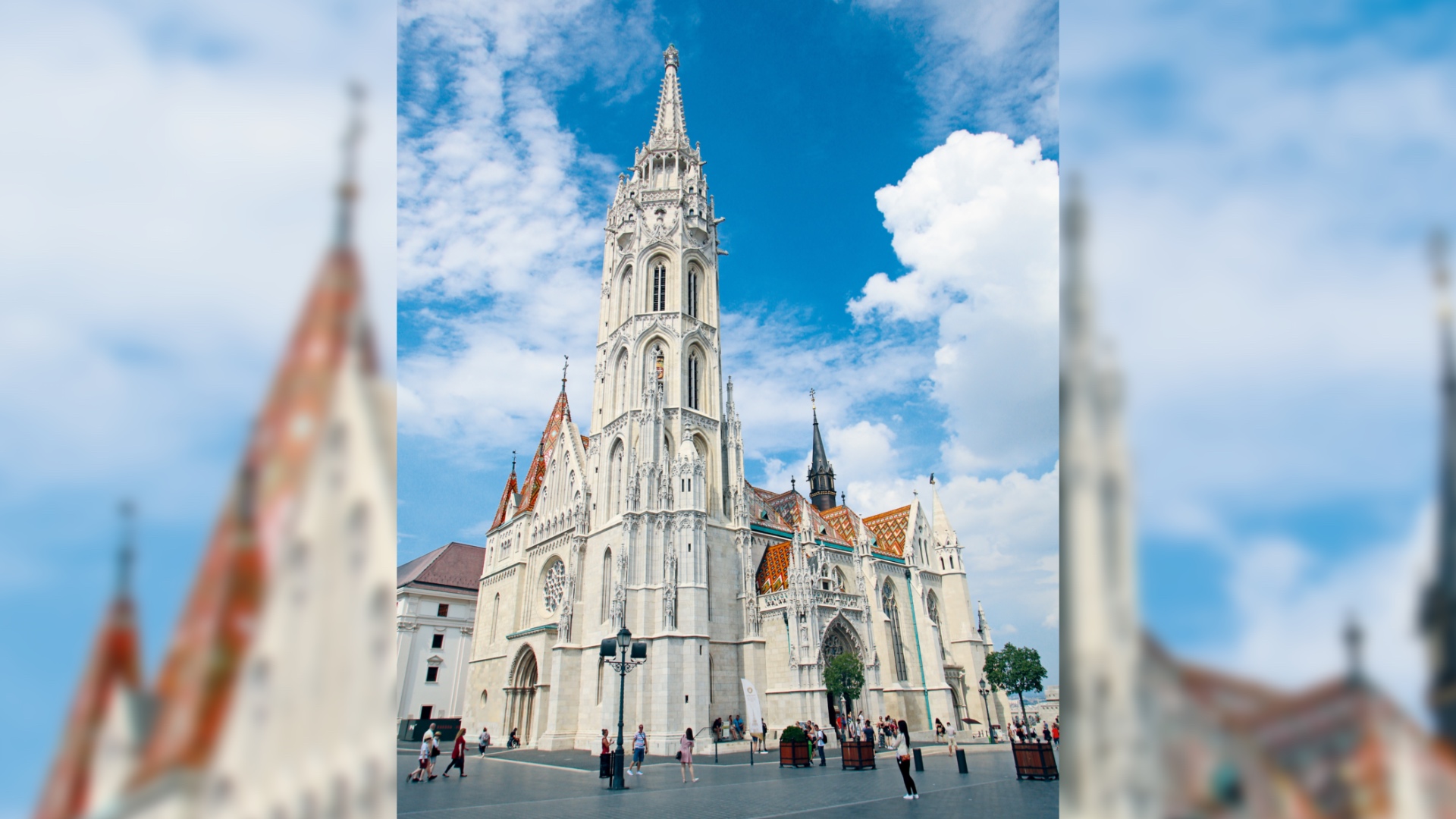
The Matthias Church is an all-white marble church in the gothic tradition. Its beautiful spires stand elegant and glorious. But of all its features, the most curious is a raven with a ring in its beak, perched on one of the white spires. According to legend, Matthias’ mother sent for him with a raven, with that exactly: a ring in its beak. The raven supposedly flew non-stop from Transylvania to Prague, and thus the boy king of ravens was crowned. Another legend has the raven snatching the ring from Matthias’ hand, with the lad giving chase then killing the bird. He proceeded to make it his emblem. But make no mistake, Matthias Corvinus is a real person who brought peace and prosperity to the country in the 15th century. Despite the myth and legend behind the raven, the Church’s polychromed roof will surely keep you in awe. The patterns created by the colors look like they are in perpetual motion.
Across Matthias Church and the Fisherman’s Bastion is the Royal Palace or Buda Castle. It was the first Royal Residence. Walking from Matthias Church and the Fisherman’s Bastion, we entered through the side and we ended up in front of the Castle. Our timing couldn’t have been more perfect as there was a changing of the guards. It took place under the shadow of the elegantly mounted bronze statue of Prince Eugene of Savoy. It’s truly amazing to see how these ceremonies survive. To make the experience fuller, one can ride the funicular from the foot of the Chain Bridge and watch Pest as it unfolds right in front of you.
But the best view was up in the Citadel at Gallert Hill. From this vantage point, we saw the entire meandering Danube as it cut across Buda and Pest. I can imagine Sissy, the Empress Elisabeth of Austria, looking on her dominion as she vacations here and marvels at the beauty of the Danube. Too bad selfies were not in vogue then.
A DANUBE DINNER AND THE MOST BEAUTIFUL CAFÉ IN THE WORLD
I may have missed a Danube cruise due to the heavy rain that greeted us while we were there, but I got something extraordinary to make up for that: dinner in the famous Blue Danube. As I was perusing the menu, the magic word “duck” suddenly leapt from its pages. Who makes a mistake with duck? Indeed, the roasted duck leg was as tasty as I expected and the sidings of cabbage, onion and potato were equally delightful. As we were enjoying our meals, there was a trio who went from table to table, granting whatever tune was requested. And when they came to our table, of course what else is there to request but “The Blue Danube” (although it’s more of a Viennese waltz than it is a Hungarian tune). After the hearty dinner, we walked the streets and came across a very curious stand. It was baking what’s called “Kurtoskalacs” or chimney cakes. It had a contraption that looks like a 4-inch diameter barrel by around 14 inches long. The seller wraps dough around it and puts it on a spinning “grill”; it gets cooked or “barbequed” in the process. These come in a variety of flavors and when you buy one, they slide it off from the contraption and you get a long thin “doughnut.”
The following day, we proceeded to the “best café in the world.” The New York City Café is situated inside the luxury hotel New York Palace Budapest, one of the five ultra-luxury hotels of the Dedica Anthology group. Located along Grand Boulevard, it cannot be missed. Waiting in without reservations, we were made to stay behind a velvet rope. Once seated, I felt like I was in a palace in St. Petersburg while I “commanded” for my order. After our managing editor told the waiter it was my birthday, I was suddenly treated to a slice of their opera cake. After dinner, we initially had no intentions of ordering dessert, and of course the prices had something to do with it, but with that one-half slice of the opera cake, we ended up ordering two more desserts. On the way out, as we passed by the lobby, I marveled at how the hotel was drop-dead gorgeous. Baroque-inspired, it was just unbelievable. I could feel the intimacy and the warmth, despite its very formal ambience.
Some scholars suggest that in the name Budapest, the word Buda may have come from the Slavic word for water. Incidentally, Pest is a Hungarian word for oven or furnace. Combined, it can be said that Buda and Pest are fire and water, symbolically in contrast of each other. But in reality, they manage to bring out the best from each other, and the world is all the better for it.
View Gallery







EXPLORE MORE


GET IN TOUCH WITH US
FOLLOW US

Copyright © 2021 AsianTraveler Magazine. All rights reserved.