Neil’s Kitchen
Filipino Fare With Flair
This restaurant shines the spotlight on Filipino food that is as creative as it is customary and oh, so delicious!
WORDS BY ANGIE DUARTE
IMAGES BY JUSTIN DE JESUS
In June 2017, at the World Street Food Congress held in Manila, late great rockstar chef, Anthony Bourdain predicted that Filipino cuisine would “eventually” make a big, lip-smacking debut on the global food arena. It’s no secret that the beloved, highly-lauded, globetrotting chef had a particular penchant for Pinoy palate-pleasers. Bourdain staunchly defended the nation’s street food, for instance, and also said on many occasions that Filipino fare would soon take American appetites by storm. But he did point out that perhaps the biggest hindrance would be the “bad press” that dishes, such as balut, have received.
That was not the first time a chef of renown made such forecasts, though. Foodies will remember that, in 2012, another celebrity chef, Andrew Zimmern predicted that Filipino food would be “the next big thing,” something he said would happen a year and a half or so after his statement. Fast forward to 2019, however, and the cuisine is, for the most part, still relegated to the backburner when it comes to go-to Asian gustatory choices.
What happened, you might ask? It has been a slow explosion on to the world scene, that’s for sure. But Filipino chefs like Neil Francis Ramos, the man behind Neil’s Kitchen, refuse to let that delicious dream fade away. It is a dream that keeps him going and has him tirelessly concocting incredibly mouthwatering takes on beloved homegrown favorites. His mission has remained the same since the opening of the first restaurant in Alabang in 2008: to put Filipino food on the international stage in a way that gives its headlining cousins – Thai, Chinese and Japanese cuisines – a run for their spices.
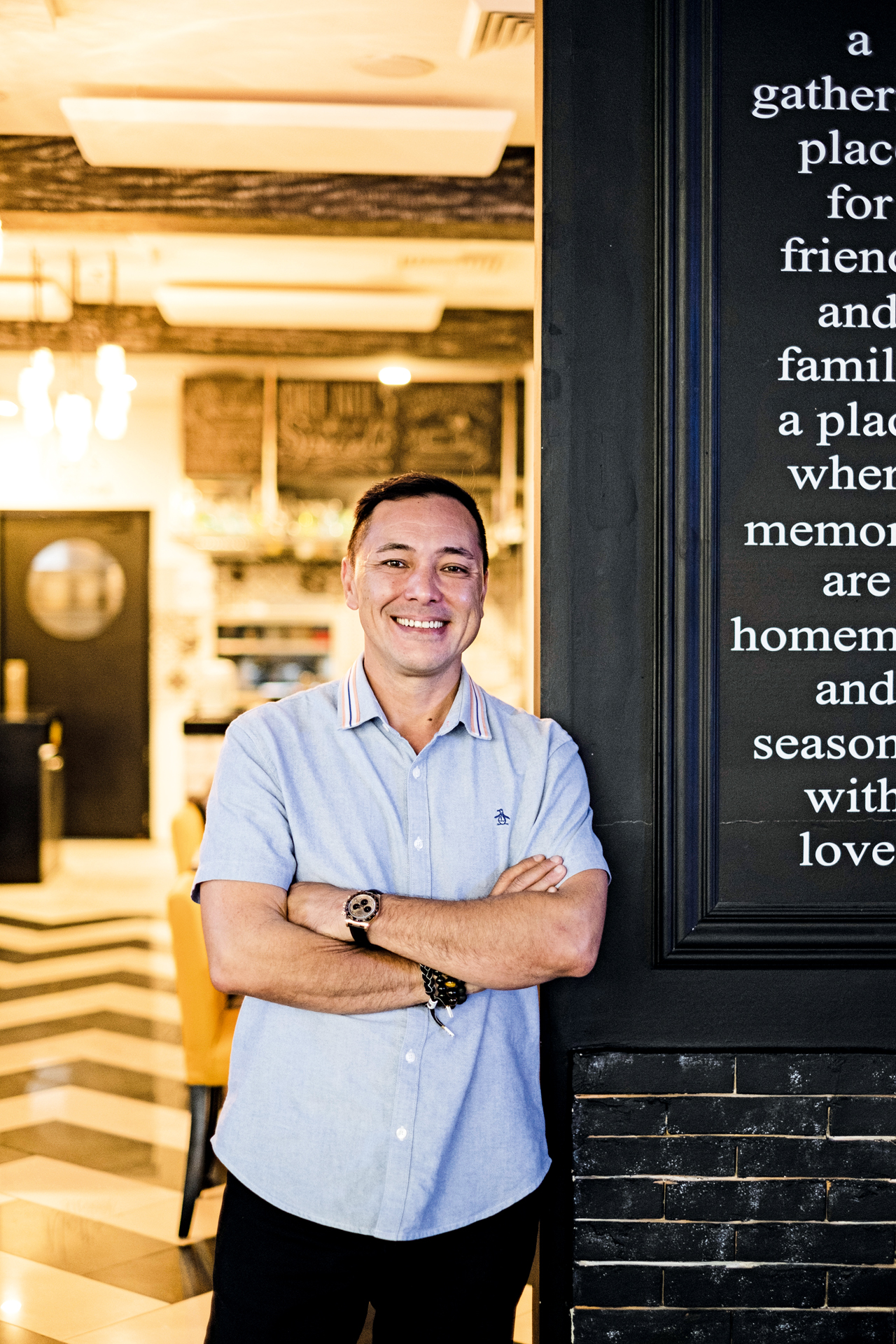
On this assignment, I caught up with Neil and his wife, Michelle Balaguer, at the second branch of their southern baby, this time in Makati, tucked away in a corner at the Glorietta Mall’s Top of the Glo. The afternoon was laden with eye-opening food facts and belly-busting dishes, as it should be with people as passionate about food as the bright-eyed, talented chef and his dynamic, driven wife.
TRADITIONAL TASTES, AND THEN SOME
“I disagree with the concept that we lack the flavor profile to make it big, globally. I think the challenge may lie more in the area of presentation and how we serve our food.” Neil says, when I ask him for his two-cents on our topic of discussion. “We tend to just slap our food onto a dish or platter, family-style, and that’s that. Basically, the concepts of modern plating and portioning were non-existent here for years. But nowadays, people go to a restaurant and they want to order something that is pleasing to the eye, and also maybe not in such large portions of the same dish.”
So, Neil spends hours reinterpreting and reinventing the way dishes are usually served to come up with menu items that are as aesthetically pleasing as they are deliciously satisfying. His artistry in the kitchen is careful and calculated, yet often as whimsical and fanciful as the quirky interiors of his casual dining establishments. As imaginative and out-of-the-box as his masterpieces may be, however, Neil is quick to point out that his cuisine is not to be labeled as fusion. Always walking a delicate balance between preserving tradition and deconstructing it, Neil remains faithful to the flavor profiles of the Philippines while coming up with new and exhilarating ways to elevate the country’s cooking styles.
“I try to stick with the original group set of ingredients and I imagine how I can rework it, using a different technique. For example, if the meat is normally just dropped into a pot of boiling water, I will maybe fry, grill, or broil it. Or, maybe, make the dish take on a new shape or something,” Neil points out.
FABULOUS FLAVORS ON PARADE
I am excited as the dishes come out of the cozy, well-stocked kitchen. If there is one thing I have come to know about Chef Neil, it is that he can transform even the most ordinary of food into a showstopping culinary creation. He is an artist, a creator of fun, and a designer of fabulous, flavor-forward, subtly sensual Filipino food.
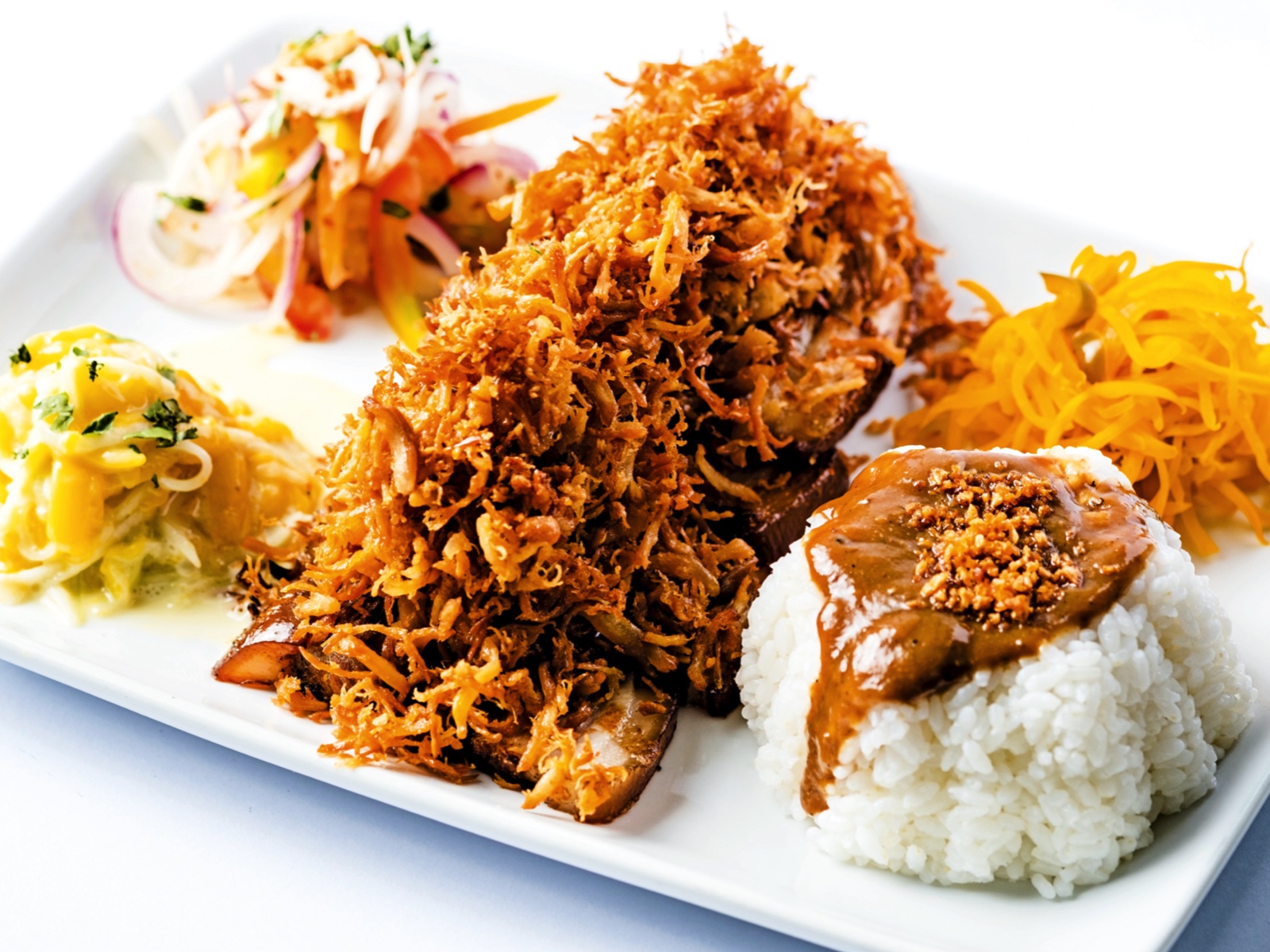
Take the bestselling Adobo Project, for instance. While the soy-and-vinegar-based Filipino staple typically consists of meat simmered in sauce and seasoning, Neil’s take on this features chunks of pork cooked two ways – grilled and fried, then coated in a rich, soy-vinegar sauce with a light sweetness to it. The flavor-rich, tender pork is topped with shredded, deep-fried chicken, and served with rice and an array of local condiments like finely slivered mango and cucumber with a light sour cream dressing, ensalada (tomato, onion, and salted egg salad), and atchara (pickled green papaya). As adobos go, there are likely as many versions as there are families in the country (I kid you not, each household seems to have its own take on what many consider our national dish), but Neil’s is most definitely a standout. With its unique texture and taste, the Adobo Project is a perfect representation of the diversity and complexity, as well as the reassuring familiarity, of Filipino food as a whole.
Another Filipino dish to which Neil has given his trademark twist is the Black Palabok. This intriguing menu offering is a gourmet version of the all-time favorite merienda food – and by version, I mean it is a rather far-removed but oh-so-tasty iteration of the original. Imagine: al-dente fettucine noodles swathed in a rich squid ink sauce, topped with fried calamari and tofu chunks, boiled egg, chopped onions, and crushed pork rind. While it may seem nothing like its orange-sauce covered rice noodle counterpart, this daring diva of a dish employs similar elements (pasta, seafood, sauce, and condiments) and delivers the same gustatory satisfaction as its more traditional cousin. Have it with a serving of Tokwa & Seafood on the side; the appetite-opening concoction of tofu chunks and steamed seafood in a lightly seasoned vinaigrette provides a nice balance to the decadent richness of the black pasta sauce.
Then there’s the homey “Chicken of the South,” Alabang Fried Chicken with gravy rice, which typifies the laidback southern vibe in every bite. This scrumptious dish showcases golden battered, juicy chicken cutlets fried to crisp perfection with a side of steamed gravy-infused rice with mushroom bits, a portion of macaroni salad, and a helping of thick gravy.
And while it is a rather worn way of putting it, when at Neil’s Kitchen, save room for dessert. Make room for it, because Neil’s sweet creations are an absolute must. The Fried Suman, Mangga & Chocnut is not only a specialty of the house, but also my personal fave meal-ender. This sticky-sweet combo of fried glutinous rice rolls, topped with chunks of fresh, ripe mango and locally-made crushed peanut chocolate candy, served with a dollop of thick coconut cream, is a gorgeous indulgence well-worth every single delectable calorie.
THE COMFORTS OF HOME
Indeed, a meal at Neil’s Kitchen brims with the comfort you crave from food that truly satisfies. It is like slipping into your most well-worn, well-loved robe, at the end of a long hard day – minus the shabbiness. If this were a catwalk of food on show, Neil’s creations would be the most eye-catching standouts of the lot, while still being every bit wearable. How can such masterpieces not help homegrown cuisine take the world by storm?
“My first inspiration really is my goal to elevate our dishes so that they will be accepted on the global stage. My mission is to introduce Filipino food globally as one of the most diverse types of cuisine. We are among the most voracious eaters in the word, and we have among the most wide food choices, condiments, and food collections. I want to achieve my reinterpretations of Filipino food and take our cuisine to a level at which people all over the word will recognize it as fun, flavorful and attractive. That’s my goal,” he says with the confidence that can only come from equal measures of pure passion and true talent.
So, from Zimmern and Bourdain, and now, to Ramos, Filipino food receives the vigorous nod of approval it so deserves – along with the push it needs to finally take its rightful place in the spotlight.

GET IN TOUCH WITH US
FOLLOW US

Copyright © 2021 AsianTraveler Magazine. All rights reserved.